


Howdy!

Why Google Ads Are Not Converting: Website and Tracking Checklist

Sergiy Kravchuk

Sergiy Kravchuk

Jul 16, 2026
Share this article
Why Google Ads Are Not Converting: Website and Tracking Checklist
Google Ads guide

Why Google Ads Are Not Converting: Website and Tracking Checklist

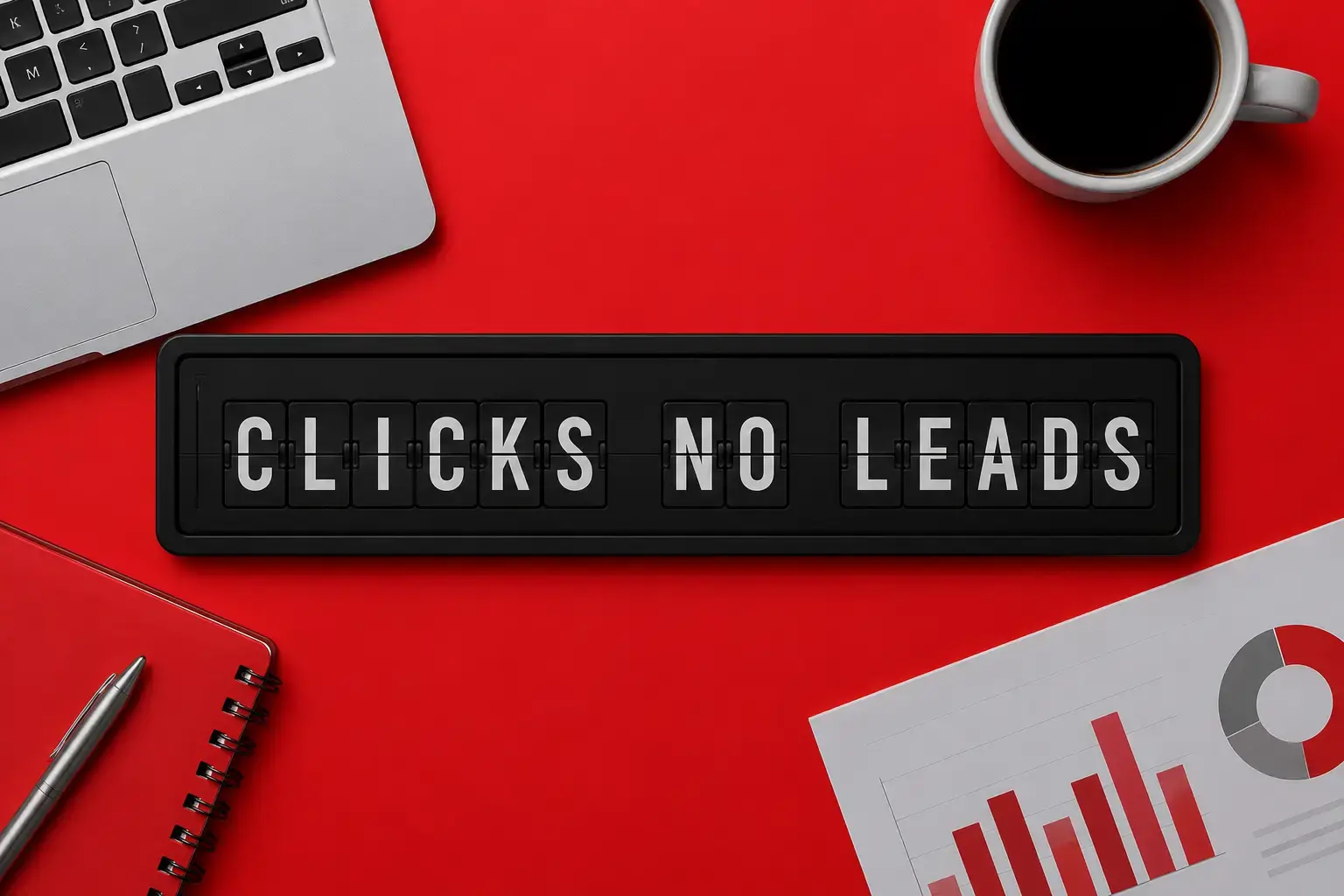
When Google Ads generate clicks but not leads, the problem may be the traffic, landing page, offer, tracking, or lead process. This guide explains how to diagnose the website and measurement setup before increasing ad spend.
Traffic Confirm that ads attract the right search intent, location, device mix, and audience.
Landing page Check whether the page matches the ad promise and gives visitors a clear next step.
Tracking Verify that calls, forms, purchases, and key actions are recorded correctly.
Why Google Ads Are Not Converting: Website and Tracking Checklist
Quick answer

Why Google Ads Clicks Do Not Turn Into Leads

Google Ads are not converting when the traffic, landing page, offer, tracking, or lead handling process does not support the same conversion goal. The fastest way to diagnose the issue is to compare search intent with the ad promise, test the landing page on mobile, submit every form and call action, and confirm that each real conversion appears in Google Ads and analytics.
Traffic fit

Are the right people clicking?

Review search terms, location settings, device performance, and campaign intent. High click volume does not help when visitors are researching, outside the service area, or looking for a different solution.
Page fit

Does the page continue the ad message?

The PPC landing page should repeat the core offer, explain who it is for, answer the main objection, and present one obvious action. Sending every ad to a generic home page often creates confusion.
Tracking fit

Are real actions measured?

Conversion tracking should record the final form submission, qualified phone call, purchase, booking, or other meaningful outcome. Button clicks and page views can be useful secondary events, but they should not replace a true lead or sale.
Main explanation

Why Google Ads Are Not Converting Even When the Campaign Gets Clicks

A click only proves that the ad attracted attention. It does not prove that the visitor found the right service, trusted the business, understood the offer, or completed the conversion action. When diagnosing why Google Ads are not converting, review the full path from search term to ad, landing page, form or call, and business response.
Explore Landing Page Design
Do not increase the budget until you know whether the main problem is traffic quality, page experience, measurement, or lead handling.
Why Google Ads Are Not Converting Even When the Campaign Gets Clicks

Search intent and offer mismatch

A user searching for pricing, emergency service, a local provider, or a specific product expects a page built around that need. A broad message can attract clicks but fail to give the visitor a convincing reason to continue.

Generic or distracting landing page

A home page may contain too many services, navigation choices, and unrelated messages. A focused Google Ads landing page should make the next action clear without forcing the visitor to search for essential information.

Weak trust and insufficient proof

Visitors may hesitate when the page lacks clear business details, service area information, process explanations, credentials, portfolio examples, policies, or realistic answers to common concerns. Trust must be visible before the form or call request.

Mobile friction and slow interaction

Many ad clicks happen on mobile devices. Small buttons, long forms, layout shifts, slow pages, blocked content, or difficult phone links can reduce website conversion even when the desktop page looks acceptable.
Key conversion factors

Four Areas to Check Before Increasing Google Ads Spend

These areas usually reveal whether the problem begins with the campaign, the PPC landing page, the conversion mechanism, or the sales process. Review them together because one weak step can reduce the value of the entire funnel.
Relevance

Ad-to-page message match

The page headline, opening paragraph, offer, and call to action should continue the promise made in the ad. Visitors should immediately know they reached the right page.
  • Match the service or product
  • Match the location or audience
  • Match the main benefit
  • Match the intended action
Message

Offer clarity

Explain what the visitor receives, who the offer is for, what happens next, and what may affect price or eligibility. Avoid vague claims that force visitors to guess.
  • Specific service scope
  • Clear customer fit
  • Practical next step
  • Visible limitations when relevant
Experience

Landing page design

Use a focused layout with a clear visual hierarchy, readable content, visible contact options, and minimal distractions. The main conversion action should be easy to find on every device.
  • Strong opening section
  • Readable supporting content
  • Mobile-friendly buttons
  • Focused navigation
Form

Lead form quality

Ask only for information needed to respond or qualify the inquiry. Long forms can reduce volume, while forms that ask too little can produce weak or incomplete leads.
  • Clear field labels
  • Reasonable field count
  • Useful validation messages
  • Confirmation after submission
Website and tracking checklist

What to Check When Google Ads Are Not Converting

Work through the checklist in order and record what is confirmed, what is broken, and what needs more data. The goal is to find the narrowest fix that removes friction without making random changes to the campaign or website.
Traffic

Confirm search terms, locations, and intent

Review the actual search terms that triggered ads, not only the keywords added to the campaign. Exclude clearly irrelevant intent, confirm geographic targeting, and compare mobile and desktop behavior before judging the landing page.
  • Check search term relevance
  • Review location reports
  • Separate research intent from buying intent
  • Compare device and network performance
Message

Compare the ad with the landing page

Place the ad and landing page side by side. The service, location, promise, and call to action should remain consistent so the visitor does not feel redirected to a different offer.
  • Repeat the core service naturally
  • Use a matching page headline
  • Explain the advertised benefit
  • Keep the same conversion goal
Page

Test the landing page on real devices

Open the page on common mobile screen sizes and complete the full path as a customer. Check loading, readability, button placement, form fields, sticky elements, popups, and whether tap-to-call links work.
  • Test mobile speed and stability
  • Check buttons above and below the fold
  • Submit every form
  • Test calls, chat, and booking links
Tracking

Validate conversion tracking end to end

Use a real test submission or call and verify that the action appears in the correct analytics property and Google Ads account. Confirm that the event fires once, uses the correct conversion action, and is not triggered by a simple page visit.
  • Test the success event
  • Check duplicate firing
  • Confirm account and property ownership
  • Verify primary versus secondary goals
Conversion review process

A Practical Process for Diagnosing Low Google Ads Conversions

A structured review prevents campaign changes from hiding website or tracking problems. Each step should produce a clear finding or next action.
01 Step
Goal

Define the real conversion

Choose the business outcome that matters: a qualified form, phone call, booking, purchase, or consultation request. Supporting events can remain available, but the main optimization goal should reflect actual value.
02 Step
Traffic

Review campaign intent

Check keywords, search terms, match behavior, ads, locations, devices, and schedules. Identify whether the campaign attracts people who can realistically become customers.
03 Step
Page

Audit the landing page

Review message match, page structure, offer clarity, trust, mobile usability, speed, forms, and calls to action. Note every point where a visitor must stop, think, search, or repeat information.
04 Step
Data

Test analytics and conversion tracking

Complete real test actions and verify data in analytics and Google Ads. Check consent behavior, tag placement, duplicate events, attribution settings, call tracking, and imported conversions when used.
Common mistakes

What Usually Hurts Conversions and What to Do Instead

The left side shows common decisions that make diagnosis harder. The right side shows a more reliable approach for improving the landing page, tracking, and lead process.

Conversion blockers

Sending all traffic to the home page
A broad page may not match the service, location, or urgency promised by the ad.
Using one form for every campaign
Different services and audiences may need different qualifying questions and confirmation messages.
Counting button clicks as final conversions
A click does not prove that the form was submitted, the call connected, or the purchase finished.
Changing bids before checking the website
More traffic can increase cost without solving the page or offer problem.

Better approach

Use a focused PPC landing page
Build the page around the same service, audience, location, and action as the campaign.
Design the form around the decision
Collect enough information to respond well while keeping the first contact easy to complete.
Track completed business outcomes
Use final success events as primary conversions and keep supporting interactions as secondary measurements.
Fix blockers before scaling spend
Resolve broken tracking, mobile issues, message mismatch, and unclear offers before raising the budget.
Service options

What to Do After You Find the Conversion Problem

The next step depends on whether the main issue is the page, the measurement setup, or the campaign strategy. Web Fly can review the current funnel and recommend a focused scope instead of applying unrelated changes.
Option
Timeline
Estimate
Action
Landing Page Review and Improvement
Best when the campaign gets relevant clicks but the page has weak message match, mobile friction, unclear offer details, or an ineffective lead form.
Based on scope
After review
Technical and Tracking Audit
Best when forms, calls, analytics, consent, tags, page performance, or conversion events may be unreliable.
Based on website and setup
Custom quote
Google Ads and Funnel Review
Best when traffic quality, campaign structure, landing page alignment, and lead feedback must be reviewed as one system.
After consultation
Project-based estimate
AI Visibility and search understanding

How Clear Landing Pages Support Search and AI Systems

A conversion-focused website should help both people and machines understand the business. Clear service definitions, locations, proof, process details, and consistent entity information can improve how search engines and AI systems interpret the page, even though no page can guarantee inclusion in an AI answer.

Define the service clearly

Use plain language to state what the business provides, who it serves, and what problem the service solves. Clear definitions reduce ambiguity for visitors and automated systems.

Connect the offer to the business

Keep the business name, contact details, service area, and relevant expertise consistent across the website. This helps establish who is responsible for the service and where it is available.

Answer decision-stage questions

Explain process, eligibility, timing, pricing factors, deliverables, and next steps when appropriate. These details support conversion decisions and create useful passages for search and AI answers.

Use descriptive page structure

Organize the page with direct section titles, short answers, lists, and FAQs. A clear structure helps users scan the content and helps systems identify the purpose of each section.
Frequently asked questions

Google Ads Conversion Questions

Use these answers to identify whether the next step is a campaign, landing page, tracking, or lead handling review.
What should I know before hiring help for Google Ads that are not converting?
Know which campaigns are affected, what counts as a real conversion, how leads are currently tracked, and what happens after a form or call. A useful review should examine traffic quality, the website, conversion tracking, and lead outcomes rather than changing bids without diagnosis.
Why are my Google Ads clicks not turning into leads?
The most common reasons are poor search intent, weak ad-to-page message match, unclear offers, mobile friction, low trust, difficult forms, or broken tracking. The lead response process may also be losing valid inquiries after they arrive.
What should a PPC landing page include?
A PPC landing page should include a clear headline, the specific offer, customer fit, benefits, process, trust signals, objection handling, and one primary call to action. It should also load well on mobile and make the form, call, purchase, or booking easy to complete.
How do I track conversions correctly?
Track the final successful action that represents business value, then test it with a real submission, call, purchase, or booking. Confirm that the event appears once in the correct analytics and Google Ads accounts, and separate primary conversions from secondary engagement events.
Should I fix my website before increasing ad spend?
Fix major website and tracking problems before increasing ad spend. More budget cannot correct a broken form, confusing page, slow mobile experience, unclear offer, or missing conversion event, and it may simply send more paid traffic into the same problem.
What landing page changes improve lead quality?
Lead quality often improves when the page states the exact service, intended customer, service area, process, eligibility, and pricing factors before the form. The form can then ask a small number of purposeful qualifying questions without creating unnecessary friction.
Find Out Why Your Google Ads Are Not Converting
What to do next

Find Out Why Your Google Ads Are Not Converting

Web Fly can review the campaign-to-website path, landing page design, lead form, analytics setup, conversion tracking, technical issues, and lead handling process. The goal is to identify the real conversion gap and recommend a practical scope for your website, tracking, SEO, or Google Ads support.

Contact Web Fly

Focused diagnosis

Review the full path from search intent and ad message to landing page, conversion event, and lead outcome.

Clear priorities

Separate urgent tracking or form failures from page improvements, campaign changes, and longer-term website work.

Practical next step

Receive a scope based on the current website, business goal, available data, and the part of the funnel that needs attention.