Howdy!

Best Aviation Website Design: 15 Features High-Trust Aviation Websites Need

Sergiy Kravchuk

Sergiy Kravchuk

Sep 13, 2026
Share this article
Best Aviation Website Design: 15 Features High-Trust Aviation Websites Need
Aviation Website Strategy

What High-Trust Aviation Websites Need to Get Right

The best aviation website design makes complex services easy to understand, gives visitors clear reasons to trust the business, and creates a direct next step. Strong aviation design connects credible content, mobile performance, SEO, and conversion paths instead of relying on visuals alone.
Clarity Explain who you serve, what you offer, and where you operate.
Trust Make services, aircraft, facilities, experience, and relevant credentials easy to verify.
Performance Support users and search engines with fast mobile pages and clean technical foundations.
Conversion Guide each high-intent visitor toward the right inquiry, quote, booking, or consultation.
What High-Trust Aviation Websites Need to Get Right
Quick answer

What Makes the Best Aviation Website Design?

A high-trust aviation website gives fast answers about services, aircraft, locations, qualifications, and next steps. Clear navigation, mobile speed, useful facts, and visible contact options matter more than decorative effects alone.
01

Answer the visitor first

The opening screen should explain the service, audience, and primary action without making visitors decode generic aviation imagery or slogans.
02

Make trust verifiable

Use factual details about aircraft, facilities, services, locations, expertise, and applicable credentials.
03

Design for mobile decisions

Key information, forms, maps, fleet details, and contact actions must remain easy to use on a phone.
04

Build for search and conversion

Plan page structure, internal links, metadata, schema, analytics, and conversion tracking with the design.
Features 1-6

Best Aviation Website Design Starts With Trust and Task Clarity

Aviation websites may serve passengers, pilots, owners, students, buyers, planners, or maintenance customers. Good aviation web design separates those journeys while keeping important facts consistent.
Explore Custom Website Development
These foundations come before advanced SEO, conversion, accessibility, tracking, and AI Visibility work.
Best Aviation Website Design Starts With Trust and Task Clarity

1. Clear service hierarchy

Organize services around how customers search and decide. Do not bury high-intent information behind broad company messaging.

2. Verifiable operational trust signals

Show concrete capabilities, facilities, aircraft, locations, expertise, and applicable credentials instead of unsupported claims.

3. Location and service-area clarity

Make geography explicit with useful location, airport, service-area, and direction information when relevant.

4. Useful fleet and aircraft detail pages

Help visitors compare options with consistent aircraft details, imagery, context, links, and an inquiry path.

5. Human contact paths

Keep phone, quote, inquiry, or consultation options visible and specific to the service.

6. Mobile-first speed and usability

Navigation, galleries, forms, maps, buttons, and core content should stay fast and easy to use on smaller screens.
Selected work Selected work

Selected Web Fly Projects

Featured case

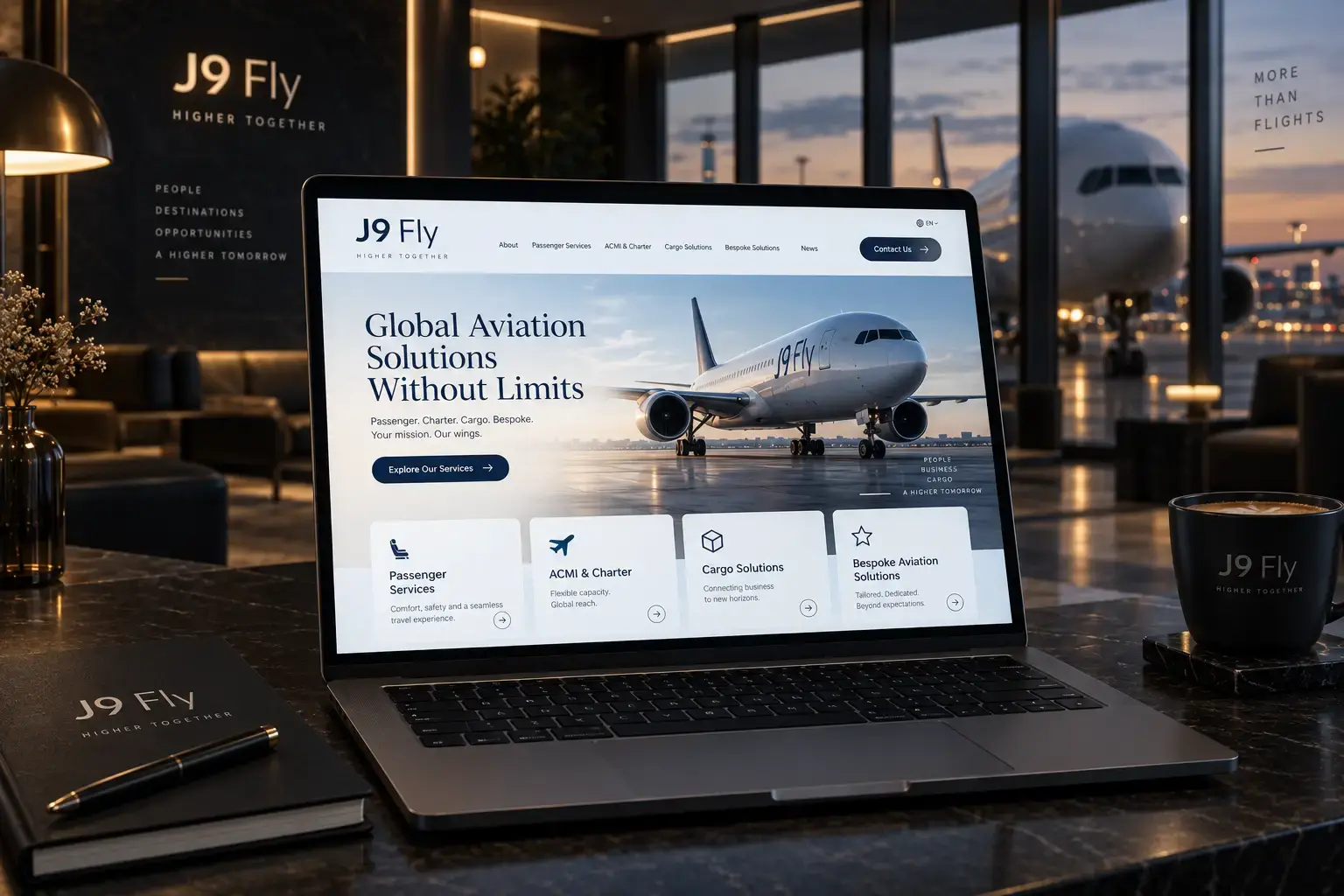
Aviation Website Design & Development for J9 Fly

Custom aviation website design and aviation website development for J9 Fly, built with Laravel Botble, bilingual content, responsive layouts, and editable CMS sections.

Features 7-12

Six More Features Strong Aircraft Websites Need

The best aviation website is defined by how well design supports trust, search intent, technical quality, and a clear business action.
Trust

7. Scannable safety and compliance content

Present safety and compliance information factually, in context, and in a format visitors can scan.
Design

8. A disciplined aviation visual system

Use aviation imagery, typography, and motion to support hierarchy without hiding practical information.
SEO

9. SEO-ready information architecture

Create indexable pages for meaningful services, locations, aircraft categories, programs, or capabilities.
CRO

10. Conversion-focused forms and calls to action

Match quote, booking, enrollment, sales, or maintenance forms to the intent of each service page.
Search

11. Local and national search signals

Keep business, location, and service-area information consistent across relevant pages.
Measurement

12. Analytics and Google Ads readiness

Plan GA4, Google Tag Manager when appropriate, form events, call actions, and meaningful conversions before paid traffic.
Features 13-15 and QA

Complete the 15-Feature Aviation Website Checklist

The final three features cover machine understanding, accessibility, and long-term maintenance. The remaining rows are practical launch checks.
Feature 13

Structured data and entity clarity

Use relevant schema, consistent organization details, and clear relationships between services, locations, people, aircraft, and facilities.
  • Keep details consistent
  • Validate structured data
Feature 14

Accessibility and inclusive user experience

Use readable type, keyboard-friendly navigation, meaningful alt text, clear form labels, sufficient contrast, and predictable controls.
  • Check keyboard use
  • Review contrast and focus
Feature 15

Maintainable CMS, security, and update process

Make operational content practical to edit and plan sensible permissions, backups, maintenance, and stale-content review.
  • Keep content editable
  • Plan backups and updates
Trust QA

Can visitors verify the important facts?

Check service scope, locations, aircraft or facility context, credibility details, and contact information.
  • Check service details
  • Check contact information
Conversion QA

Is the next step obvious?

Match calls to action to page intent and test forms, buttons, and confirmation states on mobile.
  • Use relevant CTA wording
  • Test forms on mobile
Technical QA

Can search engines crawl and understand the site?

Check indexability, canonicals, sitemaps, redirects, internal links, performance, structured data, and Google Search Console.
  • Review index signals
  • Test links and redirects
Development process

How to Build a High-Trust Aviation Website

Plan content, SEO, UX, technical requirements, and measurement together. During a redesign, preserve useful URLs, content, authority, and analytics where possible.
01 Step
Strategy

Discovery and evidence review

Clarify goals, audiences, services, locations, current issues, data, and facts that need internal review.
02 Step
UX

Audience and service mapping

Map key user journeys and the questions each audience needs answered before contact.
03 Step
SEO

Architecture and SEO planning

Plan service, location, aircraft, resource, and conversion pages plus necessary redirects.
04 Step
Content

Content and interface design

Write clear copy and design reusable patterns for trust, hierarchy, and next steps.
05 Step
Build

Development and technical QA

Build responsive components, forms, tracking, metadata, schema, performance improvements, and CMS controls.
06 Step
Improve

Launch, measurement, and iteration

Verify tracking, indexing signals, forms, and key journeys, then improve pages using real data.
What builds trust

High-Trust Aviation Design vs. Common Website Mistakes

Compare these patterns during a redesign or competitive review.

High-trust pattern

Specific service pages
Each major service explains scope, audience, facts, and next steps.
Useful aircraft content
Fleet pages help visitors compare options and reach the right inquiry.
Evidence-led copy
Concrete business facts replace unsupported claims.
Clear mobile navigation
Important tasks stay easy to reach on smaller screens.
Search-friendly architecture
Pages have distinct purposes, descriptive links, and stable URL logic.
Measured conversions
Forms, calls, and meaningful actions are tracked.

Common mistake

One page tries to rank for everything
Mixing unrelated services, locations, and audiences weakens relevance.
Design hides the facts
Heavy visual effects bury practical service information.
Generic trust language
Promotional claims replace real operational details.
Desktop-only thinking
Complex menus and forms become difficult during mobile use.
Redesign without migration planning
URL changes without redirects can break search visibility and links.
Paid traffic without conversion setup
Generic landing pages and untested tracking make campaign optimization harder.
Research ideas

Aviation Website Examples: What to Study Instead of What to Copy

Use aviation website examples and aviation web design inspiration to study structure, not just style. Judge each aircraft website by how clearly it supports users, trust, search, and inquiry paths.
1
Airport websites Study how passengers, pilots, tenants, and visitors reach terminal, parking, transportation, maps, and operational resources.
2
FBO websites Review how fuel, handling, hangar, amenities, crew support, location, hours, and service requests are organized.
3
Charter and private aviation websites Look at aircraft categories, destinations, service areas, trip requests, support, and quote flow.
4
Flight school websites Study training paths, programs, aircraft, instructors, locations, discovery flights, and student questions.
5
Aircraft sales and management websites Review listing structure, aircraft details, management services, inquiry flow, and links to advisory services.
6
MRO and aerospace service websites Study capabilities, supported aircraft or components, facilities, locations, relevant certifications, and contact routing.
What to do next

Service Options for Building the Best Aviation Website

The right next step depends on whether the main issue is the platform, search visibility, technical health, or landing-page performance. Web Fly can scope work after reviewing the website and goals.
Option
Timeline
Estimate
Action
Custom Website Development
For new sites or redesigns needing stronger UX, CMS flexibility, SEO foundations, and conversion paths.
Based on scope
Custom quote
SEO and Technical SEO
For indexing, architecture, on-page SEO, links, schema, performance, or organic visibility issues.
After review
Depends on the website
Landing Pages and Ads Readiness
For focused campaigns, quote pages, or service landing pages with measurable actions.
Based on scope
Project-based estimate
Search and answer engines

AI Visibility for Aviation Websites

AI Visibility depends on clear entities, direct answers, consistent facts, crawlable pages, and strong topical relationships. These practices improve machine understanding but do not guarantee inclusion in Google AI Overviews or other AI answers.

Name entities consistently

Keep company, service, airport, location, aircraft, and team names consistent.

Answer important questions directly

Give concise answers first, then add supporting detail where useful.

Use structured data accurately

Apply relevant schema to visible, supported content and validate it.

Keep operational facts current

Review contact details, locations, fleet information, services, and hours.

Strengthen topical internal linking

Connect aircraft, services, locations, resources, and related pages descriptively.

Protect crawlability and page quality

Monitor indexability, canonicals, redirects, sitemaps, robots rules, performance, and mobile rendering.
Frequently asked questions

Aviation Website Design FAQ

Practical answers for business owners planning or redesigning an aviation website.
What is the best aviation website design for a business?
The best aviation website design makes services, operating context, trust signals, and next steps easy to understand. It should also be fast on mobile, crawlable, accessible, and structured for SEO and conversion tracking. Visual style should support those goals.
What pages should an aviation website include?
Most aviation websites need focused service pages, company information, contact details, and pages for relevant locations, aircraft, facilities, programs, or capabilities. The exact structure depends on the business model. Build around real user and search intent rather than thin keyword pages.
How should aircraft websites present fleet information?
Use a consistent format that helps visitors compare aircraft and understand how to inquire. Include accurate category, use, capability, imagery, and service context when relevant. Keep important details readable on the page instead of only inside images or PDFs.
How important is SEO when redesigning an aviation website?
SEO should be planned before development, especially when the current site has indexed pages, backlinks, traffic, or established URLs. Address architecture, metadata, links, canonicals, redirects, schema, and crawlability with the design. This reduces avoidable migration problems.
Can an aviation website be prepared for Google Ads and lead tracking?
Yes. Use focused landing pages, clear conversion actions, GA4 and Google Tag Manager when appropriate, tested form events, and campaign-aligned messaging. Measure meaningful inquiries, not only page views or low-value clicks.
How can an aviation website improve visibility in AI answers?
Use clear entity information, direct answers, factual service and location content, descriptive links, relevant schema, and technically accessible pages. Keep operational facts consistent and current. These practices can improve understanding but do not guarantee inclusion in a specific AI answer.
Build an Aviation Website That Makes Trust Easier to See
Plan the next step

Build an Aviation Website That Makes Trust Easier to See

If your site hides key services, aircraft details, location context, search content, or conversion paths, start with a structured review. Web Fly can help with custom development, organic SEO, technical SEO, landing pages, Google Ads-ready improvements, and conversion-focused implementation.

Contact Web Fly

Website strategy

Review architecture, audience paths, service pages, and conversion goals.

SEO and technical review

Check crawlability, links, metadata, redirects, schema, and performance.

Contact and service options

Use /contact for a review or explore /services for development and marketing support.