Howdy!

Flying Club Website Design: Membership, Rentals, Scheduling, and Local Search

Sergiy Kravchuk

Sergiy Kravchuk

Sep 09, 2026
Share this article
Flying Club Website Design: Membership, Rentals, Scheduling, and Local Search
Websites for flying clubs and aviation organizations

Flying Club Website Design That Supports Membership and Operations

Flying club website design is the planning and development of a website that helps an aviation club attract new members, explain aircraft rental options, present instructors, connect pilots with scheduling tools, and appear in relevant local searches. A strong club website should serve both prospective members who are comparing aviation options and existing members who need fast access to aircraft, policies, contacts, and operational information.
Membership Explain eligibility, benefits, dues structure, application steps, and what prospective members should expect.
Aircraft Rentals Present the fleet clearly with aircraft details, rental requirements, availability guidance, and scheduling access.
CFI Visibility Introduce instructors, ratings, specialties, training options, and the best way to request instruction.
Local Search Connect the club with searches related to its airport, city, aircraft rentals, flight instruction, and aviation community.
Flying Club Website Design That Supports Membership and Operations
Quick answer

What Should a Flying Club Website Include?

A useful flying club website should make the next action obvious for both prospective and current members. It should explain membership, show the aircraft fleet, connect visitors with rental and scheduling information, introduce CFIs, answer common operational questions, establish the club location, and give search engines enough structured context to understand what the organization offers.
For prospects

Membership information

Visitors should quickly understand who can join, how the application process works, what benefits membership provides, and how to contact the club before applying.
For pilots

Fleet and scheduling access

Aircraft pages should help pilots compare available airplanes, understand checkout requirements, and move directly to the scheduling system or appropriate booking instructions.
For students

Instructor and training visibility

Aviation club website design should make flight instruction easy to discover by presenting CFIs, ratings, training availability, and clear contact paths for prospective students.
For search

Local aviation relevance

The website should clearly connect the club with its airport, city, nearby communities, aircraft rentals, flight instruction, and other services people actually search for.
Website strategy

Why Flying Club Website Design Is Different From a Standard Business Site

A flying club website has to support several audiences at once. Prospective members may be researching costs, aircraft access, community benefits, or training opportunities, while current members may simply need the scheduler, club documents, maintenance notices, or instructor contacts. The website therefore needs a clear public marketing layer and a fast operational layer without forcing either audience to search through unrelated information.
Explore On-Page SEO
The website does not need to replace every scheduling, payment, or member-management platform. In many cases, the better approach is to integrate existing systems, provide reliable access points, and keep public-facing information easy to search and maintain.
Why Flying Club Website Design Is Different From a Standard Business Site

Membership recruitment

Create a dedicated path that explains the club, membership qualifications, benefits, application process, expected responsibilities, and how a prospective member can speak with someone before joining.

Aircraft rental information

An aircraft rental club website should organize the fleet by aircraft type and make practical information easy to compare, such as equipment, intended use, checkout expectations, and where approved members go to schedule.

Scheduling connections

Existing members should not have to navigate several marketing pages to reach the scheduler. A persistent member or scheduling link can reduce friction while keeping public pages focused on discovery and conversion.

CFI website design

Instructor profiles can explain certificates, ratings, training specialties, aircraft familiarity, and contact options. This gives prospective students more confidence and creates relevant content for searches involving flight instruction.

Airport and local context

Pages should identify the airport, city, region, and nearby service area naturally. This helps users confirm that the club is practical for them and gives search engines clearer geographic context.

Search and conversion structure

Important services deserve dedicated, indexable sections or pages instead of being hidden inside one long membership page. Clear headings, internal links, contact actions, and focused content support both organic visibility and conversion.
Website strategy

Why Flying Club Website Design Is Different From a Standard Business Site

A flying club website has to support several audiences at once. Prospective members may be researching costs, aircraft access, community benefits, or training opportunities, while current members may simply need the scheduler, club documents, maintenance notices, or instructor contacts. The website therefore needs a clear public marketing layer and a fast operational layer without forcing either audience to search through unrelated information.
Explore On-Page SEO
The website does not need to replace every scheduling, payment, or member-management platform. In many cases, the better approach is to integrate existing systems, provide reliable access points, and keep public-facing information easy to search and maintain.
Why Flying Club Website Design Is Different From a Standard Business Site

Membership recruitment

Create a dedicated path that explains the club, membership qualifications, benefits, application process, expected responsibilities, and how a prospective member can speak with someone before joining.

Aircraft rental information

An aircraft rental club website should organize the fleet by aircraft type and make practical information easy to compare, such as equipment, intended use, checkout expectations, and where approved members go to schedule.

Scheduling connections

Existing members should not have to navigate several marketing pages to reach the scheduler. A persistent member or scheduling link can reduce friction while keeping public pages focused on discovery and conversion.

CFI website design

Instructor profiles can explain certificates, ratings, training specialties, aircraft familiarity, and contact options. This gives prospective students more confidence and creates relevant content for searches involving flight instruction.

Airport and local context

Pages should identify the airport, city, region, and nearby service area naturally. This helps users confirm that the club is practical for them and gives search engines clearer geographic context.

Search and conversion structure

Important services deserve dedicated, indexable sections or pages instead of being hidden inside one long membership page. Clear headings, internal links, contact actions, and focused content support both organic visibility and conversion.
Selected work Selected work

Selected Web Fly Projects

Featured case

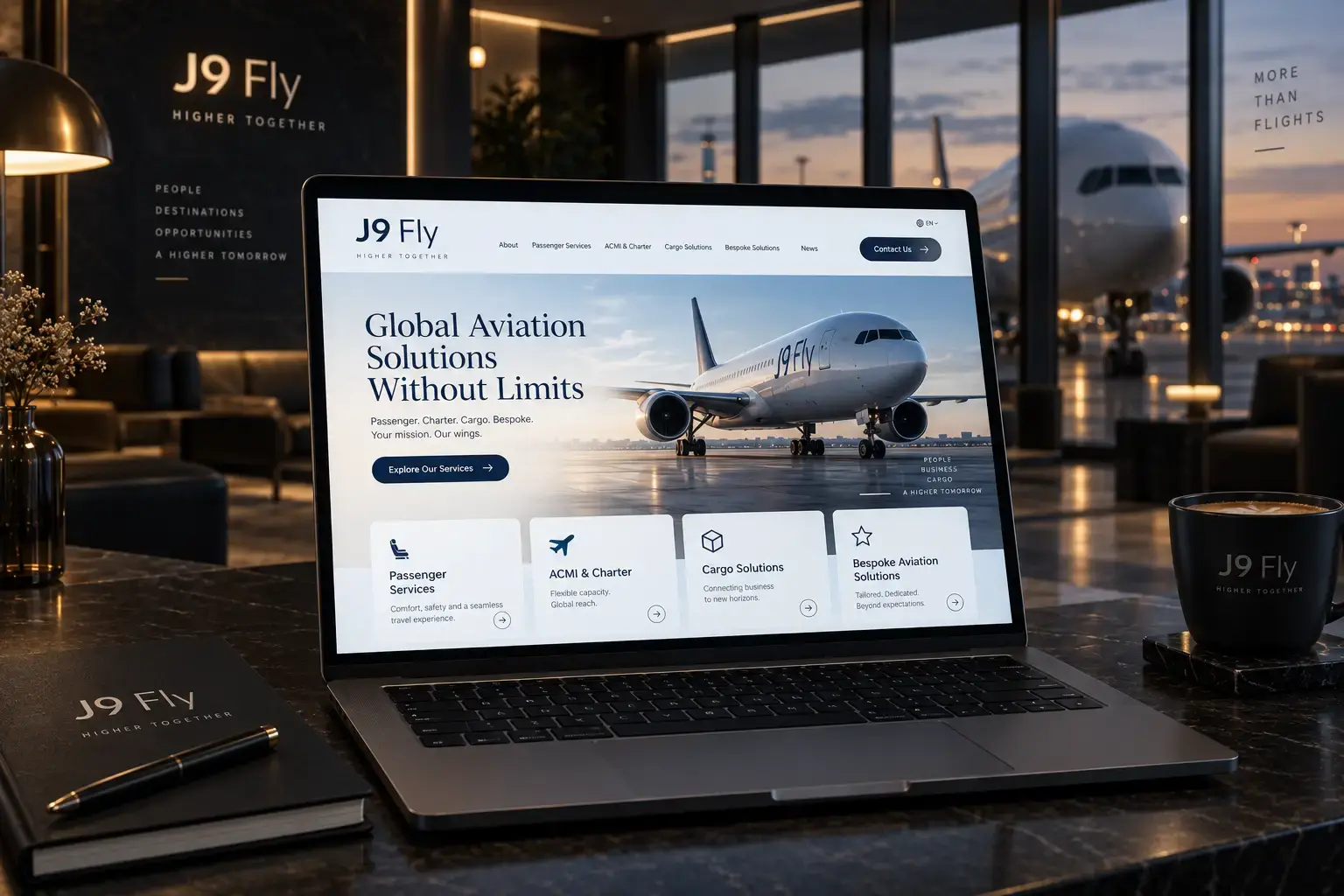
Aviation Website Design & Development for J9 Fly

Custom aviation website design and aviation website development for J9 Fly, built with Laravel Botble, bilingual content, responsive layouts, and editable CMS sections.

Core website components

Six Priorities for Effective Flying Club Website Design

The strongest aviation club websites organize information around the decisions visitors are trying to make. These priorities help turn a collection of club information into a usable website that supports recruitment, rentals, instruction, search visibility, and member access.
Membership

A clear membership path

Prospective members should not need to contact the club just to understand the basic process. Explain membership categories when applicable, eligibility, application steps, onboarding expectations, and who to contact with questions.
  • Membership benefits
  • Eligibility guidance
  • Application process
  • Contact path
Rentals

Useful aircraft pages

Give each important aircraft or fleet category enough context to help a pilot understand what is available. Avoid listing only a tail number and a photo when users also need operational and rental context.
  • Aircraft overview
  • Equipment details
  • Rental requirements
  • Scheduling link
Operations

Fast scheduling access

Scheduling should be easy to find from desktop and mobile. If the club uses a third-party platform, link to it consistently and explain who can use it instead of attempting to recreate the entire scheduling application unnecessarily.
  • Member access
  • Mobile usability
  • Clear instructions
  • External system integration
CFIs

Visible flight instructors

Instructor content helps a club compete for local training searches and gives students a clearer way to choose whom to contact. Profiles should focus on useful qualifications and training availability rather than generic biographies.
  • Certificates and ratings
  • Training specialties
  • Aircraft experience
  • Contact options
Local search

Local SEO signals

Connect the club to the airport and market it serves through consistent location information, relevant service pages, useful internal links, Google Business Profile alignment, and content that reflects how local pilots search.
  • Airport name
  • City and region
  • Local service terms
  • Consistent contact information
Conversion

Conversion-focused actions

Different visitors need different next steps. A prospective member may want to request information, a student may want to contact a CFI, and an existing member may want the scheduler, so calls to action should match each intent.
  • Join inquiry
  • Training inquiry
  • Rental information
  • Member scheduling
Website checklist

What to Review Before Launching a Flying Club Website

A new design should be reviewed as an operational tool, a marketing asset, and a search engine resource. The following checks help identify gaps that can affect member recruitment, usability, organic search visibility, and the ability of AI systems to understand the club.
Structure

Separate public and member tasks

Keep recruitment and search-focused information public while providing obvious shortcuts for existing members. Important operational links should be easy to reach without dominating every public page.
  • Membership information is public
  • Scheduler is easy to find
  • Member resources are clearly labeled
  • Navigation works on mobile
Fleet

Make aircraft information specific

Aircraft pages should answer the practical questions a qualified renter or prospective member may have. Keep details current and provide a responsible path for information that changes frequently.
  • Fleet pages are organized
  • Aircraft details are readable
  • Checkout expectations are explained
  • Availability claims are not hard-coded when they change frequently
SEO

Build pages around real search intent

Avoid forcing membership, rentals, instruction, discovery flights, and club history into one page when separate search intents exist. Dedicated pages can provide clearer answers and stronger internal linking.
  • Primary services have focused pages
  • Titles describe page intent
  • Internal links connect related topics
  • Duplicate pages are avoided
Local

Confirm airport and location signals

The website should clearly identify where the club operates and how users can reach it. Location information should remain consistent with the club's Google Business Profile and other authoritative listings.
  • Airport is named correctly
  • Address details are consistent
  • Service area is described naturally
  • Contact information is current
Technical

Check technical SEO and performance

Search visibility depends on more than copy. Verify indexing controls, canonical URLs, sitemap coverage, mobile rendering, page performance, structured data where appropriate, and clean internal linking before launch.
  • Pages are indexable
  • Canonical URLs are correct
  • Sitemap contains intended pages
  • Mobile pages load and function correctly
Conversion

Test every important action

Submit inquiry forms, open contact links, test scheduling destinations, and review the experience from a phone. A polished design still loses inquiries when forms, buttons, or external scheduling links fail.
  • Membership form is tested
  • CFI contact path works
  • Scheduler opens correctly
  • Calls to action match user intent
Development process

How to Plan an Aircraft Rental Club Website

A practical development process begins with club operations and user intent rather than visual design alone. The goal is to understand what prospective members search for, what current members need repeatedly, and which existing systems should remain connected to the website.
01 Step
Discovery

Map the audiences

List the main visitor groups, such as prospective members, current members, renter pilots, student pilots, CFIs, aircraft owners, and people searching for aviation activities in the area. Identify the next action each group should take.
Strategy
02 Step
SEO

Research search demand

Review the language people use for flying clubs, aircraft rental, flight instruction, airport-based services, and nearby aviation searches. Use this research to decide which topics need dedicated pages instead of guessing from internal club terminology.
Search intent
03 Step
UX

Design the site architecture

Create a navigation structure that separates membership, fleet, instruction, about information, member resources, and contact options. Important pages should be reachable through clear links instead of relying only on search or a homepage menu dropdown.
Architecture
04 Step
Build

Develop and integrate systems

Build responsive pages, forms, tracking, and required integrations while preserving reliable external systems when appropriate. Scheduling, member management, payment, or document platforms can often remain specialized tools connected through a better website experience.
Development
05 Step
SEO and CRO

Optimize for search and conversion

Refine titles, headings, copy, internal links, local signals, structured data, form flows, and calls to action. Configure analytics and conversion measurement so the club can understand which pages and channels generate meaningful inquiries.
Optimization
06 Step
Quality control

Test and maintain

Check forms, mobile navigation, scheduling links, indexability, performance, and page accuracy before launch. After publication, update aircraft, instructors, membership information, and operational details as the club changes.
Ongoing
Problems and improvements

Common Flying Club Website Problems and Better Alternatives

Many club websites contain valuable information but make users work too hard to find it. These comparisons show how small structural and content decisions can improve usability, search visibility, and conversion without changing the club's underlying operation.

Better approach

Dedicated membership information
Give prospective members a focused page that explains the club, application path, responsibilities, and contact options in a logical order.
Detailed fleet presentation
Organize aircraft information so pilots can understand what the club operates, what each aircraft is suited for, and where qualified members go next.
Persistent scheduler access
Provide a clear member scheduling link in a predictable location, especially on mobile, instead of burying it in unrelated content.
Searchable CFI profiles
Create useful instructor information that helps prospective students understand ratings, training specialties, and how to make contact.
Airport-specific local signals
Use the real airport, city, and relevant nearby areas naturally across the website and align those details with local business profiles.
Measured conversion paths
Track meaningful actions such as membership inquiries, training inquiries, contact form submissions, and other important website conversions.

Common mistake

Membership details hidden in PDFs
Search engines and mobile users may have difficulty discovering essential information when the website relies on downloadable documents for basic explanations.
A fleet page with only photos
Pictures help, but users also need readable aircraft context, rental requirements, and a clear next step.
Scheduler link buried in menus
Current members repeatedly use the scheduler, so making them hunt for the same link creates unnecessary friction.
Instructor names without context
A simple name list does little for students comparing training options and provides limited search context for CFI-related queries.
Generic location wording
Saying only that the club serves the local area gives search engines and users less geographic information than naming the actual airport and relevant market.
No conversion measurement
Without analytics and conversion tracking, the club may know that people visit the website but not which pages, services, or marketing channels generate inquiries.
Practical website scenarios

How Different Visitors Should Use the Website

Good aero club website design becomes easier to evaluate when the website is viewed through real user journeys. Each visitor should be able to recognize the relevant path quickly and reach an appropriate next step without understanding the club's internal organization.
1
A prospective member compares local clubs The visitor should be able to learn what the club offers, where it is based, what aircraft access looks like, how membership works, and how to ask questions before applying. Membership benefits and requirements should not be scattered across unrelated pages.
2
A renter searches for aircraft access The website should connect aircraft rental searches with useful fleet information and membership or checkout requirements. If rental is restricted to members, say that clearly so the visitor understands the relationship between joining and scheduling an aircraft.
3
A student searches for a flight instructor The visitor should find training information, instructor profiles, aircraft context, and a direct inquiry path. CFI website design becomes especially useful when instructors have different ratings, specialties, or availability.
4
An existing member needs the scheduler The scheduler should be available through a consistent navigation item or member access area. The website should not require an existing member to move through marketing content every time a routine operational task is needed.
5
A local pilot searches by airport The relevant landing page should clearly establish the airport, city, services, and relationship to the flying club. Useful local context can make the result more relevant than a generic page that mentions only the organization name.
6
A visitor arrives from Google Ads Paid traffic should land on a page that matches the ad intent, whether that is membership, flight instruction, aircraft rental information, or another specific offer. Strong message alignment can reduce confusion and improve the chance of a qualified inquiry.
Website help options

Which Web Fly Service Fits Your Flying Club Website?

The right next step depends on whether the club needs a new website, stronger search visibility, or technical improvements to an existing site. Web Fly can review the current setup and recommend a project scope based on website condition, search goals, integrations, and operational requirements.
Option
Timeline
Estimate
Action
Custom website development
Best for a new flying club website, a major redesign, improved fleet and membership structure, or integration with existing scheduling and member systems.
Based on scope
Custom quote
Organic SEO services
Best when the website is functional but needs stronger visibility for membership, aircraft rental, flight instruction, airport searches, and related aviation topics.
Ongoing or project-based
After review
Technical SEO
Best for indexing issues, site architecture problems, page speed, redirects, canonical errors, structured data, sitemap problems, or migration planning.
Based on website condition
Project-based estimate
Search and AI Visibility

How to Make Flying Club Information Easier for Search Engines and AI Systems to Understand

AI Visibility starts with the same fundamentals that make a website useful to people: specific entities, direct answers, consistent facts, clear page topics, and accessible supporting information. Google, ChatGPT, Gemini, Perplexity, and other systems are more likely to understand a flying club when the website explains its services and relationships explicitly instead of relying on vague marketing language.

Define the organization clearly

State that the organization is a flying club and explain what it provides, such as member aircraft access, rentals for qualified members, flight instruction, aviation community activities, or other actual services. Avoid assuming that every visitor already understands the club model.

Connect services to the location

Mention the real airport, city, region, and relevant service area on appropriate pages. This helps systems associate the club with local aircraft rental, instruction, and aviation searches without creating thin city pages.

Use dedicated topic pages

Separate important subjects such as membership, fleet, flight instruction, and contact information when they have distinct search intent. Clear topic boundaries make pages easier to crawl, summarize, cite, and retrieve.

Answer practical questions directly

Explain who can rent, how scheduling works, whether instruction is available, what prospective members should do first, and where operational information is located. Direct answers are more useful for traditional search, AI answers, and voice queries.

Strengthen entity signals

Keep the club name, airport, contact information, instructor identities, and other factual details consistent across the website and relevant external profiles. Appropriate structured data can reinforce these relationships when it accurately reflects visible page content.

Maintain technically accessible pages

Important information should be crawlable, indexable, mobile-friendly, internally linked, and not hidden entirely behind scripts, member logins, or downloadable documents. Search Console can then be used to monitor indexing and identify technical problems.
Frequently asked questions

Flying Club Website Design FAQ

These questions cover common planning, SEO, membership, scheduling, and development considerations for flying clubs and aircraft rental organizations.
What should a flying club website include?
A flying club website should include clear membership information, fleet details, aircraft rental requirements, scheduling access, instructor information, location details, contact options, and answers to common questions. The exact structure depends on how the club operates and which services are available to members, students, and the public.
Should aircraft scheduling be built into the website?
Not necessarily. If the club already uses a reliable aviation scheduling or member-management platform, the website can provide clear, secure access to that system instead of rebuilding it. A custom integration may make sense when there is a specific operational requirement that the existing platform cannot handle.
How can a flying club website improve local SEO?
The website should clearly identify the airport, city, service area, aircraft rental options, flight instruction, and other services people search for locally. Strong page structure, internal links, consistent business information, a well-maintained Google Business Profile, and technically indexable content can support local search visibility.
Do individual CFIs need their own pages?
Dedicated instructor profiles can be useful when CFIs have different ratings, specialties, aircraft experience, or training roles. Profiles help prospective students understand who is available and can also provide stronger context for local flight instruction searches. The information should remain accurate and be removed or updated when instructor availability changes.
How long does flying club website design take?
The timeline depends on the number of pages, content readiness, integrations, scheduling requirements, migration work, and review process. A focused informational site is different from a project that includes custom member features, extensive fleet content, SEO migration, analytics, and third-party integrations. The development schedule should be confirmed after the scope is reviewed.
Can a flying club website support Google Ads and organic SEO at the same time?
Yes. The same website can support organic search and paid campaigns when landing pages match visitor intent and conversion tracking is configured correctly. Membership, flight instruction, aircraft rental, or other offers may require separate landing experiences so advertising traffic reaches information that directly matches the campaign.
Build a Flying Club Website Around Real Member and Pilot Needs
What to do next

Build a Flying Club Website Around Real Member and Pilot Needs

If your current website makes it difficult to understand membership, compare aircraft, find instructors, reach the scheduler, or discover the club through local search, the problem may be the website structure rather than the amount of information you already have. Web Fly can review your existing site or plan a custom flying club website design focused on clear architecture, technical SEO, local search visibility, conversion paths, and practical integrations.

Contact Web Fly

Website strategy

Plan membership, fleet, CFI, scheduling, and contact journeys around the tasks visitors actually need to complete.

SEO and local visibility

Build pages that clearly connect the club with its airport, location, services, and relevant search intent.

Technical and conversion review

Check indexing, performance, analytics, forms, mobile usability, internal links, and conversion tracking before and after launch.