Howdy!

Aerospace Web Design for Manufacturers, Suppliers, and B2B Aviation Companies

Sergiy Kravchuk

Sergiy Kravchuk

Sep 13, 2026
Share this article
Aerospace Web Design for Manufacturers, Suppliers, and B2B Aviation Companies
Website strategy for technical B2B companies

Aerospace Web Design That Supports Complex B2B Sales

Aerospace web design is the planning, design, development, and search optimization of websites for aerospace manufacturers, aviation suppliers, engineering companies, component businesses, and other technical B2B organizations. A strong site should help a buyer quickly understand what you make, which capabilities you offer, which markets you serve, how to evaluate your company, and what to do next. The website also needs a technical structure that search engines and AI systems can interpret clearly.
Capabilities Organize manufacturing, engineering, supply, and service capabilities around real buyer intent.
Technical SEO Build crawlable pages, clean internal links, useful metadata, and structured information.
B2B Conversion Create clear paths for RFQs, consultations, technical questions, and sales inquiries.
AI Visibility Make company expertise, services, entities, and relationships easier for AI systems to understand.
Aerospace Web Design That Supports Complex B2B Sales
Quick answer

What Makes an Aerospace Website Effective?

An effective aerospace website combines technical clarity with a simple business journey. It should explain capabilities in language that engineers, procurement teams, executives, partners, and search engines can understand while making important evidence and contact paths easy to find.
01

Explain capabilities clearly

Separate major capabilities, products, services, processes, and markets into understandable pages instead of placing everything on one generic company page.
02

Support buyer validation

Present relevant certifications, quality information, facilities, materials, technologies, documentation, and company details when they are applicable and approved for public use.
03

Create useful search pages

Build pages around the specific problems, capabilities, components, services, and industries buyers actually search for rather than relying only on broad corporate terminology.
04

Make the next step obvious

Give qualified visitors a direct route to request a quote, send specifications, ask a technical question, contact sales, or discuss a project.
Website strategy before visual design

What Aerospace Web Design Needs to Accomplish

A polished layout is only one part of aerospace website design. The larger job is to convert a complex organization into an information structure that reflects how customers evaluate suppliers, manufacturers, engineering partners, and aviation service companies. Buyers may arrive through a branded search, a capability query, a part or process question, a referral, an industry directory, an ad, or an AI-generated answer. Each path should lead to specific information instead of forcing the visitor to decode a generic corporate website.
Explore Custom Website Development
Public website content should be reviewed internally when it involves sensitive technical data, customer restrictions, export-controlled information, confidential drawings, or other material that should not be published openly.
What Aerospace Web Design Needs to Accomplish

Translate technical expertise into buyer language

Internal terminology is not always the terminology prospects use. A website should connect engineering and manufacturing language with the practical questions buyers ask about capabilities, applications, materials, processes, capacity, markets, and project fit.

Separate capabilities into focused pages

Individual pages for meaningful services and capabilities give visitors faster answers and give search engines clearer context. They also create better destinations for outreach campaigns, industry links, Google Ads, and targeted sales conversations.

Show evidence without creating clutter

Quality systems, certifications, equipment, processes, documentation, facility information, and industry experience can support credibility when relevant. The design should present this evidence where it helps a decision rather than burying it inside decorative sections.

Build for more than one decision-maker

A technical evaluator may care about process fit, while procurement may focus on supplier qualification and an executive may need to understand business reliability. Good information architecture allows different visitors to reach the details they need.

Connect SEO with conversion paths

Traffic has limited value when visitors cannot identify the next step. Capability pages, technical articles, landing pages, RFQ actions, and contact paths should work together as one acquisition system.

Plan for future expansion

Aerospace website development should make it practical to add capabilities, industries, locations, resources, case studies, technical content, and new search opportunities without redesigning the entire site each time.
Selected work Selected work

Selected Web Fly Projects

Featured case

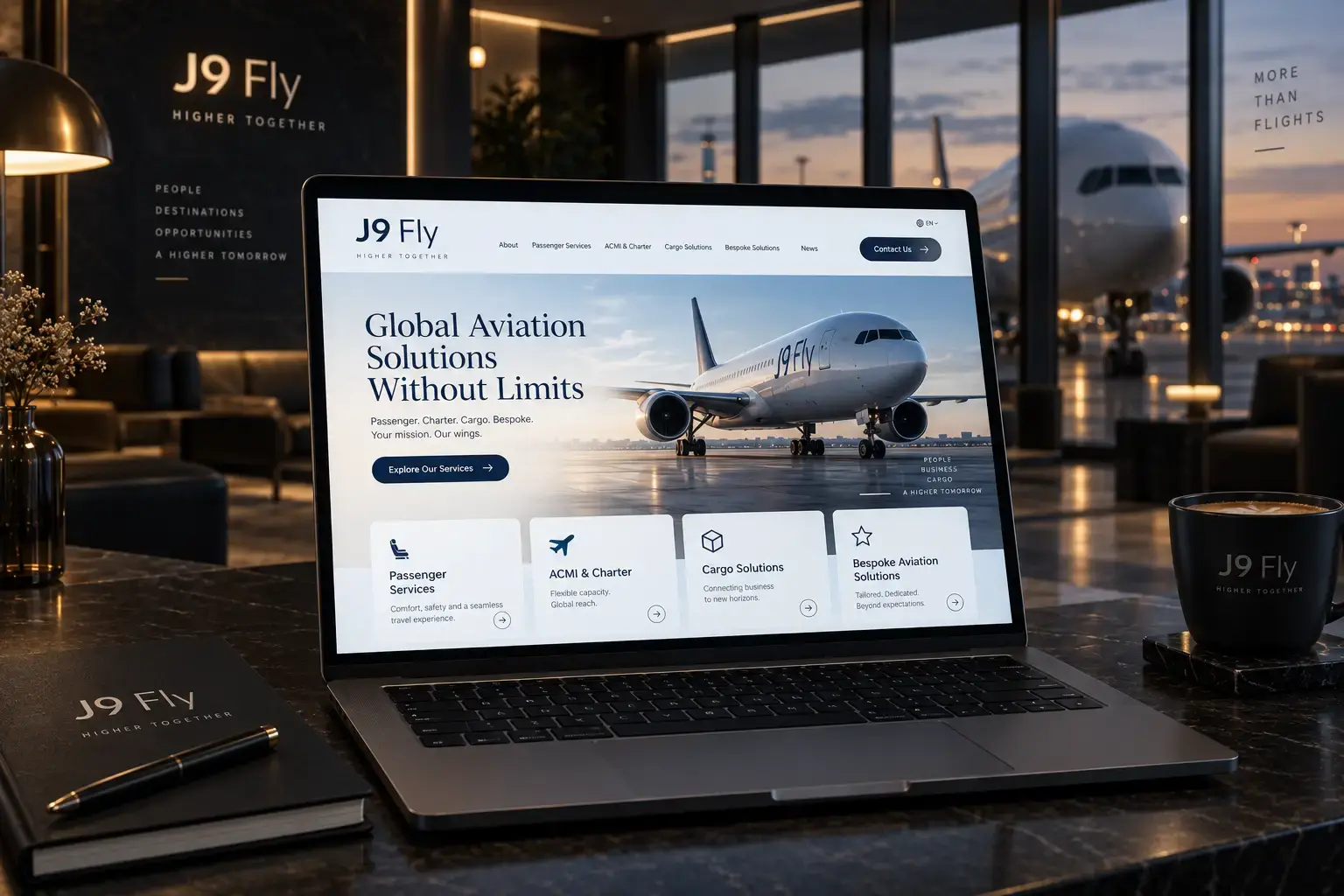
Aviation Website Design & Development for J9 Fly

Custom aviation website design and aviation website development for J9 Fly, built with Laravel Botble, bilingual content, responsive layouts, and editable CMS sections.

Core planning priorities

Aerospace Web Design Priorities for B2B Buyers

The strongest aerospace websites reduce uncertainty. They organize technical information so a qualified prospect can understand the company, validate relevant capabilities, and move toward a business conversation without unnecessary friction.
Structure

Capability architecture

Create a logical hierarchy for products, manufacturing processes, engineering services, aviation services, markets, and other important offerings.
  • Use one clear purpose per major page
  • Connect related capabilities with internal links
  • Avoid a single catch-all services page
Trust

Technical credibility

Support claims with approved details that help prospects understand how the company operates and where its expertise applies.
  • Relevant certifications and quality information
  • Materials, processes, equipment, or technologies
  • Facility and company information where useful
SEO

Search intent coverage

Map important capabilities to the terms and questions potential customers use in Google and other discovery systems.
  • Commercial capability queries
  • Technical informational queries
  • Industry and application searches
Conversion

RFQ experience

Make it easy for serious prospects to start a conversation without forcing every visitor into the same generic form.
  • Request a quote path
  • Technical inquiry path
  • Visible sales and contact options
Development

Fast technical performance

A clean website should work reliably across mobile and desktop devices, load efficiently, and avoid unnecessary design elements that interfere with usability.
  • Responsive layouts
  • Optimized media
  • Stable navigation and forms
Growth

Measurement and improvement

Analytics should help the business understand which pages attract useful visitors and which interactions contribute to inquiries.
  • GA4 and conversion events where appropriate
  • Google Search Console visibility
  • Lead and landing page review
Website planning checklist

What an Aerospace Website Should Cover

The exact content depends on the company, but these areas provide a useful framework for reviewing an existing site or planning a new aerospace website development project.
Company

Clear positioning and markets

A visitor should quickly understand what the company does, who it serves, and where its strongest capabilities fit.
  • Concise company positioning
  • Primary customer and industry segments
  • Relevant geographic or service coverage
Capabilities

Dedicated capability and service pages

Important revenue-generating offerings deserve enough detail to answer buyer questions and support organic search visibility.
  • Capability overview
  • Individual high-value service pages
  • Related applications or industries
  • Logical internal linking
Evidence

Qualification information

Include public information that helps a prospect evaluate supplier or partner fit, but avoid publishing restricted or confidential technical material.
  • Applicable certifications
  • Quality and process information
  • Equipment or technology when relevant
  • Approved downloadable resources
SEO

Search-friendly technical content

Pages should use descriptive titles, headings, copy, image alt text, internal links, and structured information instead of relying on images or vague slogans.
  • Unique page titles and descriptions
  • Search-focused headings
  • Useful supporting content
  • Crawlable text and navigation
Leads

Conversion routes for qualified prospects

Different visitors may be ready for different actions. Provide practical paths that support the actual sales process.
  • RFQ or project inquiry
  • General contact form
  • Phone or direct messaging when appropriate
  • Relevant calls to action on capability pages
Technical

Reliable website foundation

Technical SEO and development should help search engines access important pages and help users move through the website without errors.
  • HTTPS and clean URLs
  • Indexable priority pages
  • Canonical and sitemap review
  • Mobile usability
  • Performance and form testing
From planning to launch

A Practical Aerospace Website Development Process

A disciplined process keeps visual design, technical requirements, SEO, and lead generation aligned. The exact sequence can change with project scope, but each stage should resolve a specific business or technical question before launch.
01 Step
Research

Discovery and website audit

Review the current site, business priorities, target customers, major capabilities, technical constraints, competitors, search visibility, analytics, and current lead paths. The goal is to identify what should be kept, improved, reorganized, or removed.
Based on scope
02 Step
SEO

Keyword and buyer-intent mapping

Connect important capabilities with commercial searches, technical questions, industry terminology, and decision-stage needs. This helps determine which subjects require their own pages and which belong inside broader sections.
After review
03 Step
Structure

Information architecture

Plan navigation, capability groups, industry pages, resources, supporting content, RFQ paths, and internal links. URL decisions should be made before development whenever possible, especially during a redesign or migration.
Project-based estimate
04 Step
UX and content

Design and content development

Create layouts that support technical reading, credibility, and conversion while developing content around buyer questions instead of generic marketing language. Important information should remain readable without depending on visual effects.
Based on scope
05 Step
Implementation

Development and technical SEO

Build responsive templates, forms, metadata controls, indexation rules, internal links, analytics integrations, redirects when needed, and other technical foundations. Test critical pages before launch.
Custom quote
06 Step
Optimization

Launch, measurement, and iteration

Verify priority URLs, forms, analytics, Google Search Console, redirects, metadata, canonical signals, and crawlability. After launch, use real search and lead data to identify pages that should be expanded or improved.
Ongoing or project-based
Problem and solution

Common Aerospace Website Mistakes and Better Alternatives

Many aerospace and industrial websites contain substantial expertise but present it in ways that are difficult for buyers and search engines to interpret. The solution is usually better structure and clearer evidence, not more decorative content.

Common problems

Generic services page
Multiple unrelated capabilities are compressed into a few paragraphs, making it difficult to understand the company's specialization or rank for specific searches.
Visual design before content strategy
The site is designed around large images and animations before anyone determines what buyers need to find, compare, or verify.
Important information inside PDFs only
Useful technical information may be hidden from the main website experience, leaving visitors and search systems with limited page-level context.
Weak inquiry paths
Visitors reach a capability page but receive no clear instruction for requesting a quote, submitting specifications, or contacting the appropriate team.
Unplanned redesign migrations
Existing URLs are changed without proper mapping, redirects, internal-link updates, or search visibility checks.
Claims without context
Broad statements about quality, innovation, or experience replace useful information about actual services, capabilities, markets, and processes.

Better approach

Focused capability pages
Give strategically important capabilities clear pages with useful explanations, applications, related services, and next steps.
Strategy before interface design
Define audiences, search intent, page hierarchy, evidence, conversion actions, and technical requirements before finalizing visual layouts.
HTML content plus useful resources
Explain essential information on indexable pages and use approved PDFs or downloads as supporting resources when they add value.
Contextual calls to action
Match the next step to the page, such as requesting a quote, discussing a technical requirement, or contacting the company.
Controlled migration plan
Inventory important URLs, preserve useful content, map redirects, update internal links, and verify search signals during a redesign.
Specific, verifiable information
Use approved factual details about capabilities, processes, certifications, applications, and company expertise instead of unsupported superlatives.
Business scenarios

How Website Strategy Changes by Aerospace Business Type

There is no single aerospace website template that fits every company. The page structure should reflect how the business is evaluated, what information can be published, and which actions represent a qualified lead.
1
Aerospace manufacturer A manufacturer may need pages for core processes, materials, equipment, quality systems, applications, facilities, industries, and RFQ information. Search strategy can then connect those capabilities with the terms buyers use when sourcing suppliers.
2
Component or parts supplier A supplier website should make product groups, supported applications, sourcing information, availability processes, and inquiry routes easy to understand. Large catalogs may also require search, filtering, or structured product architecture.
3
Engineering and technical services company Service pages should explain the type of engineering work provided, relevant disciplines, project stages, industries, deliverables, and how a potential client begins a technical discussion.
4
MRO or aviation service provider The site may need to organize services by aircraft, system, maintenance capability, location, or customer type. Practical contact information and service availability can be as important as informational content.
5
Aviation technology company Technology businesses often need to explain complex products without overwhelming nontechnical decision-makers. A layered structure can provide a clear commercial summary first and deeper technical material for evaluators.
6
Distributor or specialized B2B supplier A distributor may need strong product taxonomy, manufacturer relationships, markets served, sourcing information, technical documentation, and clear routes for availability or quotation requests.
What to do next

Website Help Options for Aerospace and Technical B2B Companies

The right starting point depends on whether your current challenge is website structure, organic visibility, technical performance, or a complete rebuild. Web Fly can review the existing website before defining a larger scope.
Option
Timeline
Estimate
Action
Custom website development
For companies that need a new website, major redesign, improved information architecture, stronger conversion paths, or a more scalable technical foundation.
Based on scope
Custom quote
Technical and on-page SEO
For websites that need crawlability, indexation, metadata, internal linking, page structure, migration, or technical search improvements.
After review
Project-based estimate
Landing pages and campaign support
For companies that need focused pages for specific capabilities, markets, outreach campaigns, or Google Ads traffic.
Based on scope
After consultation
Search and answer engines

Aerospace Website Design for SEO and AI Visibility

AI systems do not replace the need for strong website fundamentals. They increase the value of clear entities, explicit relationships, useful answers, consistent business information, and pages that explain specialized capabilities in understandable language.

Define the company clearly

State what the business is, what it provides, which industries or applications it serves, and how major capabilities relate to one another. Avoid forcing systems to infer the company's purpose from slogans.

Create focused pages for important entities

Capabilities, services, products, technologies, locations, markets, and other strategically important subjects should have clear page-level context when they deserve individual treatment.

Answer technical and commercial questions

Support service pages with concise explanations of what a capability is, when it is relevant, what information a buyer needs, and how to begin an inquiry. Useful answers can support traditional search, voice search, and AI-generated responses.

Strengthen internal relationships

Internal links help users and crawlers understand how a capability connects with related industries, services, resources, and conversion pages. Link architecture should reflect real relationships instead of adding links mechanically.

Use structured data where appropriate

Valid structured data can clarify page type and selected entities, but it should match visible content and actual business information. Schema is a supporting signal, not a substitute for useful pages.

Maintain consistent evidence

Company names, services, capabilities, contact details, portfolio material, and other public information should remain accurate across the website. Clear and consistent information reduces ambiguity for both buyers and machine systems.
Frequently asked questions

Aerospace Web Design FAQ

These questions cover the most common strategic decisions involved in planning or improving a website for an aerospace manufacturer, supplier, aviation company, or technical B2B organization.
What is aerospace web design?
Aerospace web design is the strategy, design, development, and optimization of websites for aerospace, aviation, manufacturing, engineering, and related B2B companies. It combines clear technical communication with usability, SEO, credibility, and lead-generation paths. The goal is to help the right buyer understand the company and take an appropriate next step.
What should an aerospace manufacturing website include?
An aerospace manufacturing website should clearly explain the company, core capabilities, relevant processes, markets served, and ways to request information or a quote. Depending on the business, it may also include certifications, quality information, materials, equipment, facilities, applications, technical resources, and industry pages. Only information approved for public release should be published.
How is aerospace website design different from a general B2B website?
Aerospace website design usually requires more careful organization of technical capabilities, qualification information, buyer roles, and complex services. Visitors may include engineers, procurement professionals, executives, partners, and other specialists who need different levels of detail. The website therefore has to balance technical depth with a clear commercial journey.
Do aerospace suppliers need SEO if most business comes from referrals?
SEO can still be valuable because referred prospects often research a supplier before making contact, and new buyers may search directly for specific capabilities or solutions. Search visibility also creates another discovery channel beyond existing relationships. The right investment depends on the company's market, sales process, competition, and website condition.
How long does aerospace website development take?
The timeline depends on website size, content readiness, approval processes, integrations, technical requirements, and whether the project includes SEO or migration work. A focused website can move faster than a large site with many capabilities, product groups, resources, or stakeholder reviews. The schedule should be defined after the scope and content requirements are reviewed.
Can Web Fly improve an existing aerospace website without rebuilding everything?
Yes, when the existing platform and structure are suitable, improvements can often be made without a complete rebuild. Work may include information architecture, capability pages, technical SEO, on-page SEO, internal linking, landing pages, conversion paths, and performance improvements. A review of the current site is the best way to determine whether targeted changes or a rebuild makes more sense.
Build an Aerospace Website Around Buyers, Search, and Qualified Leads
Plan the next website step

Build an Aerospace Website Around Buyers, Search, and Qualified Leads

If your aerospace, aviation, manufacturing, or technical B2B website does not clearly communicate capabilities, Web Fly can review the structure, content, technical SEO, and conversion paths before recommending the next step. Use Viber, Telegram, or WhatsApp below, visit /contact for the contact form, or review /services/custom-website-development for website development options.

Contact Web Fly

Website strategy

Review positioning, capability architecture, navigation, content priorities, and buyer paths before investing in visual changes.

SEO and technical review

Evaluate search visibility, crawlability, page structure, metadata, internal linking, indexation, and migration risks where relevant.

Conversion planning

Connect capability pages and marketing traffic with practical RFQ, consultation, contact, and technical inquiry actions.