


Howdy!

Helicopter Flight School Website Design: Pages That Turn Prospects Into Student Pilots

Sergiy Kravchuk

Sergiy Kravchuk

Sep 08, 2026
Share this article
Helicopter Flight School Website Design: Pages That Turn Prospects Into Student Pilots
Flight School Website Strategy

Helicopter Flight School Website Design That Moves Prospects Toward Enrollment

Helicopter flight school website design should explain training options, build trust, answer enrollment questions, and give prospects a clear next step. For US flight schools, the site should connect program information, local search visibility, mobile usability, and conversion-focused calls to action.
Program clarity Organize training paths so prospects can quickly find the program that matches their goal.
Lead paths Create clear next steps for calls, inquiries, visits, and admissions conversations.
Search readiness Build crawlable program and location content around real prospect questions.
Mobile usability Keep key details and contact actions easy to use on phones.
Helicopter Flight School Website Design That Moves Prospects Toward Enrollment
Quick answer

What Should a Helicopter Flight School Website Do?

It should turn an uncertain visitor into an informed prospect by explaining programs, location, trust factors, and the next contact step.
01

Answer first questions

State the school location, training focus, program choices, and next admissions step in plain language.
02

Create program paths

Use focused pages for distinct training programs when the audience, questions, or conversion path differs.
03

Build trust before the form

Show accurate information about the school, instructors, aircraft, training environment, and process.
04

Make the next step obvious

Use consistent calls to action for requesting information, speaking with the school, or scheduling a visit.
Main explanation

Why Helicopter Training Website Design Is Different From a Generic School Site

Prospects compare training paths, location, aircraft, instructors, scheduling, cost expectations, and the steps required to begin. Strong helicopter training website design gives each major question a logical home and connects useful information to a clear next action.
Explore Custom Website Development
Build the structure around real prospect questions, actual programs, and information the school can keep accurate.
Why Helicopter Training Website Design Is Different From a Generic School Site

Separate intent by program

Different training goals create different questions. Dedicated pages help each audience find the right explanation and call to action.

Use location as context

Explain where training happens, how prospects can visit, and any location-specific details the school can verify.

Show the training environment

Use accurate instructor, aircraft, facility, and process information.

Connect content to conversion

Every major page should answer a question and offer a sensible next step.

Design for search and ads

Program pages and landing pages should match organic and Google Ads intent.

Plan for updates

A manageable CMS helps keep staff, aircraft, schedule, and policy details current.
Selected work Selected work

Selected Web Fly Projects

Featured case

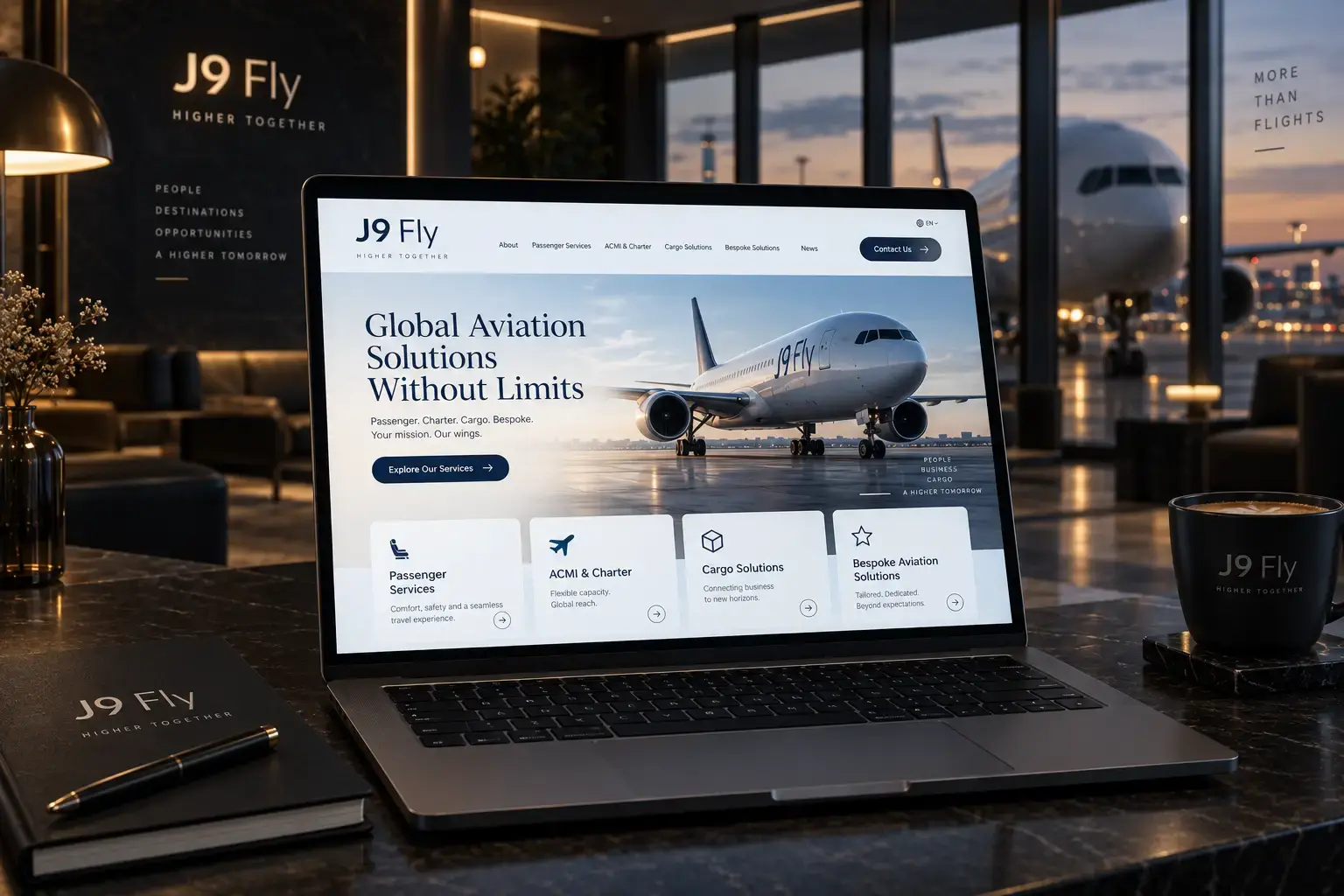
Aviation Website Design & Development for J9 Fly

Custom aviation website design and aviation website development for J9 Fly, built with Laravel Botble, bilingual content, responsive layouts, and editable CMS sections.

Key pages

Pages a Helicopter Pilot School Website Should Prioritize

These pages usually carry the most decision-making value and create clearer search intent than one overloaded homepage.
Foundation

Homepage with clear positioning

Explain what the school does, who it serves, where it operates, and the main training paths.
  • Training focus
  • Location
  • Program entry points
  • Contact action
Search intent

Training program pages

Create focused pages for programs with distinct goals, audiences, questions, or requirements.
  • Program overview
  • Who it is for
  • Training process
  • Next-step CTA
Trust

Aircraft and fleet page

Explain how current aircraft fit the training experience and use original media where possible.
  • Current aircraft
  • Training role
  • Original media
  • Accurate details
Confidence

Instructor and school pages

Present instructor bios, school background, training philosophy, and verifiable credentials.
  • Instructor profiles
  • School background
  • Training philosophy
  • Verified credentials
Qualification

Cost and planning guidance

If totals vary, explain the factors that affect cost, what may be included, and how the school prepares an estimate.
  • Cost factors
  • Estimate process
  • Included items
  • Planning questions
Conversion

Contact and visit page

Support different decision stages with phone, message, inquiry, and visit options that are easy to use on mobile.
  • Phone and messaging
  • Inquiry form
  • Visit information
  • Conversion tracking
Website checklist

Helicopter Flight School Website Design and SEO Checklist

Use this checklist to connect user experience with technical SEO, local visibility, paid traffic readiness, and lead measurement.
Content

Map search intent to pages

Map real prospect questions to dedicated pages or broader sections based on intent.
  • Program intent
  • Location intent
  • Cost questions
  • Admissions questions
Local SEO

Clarify the training location

Use consistent business details and distinct, useful context for each legitimate training location.
  • Accurate contact details
  • Training base context
  • Visit information
  • Consistent local signals
Technical SEO

Keep important content crawlable

Review internal links, metadata, canonicals, sitemap coverage, indexation controls, and appropriate structured data.
  • Indexable program pages
  • Internal linking
  • Canonical review
  • Sitemap and robots checks
Performance

Design for mobile conditions

Optimize media, keep text readable, and make form or phone actions easy to use.
  • Efficient media
  • Readable typography
  • Stable layouts
  • Accessible contact actions
Conversion

Track meaningful lead actions

Measure actions that indicate real interest, not generic page views.
  • Form completion
  • Phone clicks
  • Campaign landing pages
  • Lead-source context
Trust

Review accuracy before publishing

Confirm key school details and assign ownership for future updates.
  • Program details
  • Instructor information
  • Fleet content
  • Contact review
Development process

How Web Fly Approaches a Rotorcraft Training Website

Start with the enrollment journey and build a structure that supports SEO, Google Ads, admissions, and future content.
01 Step
Strategy

Discovery and goals

Review programs, locations, audience, lead sources, existing analytics, and website problems.
02 Step
SEO

Search intent and sitemap

Group prospect questions by intent and map them to a practical page structure with useful internal links.
03 Step
UX

Content and conversion architecture

Plan headings, answer-first sections, proof, calls to action, forms, and trust elements before visual polish.
04 Step
Build

Design and development

Build responsive templates around the approved information architecture, with accessibility, performance, and CMS usability in mind.
05 Step
Technical

Technical SEO and measurement

Review indexation, metadata, canonicals, structured data, sitemap behavior, analytics, and conversion tracking.
06 Step
QA

Launch and validation

Test forms, links, mobile layouts, tracking, redirects when needed, and key landing pages before and after launch.
Common mistakes

What Helps Prospects Decide and What Creates Friction

Reduce uncertainty with clear, accurate information, credible proof, and measurable next steps.

Build for decision-making

Specific program pages
Give each meaningful training path enough context to answer its main questions.
Clear location context
Show where training happens and how a visit or consultation works.
Current proof
Use school information staff can verify and maintain.
Visible next steps
Repeat useful calls to action at natural decision points.
Search-focused structure
Give each page a clear purpose and connect related topics internally.
Lead-focused measurement
Track real lead actions so SEO and campaign decisions have better context.

Avoid unnecessary friction

One page for every program
Do not combine unrelated training intents on one page.
Vague aviation language
Explain program differences and next steps without insider language.
Stock-photo-only trust
Do not let generic imagery replace real school information.
Hidden cost context
Explain cost variables and how estimates are prepared.
Slow mobile pages
Avoid heavy media and unstable mobile layouts.
Unverified claims
Publish only claims the school can substantiate.
Prospect scenarios

How Different Prospects Use a Helicopter Training Website

Support different prospect paths without creating thin duplicate pages.
1
First-time aviation student Use accessible language, explain the training goal, answer planning questions, and make it easy to ask for guidance.
2
Career-change prospect Help this visitor compare training paths, schedule, location, cost factors, and the next admissions conversation.
3
Fixed-wing pilot exploring rotorcraft Provide program-specific context without assuming the visitor's eligibility or individual training requirements.
4
Local prospect Make the training base, visit process, local program availability, and contact path easy to confirm.
5
Out-of-area student Explain verified location, scheduling, and planning context without implying travel or housing arrangements the school does not provide.
6
Google Ads visitor Send paid traffic to a page that matches the ad message, explains the relevant offer, and tracks the intended lead action.
Website help options

Choose the Right Next Step for Your Flight School Website

Choose a new site, SEO work, or a campaign page based on the current website and business goals.
Option
Timeline
Estimate
Action
Custom flight school website
For schools needing new architecture, responsive design, CMS development, conversion paths, and an SEO-ready foundation.
Based on scope
Custom quote
SEO and technical optimization
For existing sites that need stronger crawlability, indexation, internal linking, performance, or content structure.
After review
Project-based estimate
Campaign landing pages
For Google Ads or program campaigns that need focused messaging, lead tracking, and fewer distractions.
Based on scope
Custom quote
AI Visibility

Make the School Easier for Search Engines and AI Systems to Understand

No format guarantees inclusion in an AI answer, but clear and accurate content can reduce ambiguity for users and search systems.

State the entity clearly

Use consistent school naming, location, contact details, and service descriptions so users and systems understand who operates the site.

Use answer-first sections

Place concise answers near question-based headings, then add the context a serious prospect needs.

Structure program information

Use a consistent pattern for purpose, audience, process, planning factors, FAQs, and next steps.

Support claims with details

Publish credentials, aircraft information, policies, and school facts only when they can be verified.

Connect related topics

Link programs to instructors, fleet, cost guidance, location details, FAQs, and contact paths where relevant.

Align technical signals

Use descriptive titles, clean canonicals, indexable content, truthful structured data, and a current sitemap.
Frequently asked questions

Helicopter Flight School Website Design FAQ

Common questions about flight school websites, SEO, and paid campaigns.
What pages should a helicopter flight school website include?
A useful site usually needs a clear homepage, training program pages, school and instructor information, fleet context, location details, planning guidance, FAQs, and a contact path. The exact sitemap should reflect the school's real programs and distinct prospect search intent.
How much does a helicopter pilot school website cost?
The cost depends on the sitemap, custom design, content, CMS requirements, integrations, SEO, tracking, and migration needs. Web Fly provides a custom quote after reviewing the school's goals and technical requirements.
How long does it take to design and develop a rotorcraft training website?
The timeline depends on scope, content readiness, approvals, integrations, migration needs, and the number of unique pages. The schedule should be confirmed after discovery because a focused site differs from a content-heavy rebuild.
Can a better flight school website generate more student leads?
A better site can improve lead-generation conditions by clarifying programs, reducing friction, strengthening calls to action, and supporting SEO or Google Ads traffic. It cannot guarantee lead volume because demand, competition, location, media spend, and follow-up also matter.
Do I need a separate page for every helicopter training program?
Separate pages usually make sense when programs serve different goals, audiences, questions, or search intent. Use dedicated pages for real differences, but avoid thin near-duplicates created only for keyword variations.
How should SEO and Google Ads work with a helicopter training website?
SEO should build durable program, location, informational, and brand visibility, while Google Ads can capture selected high-intent searches with focused landing pages. Both work better when pages match the query, load well on mobile, track meaningful conversions, and share the same message architecture.
Plan a Flight School Website Around Real Prospect Decisions
What to do next

Plan a Flight School Website Around Real Prospect Decisions

If the current site makes programs difficult to compare or hides important trust information, start with structure before visual redesign. Web Fly can review the site and scope website development, SEO, technical SEO, landing page, or Google Ads-ready improvements.

Contact Web Fly

Website strategy first

Define the sitemap, content priorities, conversion paths, and measurement plan before visual production.

SEO built into structure

Plan crawlable program pages, internal links, local context, metadata, and technical checks during development.

Clear path to a custom quote

Use the contact page or preferred messenger to share the current site, target market, program mix, and goals.