Howdy!

Airline Website Design for Passenger, Charter, Cargo, and ACMI Services

Sergiy Kravchuk

Sergiy Kravchuk

Sep 06, 2026
Share this article
Airline Website Design for Passenger, Charter, Cargo, and ACMI Services
Aviation website strategy

Airline Website Design for Passenger, Charter, Cargo, and ACMI Services

Airline website design should do more than show a fleet and contact details. A strong aviation website separates passenger, charter, cargo, and ACMI journeys, explains each service clearly, and gives every audience an obvious next step. It also needs responsive performance, technical SEO, conversion paths, and content search and AI systems can interpret.
Passenger Routes, travel information, booking paths, and support.
Charter Aircraft options, mission details, quotes, and direct sales contact.
Cargo Capabilities, destinations, requirements, and inquiry workflows.
ACMI Fleet context, operating capabilities, and B2B contact.
Airline Website Design for Passenger, Charter, Cargo, and ACMI Services
Quick answer

What Should an Airline Website Be Designed to Do?

An airline website should quickly show what the company offers, whether the visitor can use that service, and what comes next. A service-led structure gives passenger users routes and travel information, charter buyers aircraft and request options, cargo customers capabilities, and ACMI buyers a direct commercial path.
01

Separate service intent

Do not force travelers, charter buyers, freight customers, and airline procurement teams through the same generic journey. Give each audience a dedicated path and conversion action.
02

Make trust verifiable

Present fleet information, operating regions, company details, contact information, and service explanations consistently. Avoid claims that cannot be supported or maintained.
03

Build for search

Create crawlable pages for major services, destinations, fleet categories, and useful questions. Connect them through logical internal links.
04

Design around action

Every important page should lead to the right next step, such as booking, requesting a quote, sending a cargo inquiry, or starting an ACMI discussion.
Core structure

How Airline Website Design Should Organize Multiple Services

Airline website design becomes more complex when one company serves audiences with different goals. Passenger traffic is task-oriented, while charter, cargo, and ACMI traffic is more consultative. Keep the brand consistent but give each service its own information path, page template, conversion method, and SEO focus.
Explore Custom Development
The exact architecture should reflect the operator's real services, fleet, destinations, systems, languages, and sales process.
How Airline Website Design Should Organize Multiple Services

Passenger service pages

Prioritize destinations, booking access, baggage and travel information, check-in guidance, policies, and support. Critical tasks should remain easy to reach on mobile.

Charter service pages

Explain mission types, aircraft categories, service regions, request requirements, and the quote process. Use an inquiry form that captures useful trip details.

Cargo service pages

Show shipment capabilities, operating areas, handling context, requirements, and how to submit an inquiry. Separate major cargo products when they have distinct customer needs.

ACMI and wet lease pages

Treat ACMI as B2B content. Explain fleet and operational capabilities, commercial context, and the process for starting a discussion without publishing unsupported availability claims.

Fleet and aircraft pages

Connect aircraft to passenger capacity, charter missions, cargo capability, or ACMI use cases. A fleet section should help users make decisions, not function only as a gallery.

Destination and market pages

Publish destination pages when they answer real travel or commercial questions. Avoid thin location pages that repeat the same text with only a city or airport changed.
Selected work Selected work

Selected Web Fly Projects

Featured case

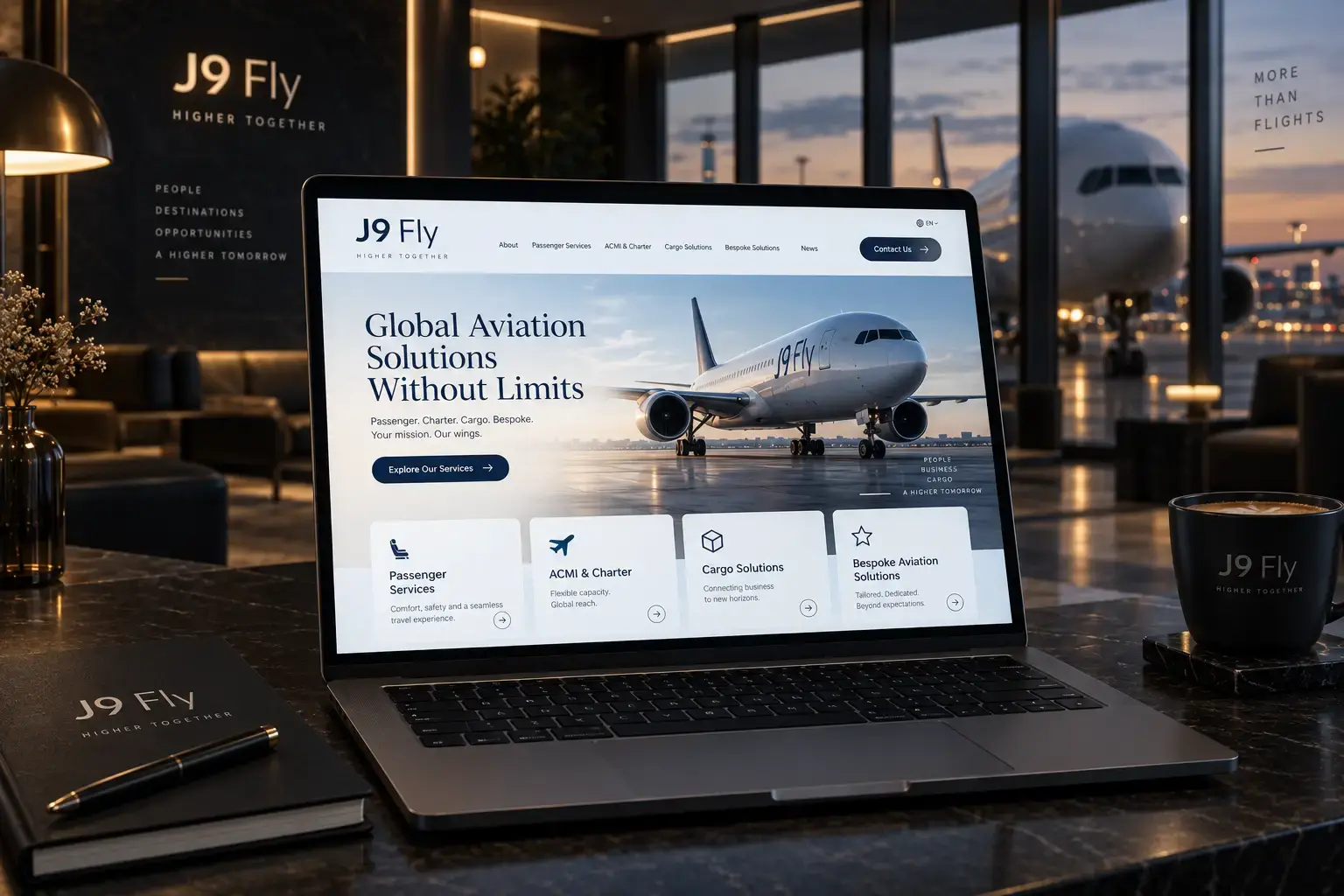
Aviation Website Design & Development for J9 Fly

Custom aviation website design and aviation website development for J9 Fly, built with Laravel Botble, bilingual content, responsive layouts, and editable CMS sections.

Practical checklist

Airline Website Design Checklist Before Development

Before design begins, document how the airline sells each service and what information visitors need to move forward. This gives UX, content, development, SEO, and paid media teams a shared structure.
Audience

Map the user groups

List each audience and the task it is trying to complete. A passenger should not have to interpret B2B lease language, and an ACMI buyer should not search through consumer travel pages.
  • Passenger travelers
  • Charter buyers
  • Freight customers
  • Airline procurement teams
Content

Define required information

Identify the facts users need before they can book, request a quote, or contact the airline. Separate stable content from time-sensitive information that needs regular updates.
  • Routes and operating areas
  • Fleet and capacity context
  • Service requirements
  • Policies and support
Conversion

Assign a primary action

Give each important landing page a primary conversion that matches its intent. Secondary contacts can remain available without competing with the main task.
  • Continue to booking
  • Request a charter quote
  • Send a cargo inquiry
  • Discuss ACMI requirements
SEO

Plan indexable pages

Decide which service, fleet, destination, and support pages should be indexable and why. This helps prevent unnecessary crawl and duplicate-content problems.
  • Unique search intent
  • Useful standalone content
  • Logical canonical target
  • Relevant internal links
Technology

Document integrations

Clarify whether booking, schedule, CRM, cargo, analytics, chat, or marketing systems must connect to the site. Integration decisions affect architecture, security, performance, and QA.
  • Booking platform
  • CRM and lead routing
  • Analytics and tag management
  • Support tools
Measurement

Define meaningful events

Measure more than pageviews. Track useful actions such as booking handoffs, quote forms, messaging clicks, cargo inquiries, and ACMI contacts when reliable tracking is available.
  • Primary CTA clicks
  • Form completions
  • Booking handoffs
  • Service-specific leads
Development process

A Practical Process for Airline Web Design

Airline website developers should start with business requirements, not colors or animation. Keep design decisions connected to content, technical SEO, integrations, conversions, and launch QA.
01 Step
Strategy

Discovery and service mapping

Review audiences, services, the current site, content ownership, integrations, and operational constraints. Define distinct passenger, charter, cargo, and ACMI journeys.
02 Step
Structure

Architecture and SEO plan

Build the page hierarchy, navigation, URL model, internal linking, and indexation plan before visual design. Map important search intent to the correct page type.
03 Step
UX

Wireframes and conversion paths

Design page layouts around the user's next decision. Place essential information, forms, booking handoffs, and contact options where they reduce uncertainty.
04 Step
Design

Responsive visual system

Create reusable components for desktop, tablet, and mobile. Aviation imagery should support the brand without hurting readability, navigation, or loading performance.
05 Step
Build

Development and SEO implementation

Build CMS templates, forms, integrations, analytics, metadata, redirects, canonical rules, structured data where appropriate, and performance controls.
06 Step
Launch

QA, launch, and iteration

Test critical journeys, forms, tracking, redirects, and indexation controls before launch. After launch, use Search Console, analytics, and lead quality to prioritize improvements.
Problem and solution

Common Airline Website Mistakes and Better Alternatives

Airlines web design often fails when branding receives more attention than user tasks and technical requirements. Connect every major page and interface decision to a specific audience, action, or operational need.

Common problems

One page for every service
Passenger, charter, cargo, and ACMI content is combined, making the offer harder to understand.
Fleet gallery without context
Aircraft are shown without capacity, mission fit, service use, or decision-making context.
Generic contact forms
Every lead uses the same form, so users see irrelevant fields and sales teams receive incomplete requests.
Heavy mobile effects
Video, oversized imagery, or animation slows critical travel and inquiry tasks.
Duplicate destination content
Near-identical airport or city pages add little value and can complicate indexation.
SEO added after launch
URLs, metadata, redirects, and crawl controls are considered too late, creating avoidable rework.

Better approach

Dedicated service architecture
Give each commercial service a clear hub and supporting pages for its specific customer questions.
Fleet linked to use cases
Connect aircraft information to passenger, charter, cargo, or ACMI needs.
Service-specific conversions
Use forms and calls to action designed around the information needed for each service.
Performance-first design
Optimize media and interactions so essential tasks remain clear and usable on mobile.
Useful location content
Publish airport or destination pages only when they provide distinct, accurate value.
SEO built into development
Plan crawlability, internal links, canonicals, redirects, structured data, and measurement before release.
Next step

Which Website Service Fits Your Airline Project?

The next step depends on whether you need a new aviation website, improvements to an existing platform, or a focused landing page. Web Fly can define a project-based scope.
Option
Timeline
Estimate
Action
Custom Website Development
For a new or rebuilt airline website with service architecture, responsive design, CMS templates, integrations, and SEO-ready implementation.
Based on scope
Custom quote
Technical SEO and Website Review
For an existing site with crawlability, indexation, performance, internal linking, migration, or other technical SEO issues.
After review
Project-based estimate
Landing Page Design
For a charter offer, route launch, cargo service, ACMI campaign, or paid media destination that needs a focused conversion path.
Based on scope
Custom quote
AI Visibility

Make Airline Website Content Easier for Search and AI Systems to Understand

AI visibility starts with clear site structure, explicit service descriptions, consistent entity information, crawlable pages, and concise answers. These practices can make it easier for search engines and AI systems to interpret what the airline offers and which pages are relevant.

Define every service plainly

Explain what the service is, who it is for, where it operates, and what comes next. Do not hide important facts behind imagery or slogans.

Connect important entities

Link the airline brand, fleet, destinations, service types, company information, and contacts consistently. Use structured data only where it is appropriate and truthful.

Answer high-intent questions

Provide concise answers about quotes, cargo requirements, fleet fit, destinations, booking steps, and service differences. Useful answers help customers and improve content clarity.

Keep facts current

Create a process for reviewing fleet information, destinations, policies, contacts, and service statements. Avoid availability or performance claims the business cannot support.

Use crawlable page structure

Keep important content in accessible pages with logical headings, internal links, canonical URLs, and stable navigation. Do not rely only on images, scripts, or external systems.

Connect visibility to business goals

Review search visibility together with qualified inquiries, booking handoffs, sales conversations, and traffic quality so content work supports real commercial outcomes.
Frequently asked questions

Airline Website Design FAQ

These questions cover structure, development, SEO, mobile experience, and planning decisions for aviation websites.
What should an airline website include?
An airline website should include clear service navigation, fleet or aircraft information, destinations or operating areas, company and contact information, support content, and a conversion path for each major audience. Passenger sites may also need booking and travel information, while charter, cargo, and ACMI sites need stronger B2B inquiry flows. The final structure should match the airline's real services and systems.
How is a charter airline website different from a passenger airline website?
A charter website is usually built around inquiry and consultation, while a scheduled passenger website is more task-driven and often connects directly to booking. Charter buyers need aircraft fit, mission context, service areas, and a quote process. Passenger users need fast access to routes, booking, travel information, and support.
Should cargo and ACMI services have separate website pages?
Yes, when the airline actively sells both services, separate sections are usually clearer because the audiences and buying processes are different. Cargo users focus on shipment capability and routes, while ACMI buyers evaluate operational capacity and commercial fit. Separate pages also make internal linking and search targeting more precise.
What makes a responsive airline website effective?
A responsive airline website keeps essential tasks easy to use on desktop, tablet, and mobile. Navigation, forms, contact options, booking handoffs, route information, and support content should remain readable and easy to tap. Large aviation imagery and video should be optimized so they do not slow critical mobile journeys.
How do airline website design and SEO work together?
SEO works best when it is planned with the site architecture rather than added after design is complete. Service pages, URLs, headings, internal links, metadata, canonicals, redirects, structured data, and performance all depend on development decisions. Coordinating design and SEO early reduces avoidable rework.
How long does airline website development take?
The timeline depends on service areas, templates, languages, integrations, content readiness, booking or CRM systems, approvals, and QA requirements. A focused charter website and a multi-service airline platform are very different projects. Web Fly can define a realistic timeline after reviewing the architecture and technical scope.
Plan an Airline Website Around Real Customer Journeys
What to do next

Plan an Airline Website Around Real Customer Journeys

If your aviation website needs clearer service structure, stronger mobile UX, better technical SEO, focused lead paths, or a rebuild, start with the business model and real customer journeys. Web Fly can turn passenger, charter, cargo, or ACMI requirements into a practical website architecture, development scope, and conversion plan.

Contact Web Fly

Website strategy

Map services, audiences, navigation, content, and conversions before visual design.

Development and SEO

Build responsive templates, technical SEO controls, integrations, and measurement into implementation.

Project review

Use /contact to share the current website, required services, integrations, languages, and launch goals.