

Howdy!

Private Jet Charter Website Design: Build Trust Before the Quote Request

Sergiy Kravchuk

Sergiy Kravchuk

Sep 06, 2026
Share this article
Private Jet Charter Website Design: Build Trust Before the Quote Request
Private aviation website strategy

Website Design for Jet Charters That Builds Trust Before the Quote

Website design for jet charters should answer trust questions before a quote request. A strong site explains the company, services, aircraft choices, coverage, quote process, and contact options while staying fast and mobile-friendly.
Trust first Explain the company, service model, process, and contact options before asking for detailed trip information.
Mobile ready Make research, aircraft browsing, calls, and quote requests easy from a phone.
Search clear Describe services, locations, aircraft categories, and business information in language search systems can understand.
Conversion focused Reduce form friction and guide qualified visitors toward the right next step.
Website Design for Jet Charters That Builds Trust Before the Quote
Quick answer

What Makes a Private Jet Charter Website Effective?

An effective charter website gives visitors enough credible information to take the next step. This is a conversion-focused aviation site that clearly explains services, aircraft options, coverage, company identity, contact methods, and what happens after a quote request.
01

Clear service model

State what the company does in plain language so visitors do not have to infer its role in the charter process.
02

Useful trip information

Explain trip types, service areas, aircraft categories, and practical planning details that matter before an inquiry.
03

Low-friction quote path

Collect the information needed to start a conversation, then let a human refine the request.
04

Visible credibility

Use accurate company details, real contact channels, clear policies, useful aircraft content, and consistent information across the site.
Trust before conversion

Private Jet Charter Website Design Is a Trust System

Private aviation is a high-consideration purchase, so polish alone is not enough. Good website design for air charters reduces uncertainty through clear service information, aircraft context, credibility, technical quality, SEO, and a simple quote journey.
Explore Landing Page Design
Treat the quote form as the end of a trust-building sequence, not the first demand placed on the visitor.
Private Jet Charter Website Design Is a Trust System

Explain who you are

Show a clear company identity, service model, and consistent contact information.

Explain what you arrange

Organize services around real customer needs and only include services the business actually provides.

Explain aircraft choices

Use real fleet information or accurate aircraft categories with practical passenger and trip context.

Explain the quote process

Tell visitors what information is useful, what happens after submission, and how follow-up works.

Support search intent

Build useful pages around genuine services, locations, aircraft categories, and recurring customer questions.

Protect the experience

Fast loading, accessible forms, secure data handling, and reliable mobile behavior all reinforce trust.
Selected work Selected work

Selected Web Fly Projects

Featured case

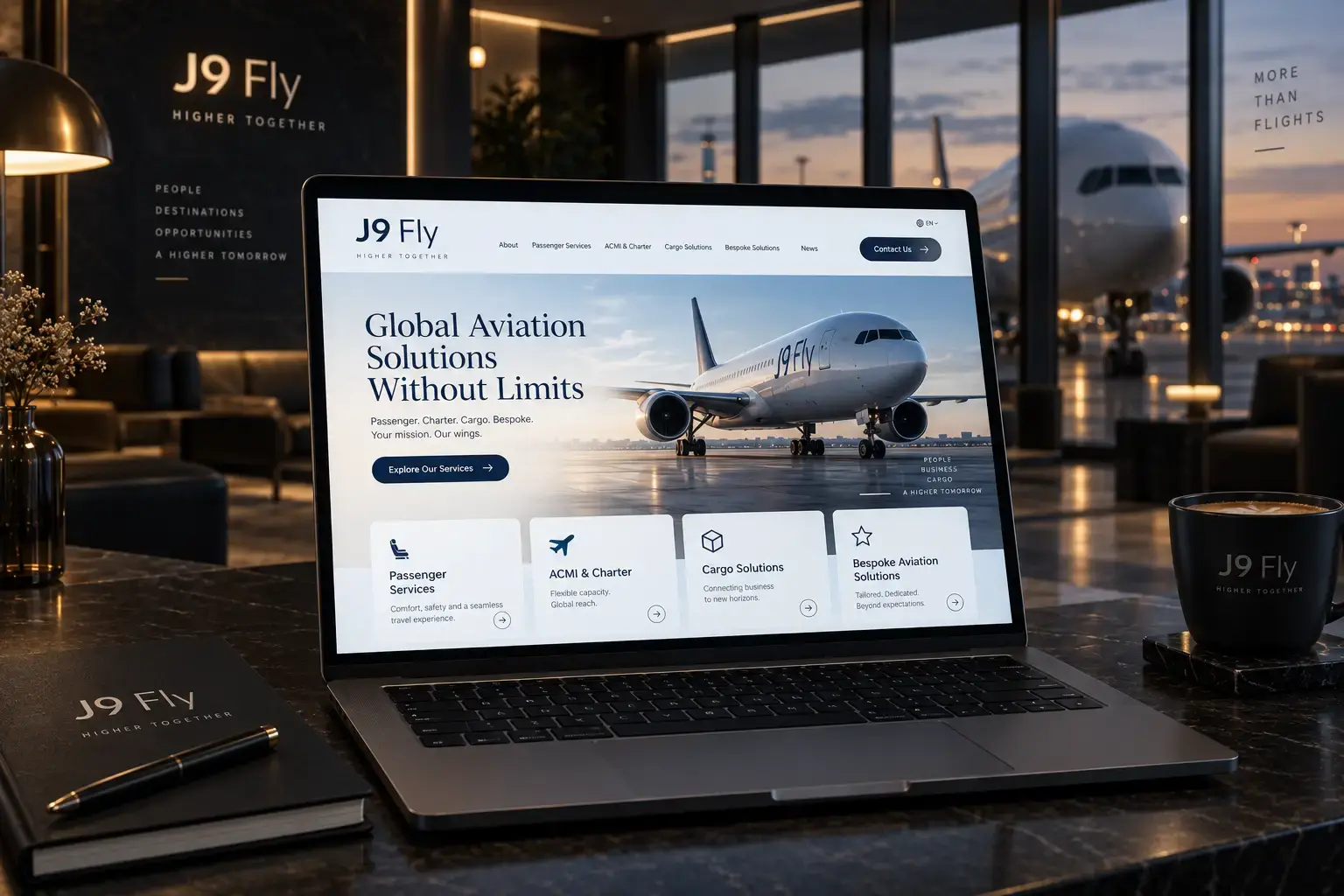
Aviation Website Design & Development for J9 Fly

Custom aviation website design and aviation website development for J9 Fly, built with Laravel Botble, bilingual content, responsive layouts, and editable CMS sections.

Core requirements

What Strong Website Design for Jet Charters Must Communicate

Make decision information easy to find before the visitor submits trip details.
Trust

Company credibility

Show real contact details, clear service descriptions, and an understandable explanation of how requests are handled.
  • Business identity
  • Service model
  • Contact details
Aircraft

Aircraft context

Help visitors understand aircraft categories and keep specifications and availability language accurate.
  • Category purpose
  • Cabin context
  • Verified details
SEO

Location relevance

Create pages for cities, airports, or regions only when the company serves them and can add useful local context.
  • Real coverage
  • Airport context
  • Unique information
Conversion

Quote usability

Ask for essential trip information first and provide visible alternatives for visitors who prefer to call or message.
  • Essential fields
  • Clear validation
  • Mobile form
Technical

Technical confidence

Avoid broken forms, slow pages, layout shifts, and inconsistent mobile behavior that can weaken premium positioning.
  • Fast pages
  • Stable layouts
  • Working tracking
AI Visibility

Search and AI clarity

Use direct definitions, descriptive headings, internal links, and accurate structured data where appropriate.
  • Clear definitions
  • Consistent details
  • Internal links
Website review checklist

Website Design for Jet Charters: What to Check Before Launch

Review every major page for clarity, usability, technical quality, and a clear next step.
Positioning

Can visitors understand the business quickly?

State the charter service, audience, geographic relevance, and next action without relying on generic luxury language.
  • Service category
  • Coverage
  • Contact path
Content

Do aircraft pages answer practical questions?

Give useful comparison context and avoid implying ownership or availability that the business cannot confirm.
  • Passenger use cases
  • Cabin context
  • Accurate language
Conversion

Is the quote form easy on mobile?

Test field types, date controls, validation, confirmation states, and alternative contact options on real devices.
  • Short first step
  • Helpful validation
  • Clear confirmation
SEO

Does each page target a distinct intent?

Separate service, aircraft, location, and informational pages only when each has enough unique value.
  • Distinct purpose
  • Descriptive metadata
  • Logical links
Technical SEO

Can search engines crawl and understand the site?

Review canonicals, sitemap coverage, robots directives, redirects, broken links, schema, images, speed, and Google Search Console.
  • Indexability
  • Sitemap and redirects
  • Search Console
Measurement

Are meaningful actions tracked?

Measure quote submissions and important contact actions, and align Google Ads conversions with real lead intent.
  • Quote submissions
  • Contact clicks
  • Ad conversions
Planning process

How Web Fly Approaches an Air Charter Website Project

Air charters website design should start with business and customer questions before visual styling. Structure, SEO, tracking, and conversion should support real inquiry handling.
01 Step
Strategy

Clarify the service model

Define services, target customers, coverage, inquiry workflow, aircraft content, and trust information.
02 Step
SEO

Map search and customer intent

Identify which services, aircraft categories, locations, or questions deserve dedicated pages.
03 Step
UX

Design the trust journey

Place service detail, credibility, aircraft context, FAQ, and quote actions in a logical sequence.
04 Step
Development

Build and optimize

Develop responsive templates, forms, metadata, internal links, performance, and reusable CMS sections.
05 Step
Tracking

Configure measurement

Track meaningful inquiries and align Google Ads landing pages with agreed lead definitions.
06 Step
QA

Test before launch

Check layouts, forms, metadata, redirects, indexation settings, tracking, and browser behavior before publishing.
Common problems

What Helps and What Hurts Private Aviation Website Design

These choices show the difference between trust-building content and avoidable friction.

Better approach

Specific services
Explain the service, audience, and next step.
Useful aircraft context
Connect aircraft categories to real trip needs.
Human quote process
Use a simple form plus phone or messaging options.
Distinct location content
Publish location pages only when they add useful service information.
Fast mobile pages
Prioritize readable layouts, optimized media, and reliable forms.
SEO tied to conversion
Guide relevant search visitors toward measurable actions.

Weak approach

Luxury language without detail
Premium visuals cannot replace clear service and process information.
Generic aircraft galleries
Photos alone do not explain aircraft options.
Overloaded forms
Too many required fields can create friction.
Mass-produced city pages
Near-duplicate location pages provide little value.
Desktop-only decisions
Complex menus and awkward forms hurt mobile research.
Traffic without lead quality
Visits alone do not show lead quality.
Practical page examples

Pages That Can Support a Charter Website

These examples show how airplane charter website design can map real customer questions to useful pages.
1
Core charter service page Explain the service, customer, coverage, inquiry process, and next step.
2
Aircraft category pages Compare aircraft categories using accurate trip, cabin, and passenger context.
3
Airport or destination pages Add these only for served markets with distinct local planning information.
4
Business travel page Address scheduling, team travel, multi-stop needs, and inquiry coordination.
5
FAQ and process page Answer recurring questions about quotes, aircraft, timing, baggage, and trip changes.
6
Campaign landing pages Use dedicated pages when a paid campaign needs a distinct message and conversion path.
Website help options

Choose the Right Next Step for Your Charter Website

Choose between a new site, a focused landing page, or technical improvements based on the business goal.
Option
Timeline
Estimate
Action
Custom Website Development
For a new private aviation website or major redesign needing strategy, responsive development, CMS structure, and SEO foundations.
Based on scope
Custom quote
Landing Page Design
For a charter service, market, route, or Google Ads campaign that needs a focused conversion path.
Based on scope
Project-based estimate
Technical SEO Review
For indexing, crawlability, speed, structured data, redirects, metadata, tracking, or other technical issues.
After review
After consultation
AI search

How Private Aviation Website Design Supports AI Visibility

AI systems need clear, consistent information about the business, services, locations, and relationships. This cannot guarantee inclusion in an AI answer, but it gives search and answer systems clearer source material.

Define the service directly

State what the company offers, who it serves, and where the service is available near the start of relevant pages.

Keep entity details consistent

Use consistent company naming, contact information, service descriptions, and location relationships across the site.

Connect related concepts

Link services to aircraft categories, airports, destinations, FAQs, and company information where relevant.

Write answerable sections

Use natural questions, direct first-sentence answers, short definitions, checklists, and process explanations.

Use structured data accurately

Add schema only when it matches visible content and represents the business truthfully.

Strengthen source quality

Publish original information about services, aircraft guidance, processes, policies, and locations instead of generic keyword copy.
FAQ

Private Jet Charter Website Design FAQ

What should a private jet charter website include?
A private jet charter website should explain the company, services, coverage, aircraft or aircraft categories, inquiry process, contact options, and common questions. It should also work well on mobile, load quickly, and make the quote path easy to understand. The exact page set depends on the business model and service coverage.
How should a charter quote request form be designed?
Start with the information needed to begin qualification, such as origin, destination, timing, passenger count, and contact details when they fit the workflow. Keep required fields obvious, use mobile-friendly controls, and explain what happens after submission. Additional details can be collected later.
Does air charters website design need separate pages for every city or airport?
No. Create a city or airport page only when the company serves that market and can provide useful, distinct information. Near-duplicate location pages can create a weak user experience and limited search value.
Can a private aviation website be optimized for Google Ads and SEO at the same time?
Yes. SEO and Google Ads can share fast performance, clear service messaging, technical foundations, and conversion tracking while using different landing pages when needed. Organic search usually benefits from a broader internal content structure.
How does website design for air charters support AI Visibility?
It supports AI Visibility by making services, locations, aircraft concepts, company details, processes, and answers easy to identify and connect. Clear headings, concise definitions, useful FAQs, internal links, and accurate structured data can help systems interpret the site. No method can guarantee that an AI system will cite or mention a website.
When should an existing charter website be redesigned?
Consider a redesign when the site no longer reflects the business, creates mobile friction, makes services difficult to understand, has unreliable forms, cannot support useful content, or has major technical SEO limitations. If the visual foundation is still effective, targeted development, landing page, conversion, or technical SEO improvements may be more appropriate than a full rebuild.
Build a Charter Website That Earns the Inquiry
What to do next

Build a Charter Website That Earns the Inquiry

If your site leaves visitors unsure about services, aircraft options, coverage, or the quote process, review the full trust journey. Web Fly can help with website design for jet charters, development, SEO, conversion planning, and Google Ads-ready measurement. Use /contact, Viber, Telegram, or WhatsApp.

Contact Web Fly

Strategy first

Review audience, service model, trust gaps, search intent, and quote flow before deciding what to redesign.

Development and SEO together

Build CMS structure, metadata, links, speed, forms, and measurement as one connected system.

Scope based on the site

The right answer may be a redesign, landing page, technical fixes, SEO work, or a focused combination.