Howdy!

Flight School Website Design: Turn Student Research Into Discovery Flight Bookings

Sergiy Kravchuk

Sergiy Kravchuk

Sep 06, 2026
Share this article
Flight School Website Design: Turn Student Research Into Discovery Flight Bookings
Website strategy for flight schools

Flight School Website Design That Moves Prospects Toward Booking

Flight school website design should do more than present aircraft photos and a list of training programs. It should help a prospective student understand what training involves, decide whether your school fits their goals, trust your instructors and operation, and take the next logical step toward a discovery flight or consultation. A strong website connects student research, local SEO, mobile usability, program information, conversion-focused design, and measurable lead generation into one clear journey.
Mobile first Make program research and contact actions easy for prospects comparing schools on a phone.
Clear programs Explain training paths, prerequisites, next steps, and common questions without forcing visitors to call for basic information.
Trust signals Show the people, aircraft, location, training environment, and operational information students need before taking action.
Booking path Create an obvious progression from research to discovery flight inquiry, consultation, or enrollment conversation.
Flight School Website Design That Moves Prospects Toward Booking
Quick answer

How Should a Flight School Website Turn Research Into Bookings?

A flight school website should answer the questions a prospective pilot has before asking them to book. This is a conversion-focused website structure that combines useful training information, proof of credibility, local and organic search visibility, responsive design, and a simple next step such as booking or requesting a discovery flight.
Step 1

Match student search intent

Build pages around real decisions such as choosing a certificate, understanding prerequisites, comparing training formats, learning what a discovery flight includes, and evaluating the school itself.
Step 2

Remove uncertainty

Explain programs, instructors, aircraft, scheduling, location, financing or pricing approach when appropriate, medical or eligibility considerations, and what happens after a prospect contacts the school.
Step 3

Make trust visible

Use authentic school information, instructor profiles, aircraft details, facility imagery, FAQs, policies, and clearly identified contact information instead of relying on broad marketing language.
Step 4

Create one clear next action

Discovery flight pages and training pages should make it easy to move from reading to an inquiry, call, consultation, or booking without searching through several unrelated pages.
The student decision journey

Flight School Website Design Should Support the Entire Research Process

Most prospective students do not arrive ready to enroll. They may be comparing private pilot training, career pathways, aircraft availability, location, scheduling, instructor access, costs, discovery flights, or simply whether learning to fly is realistic for them. A useful website organizes those questions into a logical journey instead of treating every visitor as an immediate sales lead. The best pilot training website design gives visitors enough information to understand their options while keeping the next conversion step visible.
Explore Custom Website Development
The exact page structure should reflect the programs, aircraft, audience, service area, and booking process of the individual flight school.
Flight School Website Design Should Support the Entire Research Process

Start with intent, not decoration

A polished visual design matters, but architecture comes first. Identify what prospective students search for, what they need to compare, and which questions prevent them from contacting a school.

Create dedicated training pages

Private pilot, instrument, commercial, accelerated, recurrent, discovery flight, and other offerings should have dedicated pages when the school genuinely provides them. This creates clearer search relevance and a better user experience than one generic programs page.

Build a strong discovery flight website path

A discovery flight is often the lowest-friction first experience with a school. Its page should explain what happens, who it is for, what the visitor should bring, how scheduling works, and what the next step is.

Design for local decision making

Students frequently compare nearby airports and schools. Location details, directions, service-area relevance, airport context, contact information, and locally useful content can support both user confidence and local SEO.

Connect SEO with conversion design

Ranking a program page is not enough if visitors cannot understand the offer or reach the booking action. Search visibility, page structure, copy, calls to action, technical performance, and lead tracking should support the same business goal.

Measure the actions that matter

Use analytics and conversion tracking to understand form submissions, calls, booking-button clicks, discovery flight actions, and important page journeys. That data can inform SEO, website improvements, and Google Ads decisions.
Selected work Selected work

Selected Web Fly Projects

Featured case

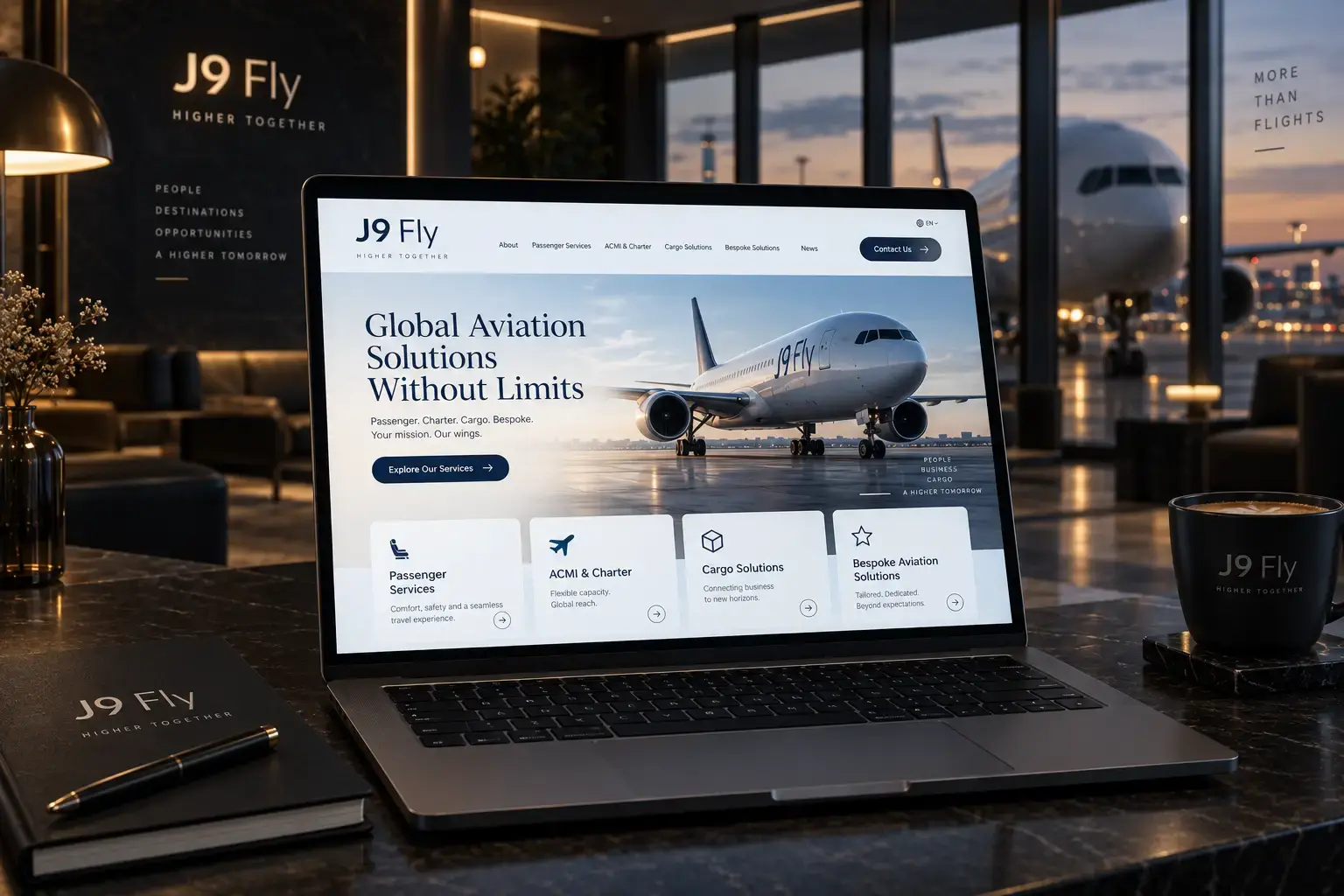
Aviation Website Design & Development for J9 Fly

Custom aviation website design and aviation website development for J9 Fly, built with Laravel Botble, bilingual content, responsive layouts, and editable CMS sections.

Core website components

Six Priorities for Effective Flight School Website Design

A flight school website needs to serve several jobs at once: explain training, earn trust, perform well in search, support mobile research, generate inquiries, and provide clean data for future marketing decisions.
Structure

Program architecture

Organize training options around specific student goals instead of placing every service on one page. Clear program architecture helps visitors self-select and gives search engines more precise context.
  • Dedicated program pages
  • Clear prerequisites
  • Logical internal links
Mobile

Responsive flight school web design

Prospects may research instructors, prices, locations, or discovery flights from a phone between work, school, or other commitments. Navigation, forms, calls to action, and content must remain easy to use on smaller screens.
  • Readable mobile content
  • Fast contact actions
  • Usable forms and menus
Trust

Trust and credibility

Aviation training is a high-consideration decision. Show real instructors, aircraft, airport information, school policies, qualifications, and practical details that help a visitor understand who will train them and where.
  • Instructor information
  • Aircraft and facility details
  • Authentic school information
SEO

Search-focused content

Pages should match the language and questions prospective students use during research. On-page SEO should support real information rather than adding repetitive keywords that make the page harder to read.
  • Intent-focused titles
  • Useful headings and FAQs
  • Relevant internal linking
Conversion

Conversion-focused discovery flight pages

The discovery flight page should answer practical questions and lead naturally to a booking or inquiry. Avoid making visitors hunt for availability, contact details, or the next step.
  • Direct explanation
  • Visible booking action
  • Low-friction inquiry path
Technical

Technical foundation

Technical SEO and performance affect how easily users and search engines can access the site. Crawlability, indexation, structured information, mobile performance, redirects, metadata, and analytics should be checked during a build or redesign.
  • Indexation controls
  • Performance checks
  • Analytics and conversion tracking
Website evaluation checklist

What Should a Flight School Website Include Before You Send Traffic to It?

Before investing more heavily in organic SEO or Google Ads, make sure the website can answer the core questions prospects have and reliably capture the actions your marketing creates. The checklist below can also guide a flight school website redesign.
Programs

Clear pages for major training options

Each important program should explain who it is for, what the training path involves, relevant prerequisites, how scheduling works, and what action a visitor should take next.
  • Program purpose
  • Student eligibility or prerequisites
  • Training format
  • Next action
Discovery flight

A dedicated discovery flight page

Treat a discovery flight as a meaningful conversion page rather than a small paragraph inside another service page. Explain the experience clearly enough that a first-time visitor knows what they are requesting.
  • What to expect
  • Who can participate
  • Scheduling information
  • Booking or inquiry action
Trust

Proof that reduces uncertainty

Prospective students want to understand the operation behind the website. Relevant instructor, aircraft, airport, facility, contact, and policy information can make the school easier to evaluate.
  • Instructor profiles
  • Aircraft information
  • Location details
  • Real contact information
SEO

Search-friendly page structure

Important pages need unique titles, useful headings, clear copy, internal links, appropriate metadata, and indexable content. Google Search Console should be used to monitor indexing and search performance after publication.
  • Unique metadata
  • Logical headings
  • Internal linking
  • Search Console monitoring
Performance

Fast, responsive, accessible interaction

Large images, video backgrounds, booking widgets, and third-party scripts should not make key pages frustrating on mobile. Test actual devices and connection conditions instead of reviewing only a desktop layout.
  • Mobile navigation
  • Image optimization
  • Form usability
  • Core interaction checks
Tracking

Reliable conversion measurement

A school should know which channels and pages generate meaningful actions. Configure analytics around contact forms, discovery flight inquiries, calls, booking interactions, and other genuine lead events.
  • Form submissions
  • Call interactions
  • Booking clicks
  • Campaign attribution
Planning a redesign

A Practical Flight School Website Redesign Process

A redesign should begin with business goals and student behavior, not with a new visual theme. This process keeps website development, SEO, content, technical implementation, and conversion tracking aligned.
01 Step
Audit

Audit the current website

Review existing pages, organic search performance, Google Search Console data, analytics, mobile usability, technical SEO, lead paths, and any pages already generating qualified inquiries.
02 Step
Research

Map student research intent

Identify the questions prospective students ask at different stages, from learning what a certificate involves to comparing schools and deciding whether to schedule a discovery flight.
03 Step
Architecture

Plan information architecture

Create a logical hierarchy for programs, discovery flights, instructors, aircraft, location information, resources, FAQs, and conversion pages. Preserve valuable existing URLs when possible during redesigns.
04 Step
UX

Design conversion paths

Decide where visitors should call, submit a form, request information, book, or move to another supporting page. Calls to action should match the level of commitment appropriate to each page.
05 Step
Development

Build and optimize

Develop responsive templates, optimize page speed, implement on-page SEO, configure technical fundamentals, connect analytics, and test forms and conversion actions before launch.
06 Step
QA

Launch, verify, and improve

After launch, verify indexing, redirects, canonical URLs, analytics, conversion tracking, forms, mobile behavior, and Google Search Console coverage. Continue improving pages based on real search and conversion data.
Problems and better approaches

Common Flight School Website Mistakes and What to Do Instead

Many flight school websites contain enough information to describe the business but not enough structure to support a confident student decision. The goal is not to add more content everywhere; it is to make the right information easier to find and act on.

Better approach

Use program-specific pages
Give important training programs their own useful pages with clear purpose, requirements, supporting information, and next steps.
Explain the discovery flight
Describe the experience, who it is suitable for, how scheduling works, and what visitors should expect before asking them to book.
Show real operational context
Use authentic instructor, aircraft, airport, facility, and contact information that helps prospective students evaluate the school.
Design mobile actions deliberately
Keep important navigation, call, form, and booking actions easy to use without excessive scrolling or oversized visual elements.
Preserve SEO value during redesign
Map existing URLs, redirects, metadata, content, internal links, and indexed pages before replacing a website that already receives organic traffic.
Track qualified actions
Measure meaningful interactions instead of treating every page view as success. Connect lead tracking with SEO and paid campaign decisions.

Common mistake

One generic training page
Combining every certificate and training option into one shallow page makes it harder for both students and search engines to understand each offering.
A booking button with no context
Asking a first-time visitor to book before explaining the experience can create unnecessary friction, especially for someone new to aviation.
Stock imagery instead of proof
Generic aviation photos may make a page attractive, but they do not answer questions about the actual instructors, aircraft, location, or training environment.
Desktop-only design decisions
A layout that looks impressive on a large monitor can become difficult to navigate, read, or convert from on a phone.
Redesigning without URL planning
Removing or changing established pages without redirects and migration checks can create broken links, lost relevance, and avoidable indexing problems.
Running ads before fixing the funnel
Google Ads can bring additional visitors, but paid traffic cannot compensate for unclear pages, broken forms, weak mobile usability, or a confusing booking process.
Practical scenarios

How Different Student Searches Should Lead to Different Website Experiences

Search intent changes depending on how much a prospective student already knows. These examples show why one generic landing page rarely serves the entire flight training journey well.
1
A visitor researching how to become a pilot This person may need educational content that explains the training path, certificates, prerequisites, timeline factors, and major decisions. The next action can be a consultation or link to the most relevant training program rather than an immediate enrollment request.
2
A visitor searching for private pilot training nearby This prospect has stronger commercial intent. A relevant program page should connect the training offer with the school's location, aircraft, instructors, scheduling approach, FAQs, and a clear inquiry or discovery flight option.
3
A visitor comparing flight schools Comparison-stage users need evidence that helps them understand differences. Make instructor access, fleet information, training structure, availability expectations, location, policies, and contact options easy to review.
4
A visitor searching for a discovery flight Send this searcher to a focused discovery flight website page rather than a broad homepage. Answer what the flight is, what happens, how long the experience generally works based on the school's offering, and how to request or book it.
5
A parent or family member researching training The person visiting may not be the future student. Clear explanations, safety and operational context, contact information, training pathways, and FAQs can help family members understand the commitment and support the decision.
6
A visitor arriving from Google Ads Paid landing traffic should reach a page that closely matches the ad promise. The page should load quickly, explain the relevant training option, answer objections, and make the intended conversion measurable.
Website help options

What to Do Next With Your Flight School Website

The right next step depends on whether the current website needs targeted improvements, a deeper SEO and technical review, or a full rebuild. Web Fly can evaluate the current situation before recommending scope.
Option
Timeline
Estimate
Action
Flight School Website Redesign
Best when navigation, content architecture, mobile experience, conversion paths, or the underlying website need substantial improvement.
Based on scope
Project-based estimate
SEO and Technical Review
Useful when the site already works visually but needs stronger organic visibility, technical cleanup, content structure, indexing checks, or migration planning.
After review
Custom quote
Discovery Flight Landing Page
A focused option for schools that need a stronger conversion page for organic search, Google Ads, local campaigns, or direct promotion.
Based on scope
After consultation
Search and AI discovery

Make Flight School Content Easier for Search Engines and AI Systems to Understand

Prospective students increasingly encounter answers through traditional search results, Google AI experiences, ChatGPT, Gemini, Perplexity, voice interfaces, maps, and other discovery surfaces. A website cannot guarantee inclusion in an AI answer, but clear information architecture, useful content, consistent entity signals, and technically accessible pages make the business easier for systems to interpret.

Use explicit program descriptions

Clearly state what each training program is, who it is for, and how it relates to other services. Avoid forcing systems to infer the meaning of a page from slogans or images.

Answer common questions directly

Use concise answers for questions about prerequisites, discovery flights, scheduling, training formats, location, aircraft, instructors, and the next step. Direct answers also improve usability for human readers.

Strengthen business identity signals

Keep the school name, location, contact information, services, instructor information, and relevant business details consistent across important pages and appropriate external profiles.

Create crawlable supporting content

Important information should exist as accessible page content rather than only inside images, PDFs, videos, or interactive widgets. Search engines and AI systems need reliable text context around the subject.

Connect related pages logically

Use descriptive internal links between program pages, discovery flight information, instructor pages, aircraft details, FAQs, location content, and other genuinely related resources.

Maintain technical clarity

Correct canonical URLs, indexation controls, metadata, structured data where appropriate, page speed, HTTPS, redirects, sitemap coverage, and mobile usability help prevent technical problems from obscuring otherwise useful content.
Frequently asked questions

Flight School Website Design FAQ

These questions cover common decisions flight school owners and marketing teams face when planning a new website, redesign, SEO campaign, or discovery flight conversion path.
What should a flight school website include?
A flight school website should clearly explain training programs, discovery flights, instructors, aircraft, location, contact options, common questions, and the next step for prospective students. It should also be responsive, technically accessible to search engines, easy to navigate, and connected to reliable lead or booking tracking.
How can flight school website design increase discovery flight bookings?
Good design reduces the uncertainty that prevents a prospective student from taking action. A focused discovery flight page should explain the experience, answer practical questions, establish trust, and make the inquiry or booking action easy to find on both desktop and mobile.
When does a flight school website need a redesign?
A redesign is worth considering when the website is difficult to use on mobile, training information is fragmented, conversion paths are unclear, the visual presentation no longer reflects the school, or the technical platform limits SEO and marketing. The decision should follow an audit so useful content, URLs, and existing search visibility are preserved where possible.
What is the difference between a flight school website and a discovery flight landing page?
The main website supports the broader student journey, including research about programs, instructors, aircraft, location, and the school itself. A discovery flight landing page is more focused and is designed around one lower-friction action: helping a visitor understand and request or book that specific experience.
Should a flight school website be optimized for local SEO?
Yes, local search is important when students are choosing a school based partly on airport location and travel distance. Location information, consistent business details, relevant local pages, useful training content, and a properly managed Google Business Profile can support local discovery without creating repetitive city pages.
Can the same flight school website be used for SEO and Google Ads?
Yes, but organic and paid visitors may need different entry pages depending on their intent. The underlying website should provide strong program information and trust signals, while dedicated landing pages can create tighter alignment between a Google Ads search, ad message, and conversion action.
Turn Flight Training Research Into a Clearer Path to Contact and Booking
Plan the next improvement

Turn Flight Training Research Into a Clearer Path to Contact and Booking

If your current website gets traffic but does not clearly move prospective students toward a discovery flight, consultation, or training inquiry, the problem may be the journey rather than the amount of traffic. Web Fly can review the website structure, mobile experience, SEO, technical foundation, conversion paths, landing pages, and tracking, then define improvements based on the actual scope of the site.

Contact Web Fly

Website strategy

Review architecture, program pages, discovery flight journeys, responsive UX, and conversion opportunities before deciding what should be rebuilt.

SEO and technical review

Check organic search structure, on-page optimization, indexing, internal links, performance, redirects, metadata, and Google Search Console signals.

Conversion-ready implementation

Connect website improvements with contact forms, booking actions, analytics, Google Ads landing pages, and measurable lead events.