Howdy!

FBO Website Design: What Pilots and Flight Departments Need Before They Choose Your Facility

Sergiy Kravchuk

Sergiy Kravchuk

Sep 06, 2026
Share this article
FBO Website Design: What Pilots and Flight Departments Need Before They Choose Your Facility
AVIATION WEBSITE STRATEGY

FBO Website Design That Helps Flight Crews Choose With Confidence

Effective FBO website design should help a pilot, dispatcher, corporate flight department, or passenger-services coordinator answer practical questions before the aircraft arrives. The website needs to make fuel, ramp capabilities, operating details, transportation, amenities, airport access, and contact information easy to find while also giving search engines and AI systems clear context about the facility and the services it provides.
Location Make the airport, ramp location, directions, and service area immediately understandable.
Services Present fuel, ground handling, passenger, crew, and aircraft support without forcing visitors to search.
Operations Clarify hours, contact paths, service requests, and important arrival information.
Mobile UX Keep essential information usable when crews are checking the site from a phone or tablet.
FBO Website Design That Helps Flight Crews Choose With Confidence
QUICK ANSWER

What Does an FBO Website Need Before a Flight Department Chooses the Facility?

An FBO website should let a visitor confirm whether the facility fits the trip without calling for every basic detail. The strongest sites combine operational clarity with conversion-focused design: they explain what is available, where the FBO is located, how crews and passengers are supported, and exactly how to request service or speak with the team.
01

Operational information

Show airport location, hours, arrival guidance, ramp or parking information, fuel availability, and any service details the facility can publish confidently. Keep frequently changing information easy for staff to update.
02

Crew and passenger support

Explain transportation, lounges, meeting areas, refreshments, rental car coordination, hotels, catering support, or other amenities that are actually available. Separate crew needs from passenger experience when that improves clarity.
03

Fast contact paths

A visitor should not need to hunt for a phone number, service request path, or contact form. Important calls to action should remain visible and understandable on mobile devices.
04

Search and AI clarity

Use descriptive page structure, location context, service-specific content, internal links, metadata, crawlable text, and appropriate structured data so Google and AI systems can understand what the FBO is and what it provides.
THE DECISION EXPERIENCE

Fixed Base Operator Website Design Should Answer Operational Questions Before the Call

A strong fixed base operator website design is not primarily about decorative aviation imagery. It is an operational information system and a sales tool. Pilots and flight departments may compare facilities based on aircraft support, fuel, ramp access, transportation, crew needs, passenger expectations, timing, and responsiveness, so the website should make those factors easy to evaluate before a service request is submitted.
Review Landing Page Design Services
The exact information an FBO should publish depends on the facility, airport, services, operating policies, and how frequently individual details change.
Fixed Base Operator Website Design Should Answer Operational Questions Before the Call

Airport and facility identification

State the airport, city or market served, facility identity, and relevant location context clearly. Do not assume every visitor already understands where the FBO is positioned or whether it serves the destination they are researching.

Fuel and aircraft services

Create clear content for the fuel products and aircraft services the facility actually provides. If pricing changes frequently or is supplied on request, explain the request process instead of publishing information that may become inaccurate.

Ramp, parking, and handling context

Flight departments need enough information to understand whether the facility appears appropriate for their operation. Explain available ramp, parking, ground support, handling, or coordination services without making capability claims that staff cannot consistently support.

Crew and passenger experience

Separate operational support from hospitality information when useful. A pilot may care about crew rest, transportation, weather planning, and quick turnaround while passengers may care more about privacy, ground transportation, comfort, and a smooth arrival.

Hours and after-hours communication

If operating hours, after-hours requests, or advance coordination affect service, explain the process clearly. A visible contact path is more useful than forcing visitors to search through a general contact page.

Arrival and next-step clarity

Every important page should make the next action obvious. That may be calling the FBO, requesting services, asking about availability, contacting the team, or confirming operational details before arrival.
Selected work Selected work

Selected Web Fly Projects

Featured case

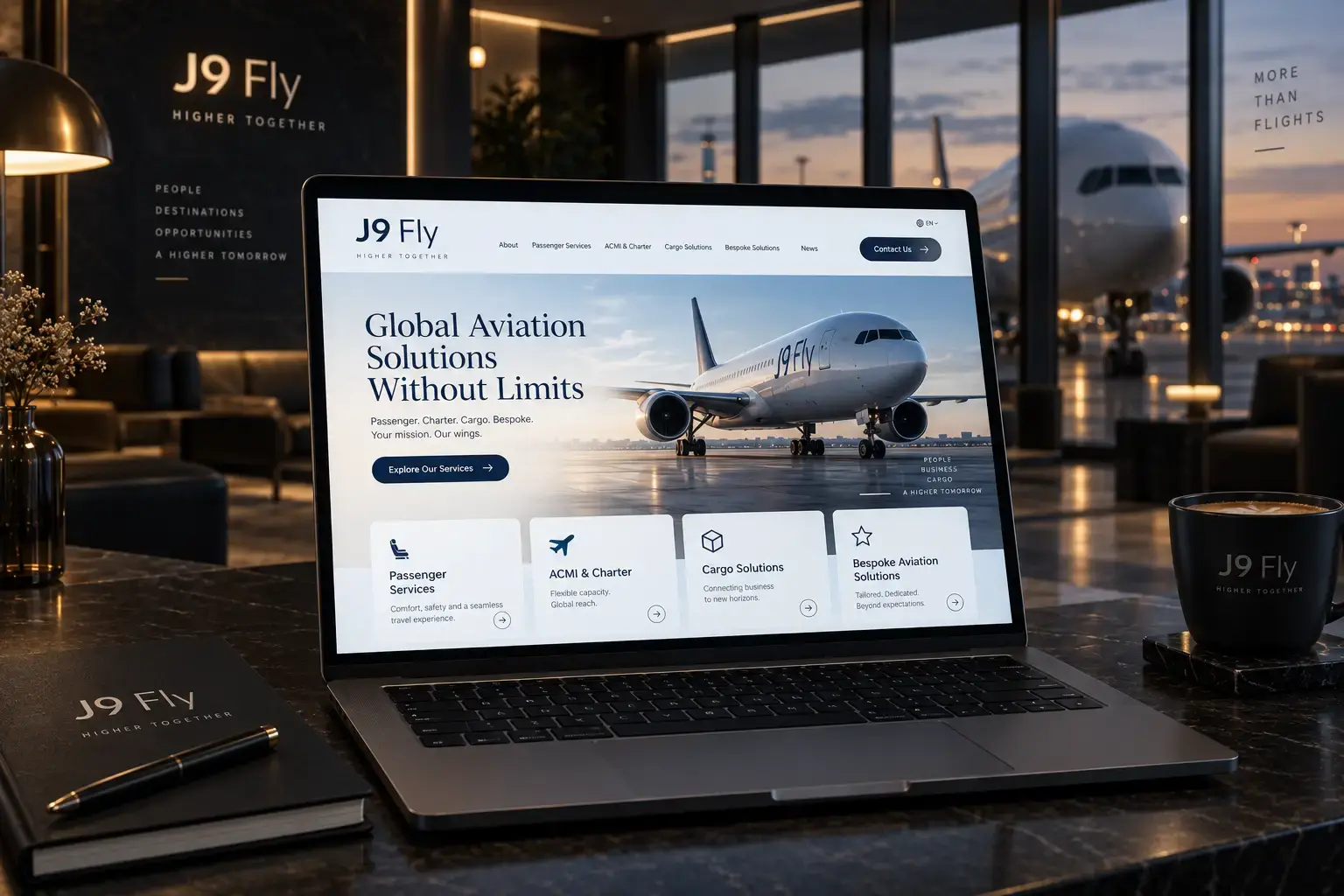
Aviation Website Design & Development for J9 Fly

Custom aviation website design and aviation website development for J9 Fly, built with Laravel Botble, bilingual content, responsive layouts, and editable CMS sections.

DESIGN PRIORITIES

Six FBO Website Design Priorities That Reduce Decision Friction

FBO web design works best when every important page supports a real question a visitor is trying to answer. These priorities help connect operational information, usability, search visibility, and conversion without turning the website into a complicated brochure.
LOCATION

Immediate location clarity

Put the airport, destination context, and facility identity where visitors can recognize them quickly. Location ambiguity creates unnecessary friction for pilots searching by airport, city, or destination.
  • Airport and city context
  • Facility identification
  • Directions or access information
SERVICES

Scannable service information

Organize services by the way customers think about their trip rather than by an internal company structure. Fuel, ground support, crew support, passenger amenities, transportation, and special coordination should be easy to scan.
  • Fuel and aircraft support
  • Crew services
  • Passenger amenities
MOBILE

Mobile-first operational UX

A pilot or dispatcher may open the site while moving between tasks. Important details, contact buttons, maps, service summaries, and forms should remain readable and easy to use without excessive scrolling or tiny interface elements.
  • Readable mobile content
  • Tap-friendly contact actions
  • Fast access to essential details
TRUST

Trust through specificity

Specific, accurate descriptions are more persuasive than broad statements about premium service. Explain what the facility actually offers and how a customer requests it.
  • Clear capabilities
  • Accurate amenities
  • Defined request process
SEO

Search-ready page structure

Airport services website design should include crawlable text, descriptive headings, relevant metadata, internal links, and service-specific pages where the search intent justifies them. Search engines need more than images to understand the facility.
  • Descriptive headings
  • Service-specific content
  • Internal linking
CONVERSION

Conversion-focused contact paths

Make it obvious how to continue after the visitor finds the needed information. Calls to action should match the decision stage, whether the user wants a quick question answered or is ready to request service.
  • Phone access
  • Contact or service request
  • Clear next step
FBO WEBSITE CHECKLIST

What to Check Before You Approve an FBO Website Redesign

Use this checklist before publishing a new aviation website design or approving a major redesign. The goal is to confirm that attractive visuals have not replaced the practical information a pilot, dispatcher, passenger-services coordinator, or flight department needs.
01

Confirm the essential operational information

Review every facility detail that could affect an arrival or service request. Assign an internal owner for information that changes so the website does not become an outdated source.
  • Airport and location details
  • Operating and contact information
  • Fuel and relevant aircraft services
  • Ramp or handling information that can be published
02

Review the site on a real mobile device

Do not approve mobile design only from a desktop preview. Test navigation, phone actions, forms, maps, service lists, and long pages on common screen sizes and with normal network conditions.
  • Header and navigation
  • Tap targets and phone links
  • Forms and service requests
  • Page speed and image loading
03

Make crew and passenger information easy to separate

A single generic amenities section can hide the details different audiences care about. Structure content so crew support, passenger experience, transportation, and aircraft services can be understood independently.
  • Crew support
  • Passenger amenities
  • Ground transportation
  • Local coordination information
04

Check every conversion path

Test what happens after someone decides to contact the FBO. Forms should be understandable, required fields should be reasonable, phone numbers should work on mobile, and important requests should reach the correct team.
  • Phone links
  • Contact forms
  • Service request flow
  • Confirmation messages
05

Complete the technical SEO foundation

A polished site can still underperform in search if important pages are difficult to crawl, duplicate, slow, or poorly described. Review indexing, canonical tags, metadata, structured data, redirects, sitemap behavior, and Core Web Vitals as part of launch QA.
  • Indexability and canonical tags
  • Titles and meta descriptions
  • XML sitemap and redirects
  • Performance and Core Web Vitals
06

Connect analytics and advertising readiness

If the FBO uses SEO, Google Ads, remarketing, or other campaigns, the website should support measurement before traffic is purchased. Define meaningful conversion actions such as contact submissions or service inquiries and verify tracking after launch.
  • GA4 and tag management
  • Lead or inquiry events
  • Campaign landing page readiness
  • Post-launch tracking verification
WEBSITE PROCESS

A Practical Process for Planning FBO Web Design

The design process should begin with how customers evaluate the facility, not with a visual template. A structured approach helps protect operational accuracy while creating a website that supports organic search, paid traffic, mobile users, and direct inquiries.
01 Step
AUDIT

Audit the current website

Review existing pages, navigation, mobile experience, search visibility, technical SEO, conversion paths, analytics, and content gaps. Preserve useful pages and existing search equity when a redesign does not require replacing everything.
02 Step
STRATEGY

Map visitor decisions

Identify the questions pilots, dispatchers, flight departments, crew members, and passengers are likely to ask. Connect those questions to page sections, service pages, calls to action, and contact paths.
03 Step
STRUCTURE

Build the information architecture

Create navigation around meaningful services and user needs. Important information should not depend on a visitor knowing the FBO's internal terminology or organizational structure.
04 Step
UX

Design for mobile and conversion

Create page layouts that prioritize operational clarity, readable content, clear buttons, accessible contact information, and efficient forms. The visual system should support the decision rather than distract from it.
05 Step
SEO

Implement SEO and technical foundations

Prepare metadata, headings, internal links, indexable content, structured data where appropriate, redirects, canonical handling, sitemap output, performance improvements, and tracking. Technical QA should happen before and after launch.
06 Step
QA

Launch, verify, and improve

Check live URLs, forms, mobile layouts, analytics events, Search Console visibility, redirects, indexing signals, and critical content. Continue improving pages based on customer questions, search behavior, and business priorities.
COMMON WEBSITE MISTAKES

What Helps an FBO Website Convert and What Creates Friction

Aviation branding can be visually impressive while the website remains difficult to use. The practical difference is whether the visitor can verify fit, understand the facility, and take the next step without uncertainty.

What works better

Airport context near the top
Make the airport, destination, and facility relationship obvious so visitors do not need to confirm basic location details elsewhere.
Specific service descriptions
Explain the services and amenities the FBO actually provides instead of relying on broad luxury or full-service statements.
Visible contact options
Keep phone, inquiry, and service-request paths easy to reach from important pages, especially on mobile.
Pages built around real search intent
Use dedicated content when a service or topic deserves its own page and customers genuinely search for it.
Fast, restrained media
Use aircraft and facility imagery to support trust without allowing oversized video or image assets to damage page speed and mobile usability.
Regular content review
Assign responsibility for operational details, contact information, amenities, and policies that may change after launch.

What commonly creates problems

A cinematic homepage with little information
Large aircraft visuals do not answer questions about services, access, hours, fuel, amenities, or how to contact the facility.
Important details buried in PDFs
When essential content exists only in downloadable files, mobile users and search systems may have a harder time finding and understanding it.
One generic services paragraph
Combining every capability into a short paragraph makes scanning difficult and limits the site's ability to match more specific search intent.
Desktop-only thinking
Small text, hover-dependent navigation, complicated menus, and oversized forms can make a technically attractive site frustrating on phones.
Unverified SEO migration
Changing URLs without mapping redirects, canonicals, internal links, metadata, and sitemap behavior can create avoidable visibility problems.
No measurement after launch
Without validated analytics and conversion events, it becomes difficult to understand whether SEO, Google Ads, and website improvements are producing meaningful inquiries.
USER SCENARIOS

How Different Visitors May Evaluate the Same FBO Website

The same facility can be viewed through very different operational priorities. Building pages around these scenarios helps an FBO communicate more clearly without creating a separate website for every type of visitor.
1
A pilot planning a first visit The pilot may want airport context, ramp information, fuel details, operating information, transportation, and a quick way to confirm anything that affects arrival. Clear navigation and mobile readability matter more than a long corporate introduction.
2
A corporate flight department comparing facilities The team may evaluate services, aircraft support, passenger handling, transportation, reliability of communication, and whether the facility appears appropriate for the mission. Detailed service pages can make comparison easier.
3
A dispatcher coordinating multiple details The dispatcher benefits from predictable contact paths, service-request information, airport context, and content that can be shared quickly with crew members or other stakeholders.
4
A crew member planning ground time Crew-focused information may include transportation, rest options, work areas, refreshments, local resources, and the process for requesting support. These details should not be hidden inside passenger-focused marketing copy.
5
A passenger-services coordinator This visitor may focus on privacy, ground transportation, waiting areas, meeting spaces, coordination, and a smooth handoff after arrival. The site should explain available services without overstating amenities.
6
A search visitor who does not know the brand Someone searching by airport, destination, fuel need, or aviation service may arrive on an internal page rather than the homepage. Every important landing page should provide enough context to identify the FBO and continue toward contact.
NEXT STEP

Which Website Service Fits Your FBO?

The right scope depends on the current website, content, technical condition, business goals, and whether the project is a focused improvement or a full rebuild. Web Fly can review the existing site first and recommend a practical scope instead of forcing every FBO into the same package.
Option
Timeline
Estimate
Action
Custom FBO Website Development
Best when the current site needs a new information architecture, design system, CMS implementation, mobile experience, conversion paths, and launch QA.
Based on scope
Custom quote
Technical SEO Review
Useful when the design is acceptable but indexing, performance, redirects, structured data, crawlability, metadata, or technical launch issues need attention.
After review
Project-based estimate
Organic SEO and Content Structure
Appropriate when the website needs stronger service pages, location and airport relevance, internal linking, content planning, search visibility, and ongoing optimization.
Monthly format
After consultation
AI VISIBILITY

Make the FBO Easier for Search Engines and AI Systems to Understand

AI Visibility is not a separate replacement for good website architecture and SEO. It starts with clear, accessible information about the entity, location, services, and relationships on the site. No implementation can guarantee inclusion in an AI answer, but better structured and more specific content gives search and answer systems clearer information to interpret.

Establish clear entity identity

Consistently identify the FBO, airport, location, organization, contact information, and service context. Avoid pages where a visitor or crawler has to infer which airport or facility the content describes.

Describe services in explicit language

Use normal descriptive text for fuel, aircraft support, ground transportation, passenger services, crew support, or other actual capabilities. Important meaning should not exist only in icons, images, or promotional slogans.

Create answer-friendly sections

Use descriptive headings followed by direct explanations, concise lists, and practical details. This structure also helps visitors who scan the page before deciding whether to call.

Strengthen internal relationships

Connect relevant service pages, airport or location content, contact pages, and supporting articles with useful internal links. A clear site structure helps define how topics relate to the business.

Use structured data appropriately

Add supported schema that accurately represents the organization, pages, breadcrumbs, and other eligible content where appropriate. Structured data should describe real page content rather than attempt to manufacture relevance.

Keep information crawlable and current

Important facts should appear in accessible page content and remain available to search engines. Update details when services, contact information, operating procedures, or facility information changes.
FREQUENTLY ASKED QUESTIONS

FBO Website Design FAQ

These questions cover the practical website, SEO, and conversion issues FBO owners and aviation marketing teams commonly need to consider before a redesign.
What information should an FBO website show first?
An FBO website should first make the facility, airport, location, major services, operating information, and contact options easy to identify. Visitors should be able to confirm basic fit without searching through multiple pages. More detailed information about fuel, crew support, passenger amenities, transportation, and service requests can then support the decision.
Why is mobile design especially important for an FBO?
Mobile design matters because pilots, dispatchers, crew members, and travelers may need information while away from a desktop computer. Phone numbers, service details, directions, forms, and navigation should remain easy to use on a smaller screen. Mobile usability should be tested on real devices rather than assumed from a responsive layout preview.
Does an FBO website need SEO if pilots already know the airport?
SEO can still be valuable because not every potential customer searches for the FBO by brand name. Visitors may search by airport, destination, aviation service, fuel need, or other trip-related intent. Organic SEO also helps search engines understand the relationship between the facility, its location, and its services.
What is the difference between FBO web design and a general aviation website?
FBO web design is centered on helping users evaluate and contact a specific fixed base operator, while aviation website design can cover many types of aviation businesses. An FBO site usually needs stronger emphasis on airport context, fuel and ground services, crew and passenger needs, transportation, operational information, and service requests. The exact structure should reflect the facility's real services.
Can an FBO website help flight departments choose between facilities?
Yes, a well-structured website can make comparison easier by presenting the information a flight department needs to evaluate fit. Clear service descriptions, location information, operational details, amenities, and contact paths reduce uncertainty before direct coordination begins. The website should support the decision without replacing required operational confirmation with the FBO team.
How often should an FBO website be updated?
The website should be updated whenever published services, contact details, operating information, amenities, policies, or other important facility information changes. SEO and technical performance should also be reviewed periodically, especially after redesigns, CMS changes, domain changes, or major content updates. Frequently changing operational information should have a clear internal owner.
Build an FBO Website Around the Questions Customers Ask Before Arrival
WHAT TO DO NEXT

Build an FBO Website Around the Questions Customers Ask Before Arrival

If your current website looks polished but makes pilots or flight departments work to find essential information, start with an information, mobile UX, SEO, and conversion review. Web Fly can help with FBO website design, custom development, technical SEO, landing pages, analytics readiness, and search-focused content structure. Use /contact to request a review or explore /services/custom-website-development for a website rebuild or major redesign.

Contact Web Fly

Website strategy

Organize the site around facility information, customer questions, service pages, and clear next steps instead of a generic aviation template.

SEO and technical QA

Connect content strategy with crawlability, metadata, redirects, performance, structured data, analytics, and post-launch verification.

Conversion-focused implementation

Make the path from researching the FBO to contacting the team clear on desktop and mobile without unnecessary steps.