


Upgrade your towing website design today! Discover expert tips and tools to create a high-performance, lead-generating website. Start now!
Towing Website Design
In the competitive world of towing services, having a professional and well-designed website is no longer optional—it’s essential. A towing website serves as the digital front door to your business, allowing potential customers to find, trust, and engage with your services. Whether you’re offering emergency roadside assistance or long-distance vehicle transport, your website is your most powerful tool to connect with clients and stand out from competitors.
This guide will walk you through everything you need to know about towing website design, from understanding its importance to integrating the best practices that ensure your site performs at the highest level. With a focus on functionality, user experience, and SEO optimization, we’ll explore how to build a towing website that drives leads, enhances visibility, and reflects your brand’s professionalism.
Why Focus on Towing Website Design?
In the towing industry, customers often make quick decisions during stressful situations. Whether they’re stranded on the side of the road or searching for reliable towing companies online, your website must deliver critical information quickly and efficiently. A poorly designed website can lead to frustration, driving potential clients to competitors. A well-crafted towing website design, on the other hand, ensures that customers can easily access your services and feel confident in your expertise.
Key advantages of an optimized towing website include:
- Increased Visibility: Ranking higher on Google for keywords like towing website design, transportation web design, and website design for logistics companies helps you attract more leads.
- Improved User Experience: A fast, responsive, and intuitive website leaves a positive impression on users.
- Local Search Dominance: Effective SEO techniques ensure your towing services show up in local searches, especially during emergencies.
- Lead Generation: Strategic call-to-action (CTA) placements and contact forms convert visitors into paying customers.
Introduction to Towing Website Design
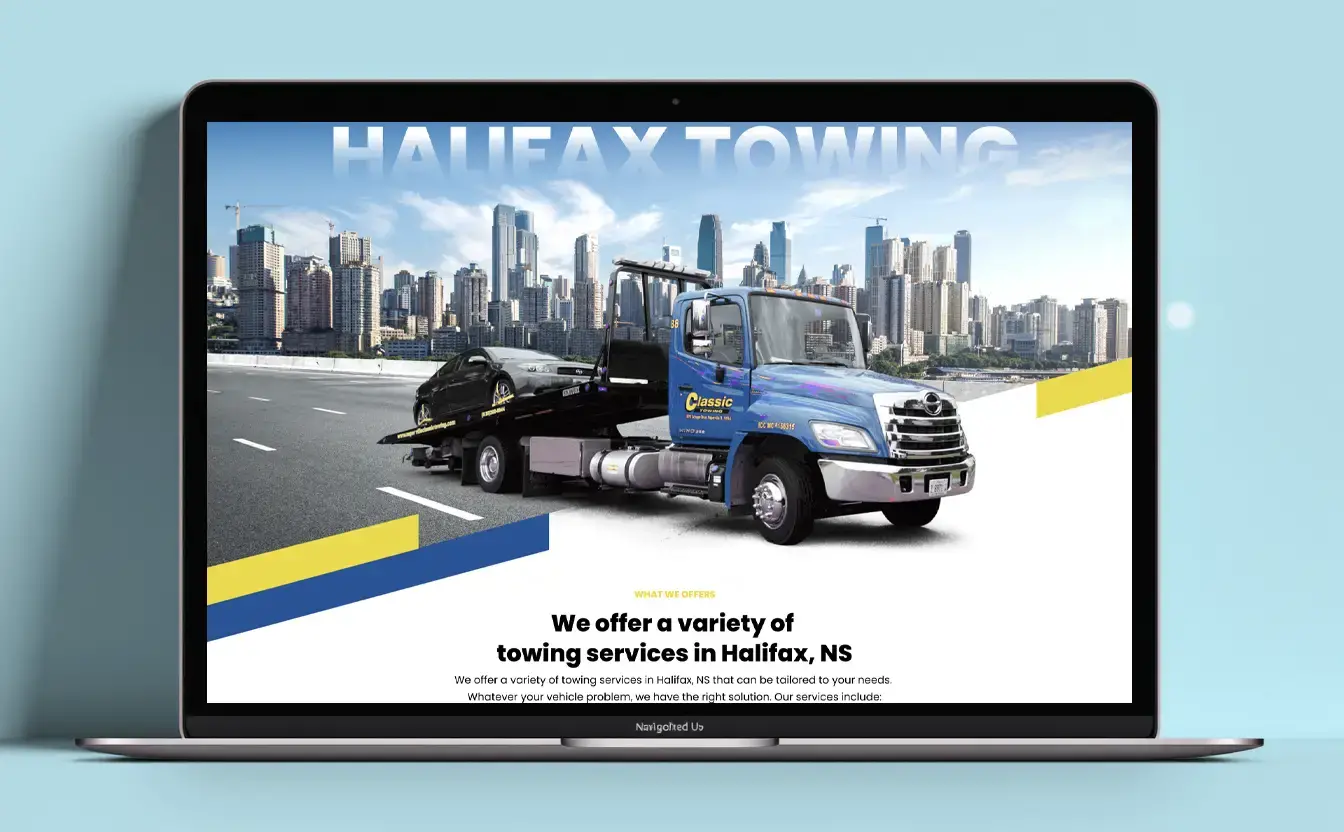
What Is Towing Website Design?
Towing website design is the process of creating an online platform tailored specifically for towing businesses. This design approach focuses on meeting the unique needs of towing companies, such as providing real-time updates, emergency contact options, and information about services. Unlike generic website designs, towing websites must prioritize usability, speed, and accessibility to cater to customers in urgent situations.
Key components of effective towing website design include:
- A clean and professional layout.
- Mobile-friendly design for on-the-go users.
- Integration of SEO techniques for better search visibility.
- Features like service request forms, interactive maps, and real-time chat.
Why Is a Website Essential for Towing Services?
In today’s fast-paced world, customers often rely on the internet to find immediate solutions, especially for services like towing. A professionally designed website bridges the gap between your business and customers, ensuring they can find and connect with you during emergencies.
Here’s why your business needs a towing website design:
- 24/7 Accessibility:
- A website acts as a round-the-clock representative for your business.
- Customers can find you at any time, even outside business hours.
- Building Trust and Credibility:
- A modern, user-friendly website enhances your brand’s credibility.
- Customers are more likely to trust companies with polished online presences.
- Capturing Local Customers:
- With proper SEO and localized keywords, your website can dominate search results for towing services in your area.
- Instant Customer Engagement:
- Features like click-to-call buttons, live chat, and emergency service forms make it easier for customers to connect with you in real-time.
Market Insights for the Towing Industry
The towing and transportation industry in the USA is rapidly growing, with an increasing number of customers relying on digital platforms to find towing services. Here are a few insights into the current market:
- 85% of customers use their smartphones to search for towing services during emergencies.
- Websites with optimized local SEO rank higher in “near me” searches, making them more visible to potential clients.
- The demand for specialized services, such as long-distance towing and vehicle recovery, has increased, emphasizing the need for detailed service pages.
Investing in professional towing website design gives your business a competitive edge, ensuring you stand out in this growing market.
Key Features of an Effective Towing Website
Creating a website that serves both your business and your customers requires strategic planning and thoughtful implementation. A successful towing website design combines usability, technical efficiency, and visual appeal to deliver an outstanding user experience while maximizing your business’s online visibility.
User-Friendly Navigation
Navigation is the backbone of any website. For a towing website, customers must quickly find the services they need, whether it’s roadside assistance, long-distance towing, or emergency contact information. Clear menus and intuitive navigation paths ensure your visitors can access critical information without frustration.
Key Tips for User-Friendly Navigation:
- Use a straightforward menu structure with clear labels like “Home,” “Services,” “Contact Us,” and “FAQs.”
- Limit the number of menu items to avoid overwhelming users.
- Include a search bar for quick access to specific information.
Sample Code for a Responsive Navigation Menu:
<nav>
  <ul>
    <li><a href="/">Home</a></li>
    <li><a href="/services">Services</a></li>
    <li><a href="/about">About Us</a></li>
    <li><a href="/contact">Contact Us</a></li>
    <li><a href="/faq">FAQs</a></li>
  </ul>
</nav>
<style>
  nav ul {
    display: flex;
    flex-wrap: wrap;
    justify-content: center;
    list-style-type: none;
    padding: 0;
  }
  nav ul li {
    margin: 0 15px;
  }
  nav ul li a {
    text-decoration: none;
    color: #333;
    font-size: 18px;
  }
  nav ul li a:hover {
    color: #007BFF;
  }
</style>
Mobile Responsiveness
With over 85% of towing service searches happening on mobile devices, ensuring your website is mobile-friendly is non-negotiable. A mobile-responsive design adapts seamlessly to different screen sizes, providing a smooth browsing experience for users on smartphones, tablets, and desktops.
Best Practices for Mobile Responsiveness:
- Use flexible grids and layouts to adapt to various devices.
- Optimize images to prevent slow loading times on mobile connections.
- Test your website on different devices using tools like Google’s Mobile-Friendly Test.
Local SEO Optimization
Local SEO is critical for towing businesses because customers typically search for nearby services during emergencies. Incorporating local SEO strategies ensures your website ranks higher for search queries like “towing services near me.”
Steps to Optimize for Local SEO:
- Add Location-Specific Keywords: Use keywords like towing website design, transportation web design, and your specific city or region.
- Set Up Google My Business: Ensure your business listing includes accurate information such as name, address, phone number (NAP), and working hours.
- Implement Schema Markup: Use structured data to provide search engines with detailed information about your business.
Example of Local Business Schema Markup:
<script type="application/ld+json">
{
  "@context": "https://schema.org",
  "@type": "LocalBusiness",
  "name": "XYZ Towing Services",
  "address": {
    "@type": "PostalAddress",
    "streetAddress": "456 Elm Street",
    "addressLocality": "Los Angeles",
    "addressRegion": "CA",
    "postalCode": "90001"
  },
  "telephone": "+11234567890",
  "openingHours": "Mo-Su 24hr",
  "url": "https://www.xyztowing.com",
  "priceRange": "$$"
}
</script>
Call-to-Action (CTA) Optimization
Strong CTAs drive conversions by encouraging visitors to take specific actions, such as requesting a tow or calling for assistance. Effective CTAs are prominent, persuasive, and strategically placed throughout your website.
Examples of Effective CTAs:
- “Call Now for Immediate Assistance!”
- “Request a Free Quote for Long-Distance Towing.”
- “Get Roadside Help in Minutes – Click Here.”
Where to Place CTAs:
- Header section for immediate visibility.
- Service pages to guide users toward booking.
- Footer to capture leads on every page.
Contact Information Accessibility
Your contact information is one of the most critical elements on your website. Make it easy for customers to reach you by prominently displaying your phone number, email, and physical address.
Best Practices:
- Use a “sticky” contact button that stays visible as users scroll.
- Include a contact form for inquiries.
- Integrate a click-to-call button for mobile users.
Sample Contact Section Code:
<section id="contact">
  <h2>Contact Us</h2>
  <p>Need immediate assistance? Call us at <a href="tel:+11234567890">+1 (123) 456-7890</a></p>
  <form action="/submit-contact" method="post">
    <label for="name">Name:</label>
    <input type="text" id="name" name="name" required>
    <label for="email">Email:</label>
    <input type="email" id="email" name="email" required>
    <label for="message">Message:</label>
    <textarea id="message" name="message" rows="5" required></textarea>
    <button type="submit">Submit</button>
  </form>
</section>
Design Elements for High-Performance Towing Websites
A visually appealing and strategically designed website plays a vital role in attracting customers and keeping them engaged. In the towing industry, where customers often make quick decisions, your website must balance aesthetic appeal with functionality to create a positive first impression. This section focuses on the key design elements that elevate towing website design to the next level.
Visual Design Tips for Towing Websites
The design of your towing website should reflect professionalism and trustworthiness. Avoid overly flashy designs and instead focus on clean layouts, calming color schemes, and easy-to-read fonts.
Best Practices for Visual Design:
- Color Palette:
- Use colors that evoke trust and reliability, such as blue, green, and white.
- Accent your design with bold colors like yellow or red to highlight CTAs.
- Typography:
- Use readable fonts like Arial, Roboto, or Open Sans.
- Ensure text sizes are large enough for easy reading on all devices.
- Imagery:
- Include high-quality images of your towing fleet, staff, and equipment.
- Avoid stock photos that may look generic or unrelated to your business.
Sample CSS for a Clean Visual Layout:
<style>
  body {
    font-family: "Open Sans", sans-serif;
    line-height: 1.6;
    color: #333;
    margin: 0;
    padding: 0;
  }
  header {
    background: #007BFF;
    color: #fff;
    padding: 20px 0;
    text-align: center;
  }
  h1, h2, h3 {
    font-family: "Roboto", sans-serif;
  }
  img {
    max-width: 100%;
    height: auto;
  }
  .cta-button {
    display: inline-block;
    padding: 10px 20px;
    background: #FFC107;
    color: #333;
    text-decoration: none;
    border-radius: 5px;
    font-weight: bold;
  }
  .cta-button:hover {
    background: #FFA000;
  }
</style>
Call-to-Action (CTA) Placement
CTAs are critical for converting visitors into customers. A well-designed CTA should stand out visually while guiding the user toward taking action.
Key Points for CTA Design:
- Color Contrast: Use colors that stand out from the background to draw attention to your CTAs.
- Action-Oriented Language: Use phrases like “Get Help Now” or “Request a Tow.”
- Strategic Placement: Position CTAs at the top of the page, in service sections, and at the bottom of each page.
Example CTA Placement in HTML:
<div class="cta">
  <h2>Need Towing Assistance?</h2>
  <a href="/contact" class="cta-button">Call Now</a>
</div>
Page Speed Optimization
Fast-loading websites are essential for customer retention and SEO rankings. A delay of even a few seconds can cause visitors to leave, especially in the time-sensitive towing industry.
Techniques to Improve Page Speed:
- Image Compression:
- Use tools like TinyPNG or ImageOptim to reduce image file sizes.
- Save images in WebP format for faster loading.
- Enable Browser Caching:
- Store commonly used files (e.g., logos, CSS) locally on users’ browsers to reduce load times for repeat visits.
- Use a Content Delivery Network (CDN):
- Distribute content through servers worldwide to ensure faster delivery.
Sample .htaccess File for Caching:
<IfModule mod_expires.c>
  ExpiresActive On
  ExpiresByType image/jpg "access plus 1 month"
  ExpiresByType image/jpeg "access plus 1 month"
  ExpiresByType image/png "access plus 1 month"
  ExpiresByType text/css "access plus 1 week"
  ExpiresByType text/javascript "access plus 1 week"
</IfModule>
Real-Time Features
Adding real-time features like live chat, service availability, or vehicle tracking can enhance customer interaction and satisfaction.
Popular Real-Time Features for Towing Websites:
- Live Chat: Use tools like Tawk.to or Zendesk Chat for customer support.
- Vehicle Tracking: Provide customers with live updates about their tow truck’s location.
- Dynamic Pricing Calculators: Allow customers to estimate towing costs based on distance and vehicle type.
Example Live Chat Integration with Tawk.to:
<script type="text/javascript">
  var Tawk_API = Tawk_API || {}, Tawk_LoadStart = new Date();
  (function(){
    var s1 = document.createElement("script"),s0 = document.getElementsByTagName("script")[0];
    s1.async = true;
    s1.src = 'https://embed.tawk.to/123456789/default';
    s1.charset = 'UTF-8';
    s1.setAttribute('crossorigin','*');
    s0.parentNode.insertBefore(s1,s0);
  })();
</script>
SEO Strategies for Towing Websites
Search engine optimization (SEO) is a cornerstone of towing website design. Without proper SEO, even the most beautifully designed website may fail to attract the necessary traffic. SEO ensures that your towing website appears at the top of search engine results, especially for critical searches like “towing services near me” or “emergency towing.”
In this section, we’ll explore actionable SEO strategies tailored to towing websites, ensuring your business stands out online.
Keyword Placement for Maximum Visibility
Effective keyword placement is critical for search engines to understand your website’s content. For towing businesses, integrating keywords like towing website design, transportation web design, and website design for logistics companies throughout your site can dramatically boost your rankings.
Best Practices for Keyword Placement:
- Page Titles:
- Include primary keywords at the beginning of your title tags.
- Example:
<title>Towing Website Design Services – Professional & Reliable</title>
- Meta Descriptions:
- Use keywords to craft compelling meta descriptions that encourage clicks.
- Example:
<meta name="description" content="Expert towing website design services to boost your online visibility. Tailored designs for towing and transportation companies.">
Headers and Subheaders:
- Place keywords in H1, H2, and H3 tags to improve content hierarchy and SEO.
Body Content:
- Use primary and related keywords naturally within the content.
- Bold important keywords for better readability (e.g., towing website design).
Alt Text for Images:
- Add descriptive alt text for images, incorporating keywords.
- Example:
<img src="tow-truck.jpg" alt="Professional towing services - towing website design">
On-Page SEO Essentials
Optimizing on-page elements ensures your website is crawlable and understandable by search engines. Focus on these critical areas:
- URL Structure:
- Use short, descriptive URLs that include keywords.
- Example:
https://yourwebsite.com/towing-website-design
- Internal Linking:
- Link to other pages on your site to improve navigation and distribute SEO authority.
- Example: “Learn more about our transportation web design services here.”
- Content-Length and Quality:
- Create detailed pages with at least 1,000 words to provide value and rank better.
- Header Tags:
- Use structured header tags (H1-H3) to create a hierarchy for content.
Local SEO Optimization
Since towing services are primarily location-based, local SEO is critical. Implement these strategies to dominate local search results:
- Google My Business (GMB):
- Claim and optimize your GMB profile with accurate details, including your business name, address, phone number, and working hours.
- Local Keywords:
- Use keywords that include your location.
- Example: “Emergency towing services in Los Angeles.”
- NAP Consistency:
- Ensure your Name, Address, and Phone number are consistent across all online platforms.
- Local Backlinks:
- Partner with local directories or industry websites for backlinks.
Example of Location-Specific Content:
<p>XYZ Towing Services is your trusted partner for **emergency towing in Chicago**. Our 24/7 availability ensures you’ll never be stranded. Contact us at <a href="tel:+11234567890">+1 (123) 456-7890</a>.</p>
Technical SEO for Better Performance
Technical SEO ensures that your website is accessible and efficient, improving both user experience and search rankings.
Core Technical SEO Practices:
- Page Speed Optimization:
- Minimize CSS and JavaScript files.
- Use tools like Google PageSpeed Insights to identify bottlenecks.
- Mobile Friendliness:
- Test your website for mobile compatibility and resolve any issues flagged by Google’s Mobile-Friendly Test.
- Secure Website:
- Use HTTPS with an SSL certificate to build trust and enhance security.
- XML Sitemap:
- Create and submit a sitemap to help search engines index your site efficiently.
- Example:
<urlset xmlns="http://www.sitemaps.org/schemas/sitemap/0.9">
  <url>
    <loc>https://www.yourwebsite.com/</loc>
    <lastmod>2025-01-01</lastmod>
    <changefreq>daily</changefreq>
    <priority>1.0</priority>
  </url>
  <url>
    <loc>https://www.yourwebsite.com/towing-services</loc>
    <lastmod>2025-01-01</lastmod>
    <changefreq>weekly</changefreq>
    <priority>0.8</priority>
  </url>
</urlset>
Schema Markup:
- Add schema data to enhance your visibility in search engine results.
- Example:
<script type="application/ld+json">
{
  "@context": "https://schema.org",
  "@type": "LocalBusiness",
  "name": "ABC Towing",
  "address": {
    "@type": "PostalAddress",
    "streetAddress": "123 Main Street",
    "addressLocality": "Houston",
    "addressRegion": "TX",
    "postalCode": "77001"
  },
  "telephone": "+11234567890"
}
</script>
Content Marketing for SEO
Quality content is the foundation of a successful SEO strategy. For a towing website, content should address customer pain points while incorporating relevant keywords.
Content Ideas for Towing Websites:
- FAQs: Address common questions about towing services.
- Blog Posts: Write articles like “Top 5 Tips for Finding Reliable Towing Services.”
- Service Pages: Create dedicated pages for each service you offer (e.g., “Emergency Towing,” “Long-Distance Towing”).
Backlink Strategies
Backlinks from reputable sources improve your website’s authority and ranking. Focus on acquiring links from:
- Local Business Directories: List your business in towing and logistics directories.
- Industry Websites: Collaborate with related businesses like auto repair shops.
- Content Sharing: Publish guest posts or share helpful resources to gain backlinks.
Technical Features for Towing Websites

To create a towing website that stands out, technical functionality must go beyond just aesthetics. Your site should incorporate advanced features that enhance user experience, streamline business operations, and provide valuable tools for your customers. This section highlights key technical elements that elevate towing website design.
Real-Time Chat for Customer Engagement
A live chat feature enables instant communication between you and your customers, making it easier for them to request towing services or ask questions in emergencies.
Benefits of Real-Time Chat:
- Immediate customer support.
- Increased conversions through prompt responses.
- Enhanced trust and professionalism.
Integration Example:
<script type="text/javascript">
  var Tawk_API = Tawk_API || {}, Tawk_LoadStart = new Date();
  (function(){
    var s1 = document.createElement("script"), s0 = document.getElementsByTagName("script")[0];
    s1.async = true;
    s1.src = 'https://embed.tawk.to/123456789/default';
    s1.charset = 'UTF-8';
    s1.setAttribute('crossorigin','*');
    s0.parentNode.insertBefore(s1,s0);
  })();
</script>
Interactive Maps for Service Areas
Interactive maps help customers quickly locate your service coverage area, making your website user-friendly and informative. Embedding Google Maps is a simple yet effective way to achieve this.
Example Map Embed Code:
<iframe
  src="https://www.google.com/maps/embed?pb=!1m18!1m12!1m3!1d3151.8354345094077!2d144.95373531575972!3d-37.81627974217998!2m3!1f0!2f0!3f0!3m2!1i1024!2i768!4f13.1!3m3!1m2!1s0x6ad642af0f11fd81%3A0xf577db8e3111b09!2sTowing%20Services!5e0!3m2!1sen!2sus!4v1618901673210!5m2!1sen!2sus"
  width="600"
  height="450"
  style="border:0;"
  allowfullscreen=""
  loading="lazy"></iframe>
Additional Features:
- Highlight service zones with different colors.
- Include clickable markers for dispatch locations.
Dynamic Pricing Calculators
Providing customers with real-time price estimates can streamline inquiries and reduce manual efforts. Dynamic pricing calculators allow users to input details like distance, vehicle type, and service required to get an instant quote.
Sample Code for a Basic Pricing Calculator:
<form id="pricingCalculator">
  <label for="distance">Distance (miles):</label>
  <input type="number" id="distance" name="distance" required>

  <label for="vehicleType">Vehicle Type:</label>
  <select id="vehicleType" name="vehicleType" required>
    <option value="car">Car</option>
    <option value="truck">Truck</option>
    <option value="motorcycle">Motorcycle</option>
  </select>

  <button type="button" onclick="calculatePrice()">Calculate Price</button>

  <p id="priceResult"></p>
</form>
<script>
  function calculatePrice() {
    const distance = document.getElementById("distance").value;
    const vehicleType = document.getElementById("vehicleType").value;
    let pricePerMile = vehicleType === "truck" ? 5 : (vehicleType === "car" ? 3 : 2);
    let totalCost = distance * pricePerMile;
    document.getElementById("priceResult").innerText = `Estimated Price: $${totalCost}`;
  }
</script>
Online Booking System
An online booking feature allows customers to schedule towing services without the need for phone calls, improving convenience and efficiency.
Key Features for Online Booking Systems:
- Form Fields: Include date, time, location, and service type.
- Real-Time Availability: Show available time slots.
- Confirmation Emails: Send automated emails after booking.
Example Form Code:
<form action="/submit-booking" method="post">
  <label for="pickup">Pickup Location:</label>
  <input type="text" id="pickup" name="pickup" required>

  <label for="dropoff">Dropoff Location:</label>
  <input type="text" id="dropoff" name="dropoff" required>

  <label for="date">Preferred Date:</label>
  <input type="date" id="date" name="date" required>

  <label for="time">Preferred Time:</label>
  <input type="time" id="time" name="time" required>

  <button type="submit">Book Now</button>
</form>
Security Features
Your website must prioritize customer data protection, especially if handling sensitive information like payment details or personal information.
Key Security Measures:
- SSL Certification: Encrypt communication between your website and users.
- Secure Payment Gateways: Use trusted services like Stripe or PayPal.
- CAPTCHA: Add CAPTCHA to prevent bots from submitting forms.
Example CAPTCHA Integration:
<form action="/submit" method="post">
  <!-- Your form fields here -->
  <div class="g-recaptcha" data-sitekey="your-site-key"></div>
  <button type="submit">Submit</button>
</form>
<script src="https://www.google.com/recaptcha/api.js" async defer></script>
Integration with Analytics Tools
Understanding customer behavior is essential for continuous improvement. Integrate tools like Google Analytics to track user interactions, identify bottlenecks, and refine your website.
Benefits of Analytics Integration:
- Monitor traffic sources (e.g., search engines, social media).
- Track conversions and optimize CTAs.
- Analyze page performance to improve user experience.
Google Analytics Integration Code:
<script async src="https://www.googletagmanager.com/gtag/js?id=UA-12345678-1"></script>
<script>
  window.dataLayer = window.dataLayer || [];
  function gtag(){dataLayer.push(arguments);}
  gtag('js', new Date());
  gtag('config', 'UA-12345678-1');
</script>
Common Challenges and Solutions in Towing Website Design
Designing a towing website that is both functional and appealing can be challenging. Businesses often face technical, design, and operational issues that can impact user experience and lead generation. This section explores common challenges in towing website design and provides practical solutions to overcome them.
Challenge 1: Ensuring Mobile Responsiveness
The Problem: With over 85% of towing service searches occurring on mobile devices, a non-responsive website can lead to high bounce rates and lost customers.
The Solution:
- Implement a responsive design using CSS media queries.
- Test your site on multiple devices to ensure it adapts to different screen sizes.
Sample CSS for Mobile Responsiveness:
<style>
  body {
    margin: 0;
    font-family: Arial, sans-serif;
  }
  .container {
    width: 100%;
    padding: 20px;
  }
  @media (max-width: 768px) {
    .container {
      padding: 10px;
    }
  }
</style>
Challenge 2: Slow Loading Times
The Problem: Slow-loading websites frustrate users and negatively impact SEO rankings. Towing customers, who often need immediate help, will likely leave a slow site.
The Solution:
- Optimize images by compressing them without compromising quality.
- Minimize JavaScript and CSS files.
- Use lazy loading for images and videos.
Example of Lazy Loading for Images:
<img src="tow-truck-thumbnail.jpg" data-src="tow-truck.jpg" alt="Tow Truck" loading="lazy">
Challenge 3: Limited Local SEO Visibility
The Problem: Many towing businesses struggle to appear in local search results, which are crucial for capturing nearby customers.
The Solution:
- Optimize for local keywords such as “towing services in [city].”
- Add your business to Google My Business with complete and accurate information.
- Include your location in meta descriptions and structured data.
Local SEO Example for Meta Description:
<meta name="description" content="Reliable towing services in Los Angeles. Contact us for 24/7 emergency assistance and affordable towing rates.">
Challenge 4: Poor User Experience (UX)
The Problem: Complex layouts, broken links, or unclear navigation can drive users away from your site.
The Solution:
- Create a simple and intuitive layout with clear navigation menus.
- Regularly audit your website for broken links or outdated content.
- Use tools like Hotjar to monitor user behavior and improve UX.
Challenge 5: Lack of Real-Time Features
The Problem: Customers expect real-time updates, such as estimated arrival times or live chat options. Websites without these features may appear outdated or unhelpful.
The Solution:
- Add live chat or chatbot functionalities for instant customer communication.
- Use GPS tracking APIs to provide real-time location updates for tow trucks.
Real-Time Tracking API Example:
function initMap() {
  var options = {
    zoom: 10,
    center: {lat: 34.0522, lng: -118.2437} // Example coordinates for Los Angeles
  };
  var map = new google.maps.Map(document.getElementById('map'), options);
  var marker = new google.maps.Marker({
    position: {lat: 34.0522, lng: -118.2437},
    map: map
  });
}
Challenge 6: Security Vulnerabilities
The Problem: Towing websites often handle sensitive information like payment details or customer data, making them a target for cyberattacks.
The Solution:
- Implement HTTPS with an SSL certificate for secure communication.
- Use robust hosting solutions with firewalls and regular updates.
- Add CAPTCHA to prevent bots from spamming forms.
Example CAPTCHA Integration:
<div class="g-recaptcha" data-sitekey="your-site-key"></div>
<script src="https://www.google.com/recaptcha/api.js" async defer></script>
Challenge 7: Inadequate Conversion Optimization
The Problem: Visitors may leave your website without taking any action if your CTAs are poorly designed or misplaced.
The Solution:
- Use bold, action-oriented CTAs like “Call Now” or “Request a Tow.”
- Place CTAs prominently in the header, service sections, and footer.
Example CTA in HTML:
<a href="tel:+1234567890" class="cta-button">Call Us Now</a>
What is towing website design?
Why is a professional website important for towing services?
How do I optimize my towing website for local SEO?
Use location-specific keywords (e.g., “towing services in Dallas”).
Add your business to Google My Business with accurate details.
Include your location in page titles, meta descriptions, and structured data.
What features should a towing website include?
Mobile responsiveness.
Clear CTAs like “Call Now” or “Request a Tow.”
Real-time chat or live assistance.
An interactive map showing service areas.
Quick load times and secure browsing (SSL).
How do I improve the page speed of my towing website?
Compressing images using tools like TinyPNG.
Minimizing CSS and JavaScript files.
Using a content delivery network (CDN).
Enabling caching for faster repeat visits.
How do I add an online booking system to my website?
Can I integrate real-time location tracking on my towing website?
What is the cost of designing a towing website?
How do I secure my towing website?
Installing an SSL certificate for HTTPS encryption.
Using strong passwords and secure hosting providers.
Adding CAPTCHA to forms to prevent spam.
Regularly updating your website and plugins.
What type of content should I include on my towing website?
Detailed service descriptions (e.g., emergency towing, long-distance towing).
Location-specific information for local SEO.
An FAQ section to address customer concerns.
Blogs or articles with tips for vehicle safety and towing preparation.