


Website structure guide
Website structure for service business SEO
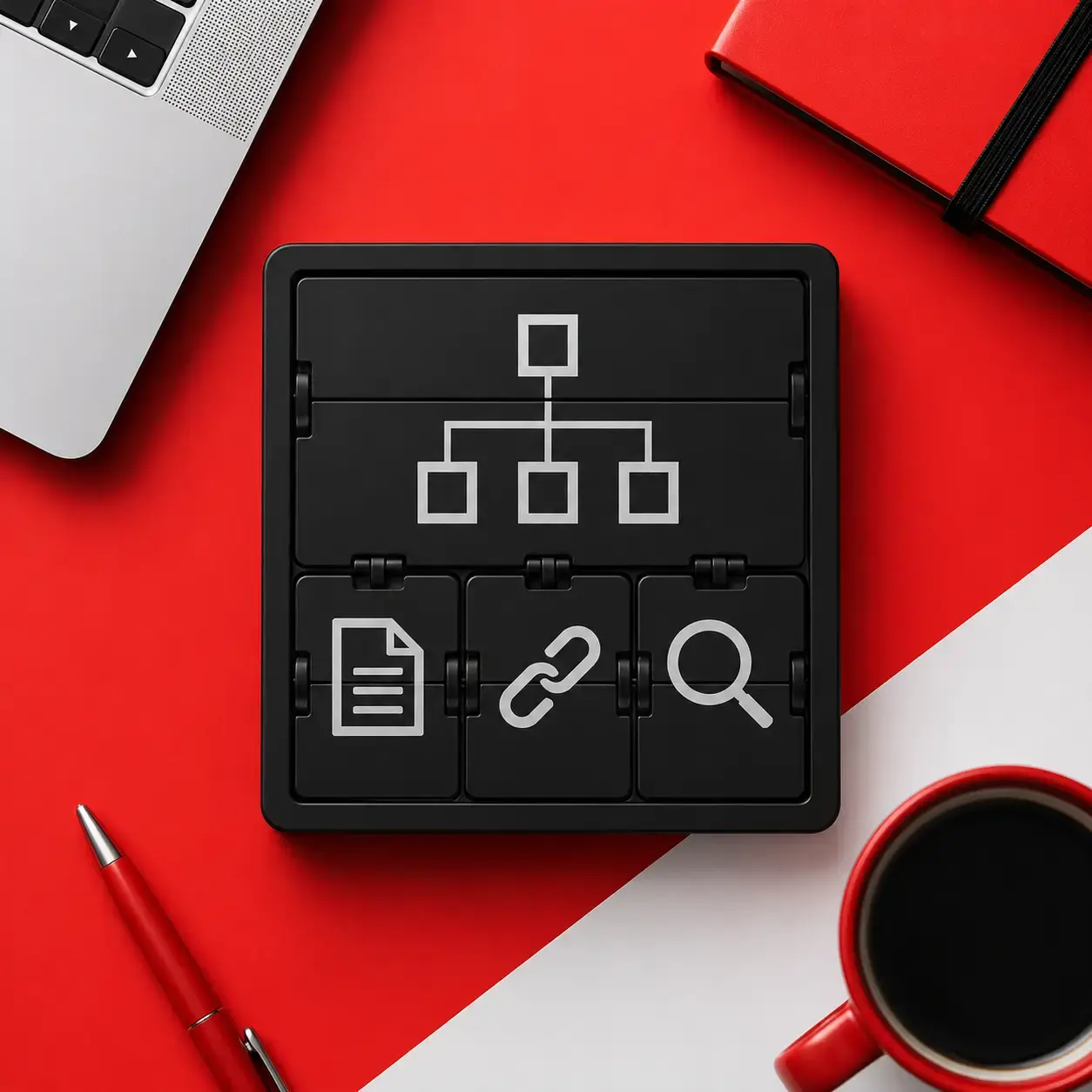
Website structure for service business SEO is the way your pages are organized so customers, Google, and AI search systems can understand what you do, who you serve, and which page should answer each search intent. A strong structure connects your homepage, service pages, categories, proof, resources, and contact paths into one clear system.
Core pages
Your homepage, service overview, about, proof, resources, and contact pages need clear roles.
Service pages
Each important service should have a dedicated page when it has its own search demand or sales context.
SEO architecture
Navigation, internal links, categories, and URLs should help search engines understand page relationships.
Conversion paths
Every major page should guide visitors toward a quote, consultation, contact form, or next useful page.



Quick answer
How to structure a service business website for SEO
A service business website should be organized around how people search, compare, and contact the company. The goal is not to create more pages for no reason. The goal is to give each important service, topic, and conversion path a clear place.
Definition
What website structure means
Website structure is the relationship between your pages, navigation, URLs, categories, internal links, and calls to action. For a service company, this structure should make it easy to understand what you offer and which page is the best answer for each customer need.
Best practice
Give important services their own pages
If a service has separate search intent, separate pricing logic, separate examples, or separate customer questions, it usually deserves its own page. This helps Google understand relevance and helps visitors find the exact service they need.
SEO value
Use categories to group related services
Categories help connect related services into a logical topic cluster. They make navigation easier, support internal linking, and help search engines see that your website covers a service area in depth.
Conversion value
Connect every page to a next step
A strong structure does not stop at information. Each page should guide users toward a quote request, consultation, contact form, phone call, related service, or supporting resource.
Article navigation
What this guide covers
Use this structure to review your current website or plan a new one before design, SEO, or development begins.
Read the guide
Related services
Main explanation
Why website structure for service business SEO matters
Service business website structure affects how clearly your website communicates with people and search engines. A weak structure often hides important services behind one generic page, mixes unrelated topics, or forces visitors to guess where to click next. A stronger SEO site architecture separates major services, groups related pages, and builds a clear path from search intent to inquiry.
Improve your SEO structure
The right structure depends on your services, locations, competition, content depth, and business goals. It should be planned before development or redesigned carefully if the site is already live.
Search intent becomes clearer
A dedicated service page can answer one specific query better than a broad page that tries to cover everything. This helps the page match users who search for that exact service.
Google can understand page relationships
Internal links, categories, breadcrumbs, and URL structure help search engines understand which pages are most important and how topics connect.
Visitors find the right service faster
A clear navigation system reduces confusion. People should be able to move from a broad service category to a specific offer without thinking too hard.
Content becomes easier to expand
A planned structure gives your business room to add resources, case studies, location pages, FAQs, and supporting articles without creating a messy website.
Google Ads pages work better
When landing pages and service pages are aligned with one clear offer, ad traffic can land on a more relevant page instead of a generic homepage.
Conversions become easier to track
A structured website makes it easier to see which pages generate calls, form submissions, consultation requests, and other business actions.
Core pages
Best website pages for a service company
Most service businesses need a small set of core pages and a flexible system for service-specific pages. The exact number depends on the business, but these page types create a strong foundation.
Foundation
Homepage
The homepage should explain who you help, what services you provide, where you operate, and why visitors should continue. It should not carry every SEO topic alone.
- Clear value proposition
- Service summary
- Trust signals
- Main CTA
Hub
Service overview page
A service overview page introduces all major services and links to individual service pages. It works like a hub for users and search engines.
- Service categories
- Short summaries
- Links to details
- Contact path
SEO target
Individual service pages
Each key service should have a page that explains the problem, solution, process, deliverables, proof, FAQ, and next step. This is where service page structure becomes important.
- Specific offer
- Search intent match
- Proof and process
- Strong CTA
Trust
About and trust pages
Users want to know who is behind the business. About, team, process, reviews, certifications, and portfolio pages can support trust before contact.
- Company context
- Experience
- Reviews
- Portfolio or proof
Authority
Resource content
Blog posts, guides, checklists, and FAQs help answer early-stage questions. They can support service pages through internal links and topical authority.
- Guides
- Comparisons
- Checklists
- Educational content
Conversion
Contact and conversion pages
Contact pages, quote request forms, consultation pages, and location contact details turn traffic into action. They should be easy to find from every major page.
- Simple form
- Phone or email
- Service context
- Clear expectations
Checklist
Website structure checklist for service business SEO
Use this checklist before launching a new site, redesigning an old one, or expanding SEO content. It helps you decide whether your current structure is clear enough for users, Google, and AI search systems.
Page roles
Give every important page a specific job
A page should not exist only because competitors have one. Define whether the page is meant to rank, explain, build trust, support navigation, or convert.
- One clear purpose
- One main search intent
- One primary next step
Services
Separate major services into dedicated pages
Do not force all services into one long page when customers search for them separately. Dedicated pages give each offer room for details, FAQs, examples, and conversion content.
- Unique service title
- Clear benefits
- Process and deliverables
- Relevant CTA
Categories
Group related services logically
Service categories can help users compare options and help search engines understand topical relationships. Keep category names simple and customer-friendly.
- No confusing labels
- No duplicate categories
- Clear links to service pages
Internal links
Connect related pages naturally
Internal links should help users move from broad information to specific services. They also help search engines find and prioritize important pages.
- Homepage to service hub
- Service hub to service pages
- Articles to services
- Service pages to contact
URLs
Use clean and descriptive URLs
URLs should be short, readable, and aligned with the page topic. Avoid random numbers, unnecessary words, and duplicate paths that compete with each other.
- Lowercase words
- Hyphen-separated slugs
- No confusing folders
- No duplicate intent
Conversion
Place CTAs where the decision happens
A user should not have to search for the next step. Add contact paths after key explanations, service details, proof sections, and FAQs.
- Quote request
- Consultation
- Phone or email
- Related service link
Step-by-step process
How to plan SEO site architecture for a service business
The best structure usually starts with business logic, then search intent, then design and development. This order prevents the site from looking good visually but failing to support SEO or leads.
01
Step
Start
List your real services
Start with the services you actually want to sell. Include core services, high-margin services, local services, recurring services, and services that need better visibility.
Business review
02
Step
Structure
Group services by customer intent
Organize services based on how customers think, not only how your internal team talks. Similar offers can become categories, while distinct offers can become dedicated pages.
Intent mapping
03
Step
Validation
Research search demand and competition
Check whether people search for each service separately and how competitors structure their pages. This helps decide which pages need full SEO content.
SEO review
04
Step
Map
Create the page map
Build a simple sitemap that includes the homepage, service hub, service pages, resource content, proof pages, and contact paths. Keep it clear before design begins.
Page planning
05
Step
Content
Write content for each page role
A homepage, service page, category page, and article should not use the same content pattern. Each page needs content that matches its role in the customer journey.
Content structure
06
Step
Optimize
Build, link, test, and improve
After launch, review indexing, crawlability, internal links, user behavior, form submissions, and rankings. Website structure can be improved over time as the business grows.
Ongoing improvement
Problems and fixes
Common website structure mistakes and better solutions
Many service websites struggle because the structure was planned around visual sections instead of search intent, service clarity, and conversion flow. These are the issues to check first.
Common problems
One page for every service
A single services page may be too broad to rank for specific service searches or answer detailed buyer questions.
Navigation labels are unclear
Creative menu names can confuse visitors. Service businesses usually need simple labels that match what customers expect.
Blog articles are disconnected
Educational content often fails when it does not link back to relevant services or answer a clear business-related question.
Duplicate service pages compete
Pages with nearly identical intent can confuse search engines and split relevance instead of strengthening one page.
Contact paths are hidden
If visitors need to scroll too far or open several pages to contact you, the structure is hurting conversions.
Locations are added without strategy
Location pages should be useful and specific. Thin pages with only city names often create low-value content.
Better solutions
Build dedicated pages for key services
Create separate pages when the service has its own search intent, value proposition, proof, process, and FAQ.
Use plain customer-friendly navigation
Labels like Services, Work, About, Resources, and Contact are usually clearer than vague branded terms.
Link resources to service pages
Use articles and guides to answer questions, then guide readers to the relevant service page when they need help.
Consolidate overlapping pages
When two pages answer the same search intent, merge or reposition them so each page has a distinct purpose.
Add CTAs near decision points
Place consultation, quote, and contact options after problem explanations, service details, proof, and FAQs.
Plan local pages carefully
Only create location pages when they can provide real local relevance, service details, proof, and helpful content.
Practical examples
Examples of service business website structure
The right structure depends on the business model. These examples show how a service company can organize pages without creating a confusing or bloated website.
1
Local home service company
A contractor, cleaning company, or repair service usually needs a homepage, service overview, individual service pages, location content if relevant, reviews, before and after proof, and a direct quote path.
2
Professional services firm
A consultant, accountant, attorney, or agency may need service pages, industry pages, case studies, resource articles, team credibility, and consultation-focused CTAs.
3
Medical or wellness service provider
A clinic, therapist, or wellness provider should make services easy to understand, add trust and credentials, answer patient questions, and create clear appointment paths while following industry rules.
4
B2B service company
A B2B company often benefits from service pages, solution pages, industry pages, case studies, process explanations, and content that supports longer decision cycles.
5
Startup or new brand
A new business can start with a lean structure, but it should still plan future service pages, SEO content, proof sections, and conversion paths before the site grows.
6
Company preparing for Google Ads
A business that runs ads should avoid sending all traffic to the homepage. Dedicated landing pages or focused service pages usually create better message match and clearer next steps.
Website help options
Which service fits your website structure problem
If your website structure is unclear, the right next step depends on whether you need planning, SEO improvements, technical cleanup, or a broader redesign. Webfly can review the current site and recommend a practical path.
Option
Timeline
Estimate
Action
Custom website development
Best when you are building a new service business website and want the structure, design, SEO foundation, and conversion paths planned from the start.
Project-based
Custom quote
Technical SEO and site architecture review
Best when the website is already live but has crawlability issues, weak internal links, confusing URLs, indexing problems, or unclear page relationships.
After review
Based on scope
Website redesign with SEO planning
Best when the website looks outdated, does not convert well, or needs a new structure before content, design, and development are rebuilt.
Project-based
After consultation
FAQ
Website structure for service business SEO FAQ
These answers cover the most common questions business owners ask before planning a new website, redesigning a site, or improving SEO architecture.
What pages should a service business website have?
A service business website should usually have a homepage, service overview page, individual service pages, about page, proof or portfolio page, resource content, and contact page. Some businesses also need location pages, industry pages, pricing pages, or landing pages depending on their services and marketing strategy.
Should each service have its own page?
Each important service should usually have its own page when people search for it separately or when it needs its own explanation, proof, process, and CTA. Smaller related services can sometimes stay inside a category page until there is enough search demand or business value to separate them.
How do categories help SEO?
Categories help SEO by grouping related services and making the site easier to understand. They can support internal linking, improve navigation, and show search engines that the website covers a topic area in a structured way.
What is the best service page structure?
A strong service page should explain the customer problem, the service, who it is for, what is included, the process, proof, FAQs, and the next step. It should focus on one primary service instead of trying to rank for every service at once.
How long does it take to improve website structure?
The timeline depends on the size of the website, number of services, technical condition, and whether content or design needs to change. A small structure cleanup can be faster, while a full redesign or SEO architecture rebuild usually needs planning, content, development, testing, and post-launch review.
Do I need a redesign to fix website structure?
Not always. Some structure problems can be fixed with better navigation, internal links, service pages, URLs, or content updates. A redesign is usually needed when the current layout, CMS, templates, or user experience prevents the website from supporting SEO and conversions properly.

What to do next
Need a clearer website structure for SEO and leads?
Webfly can review your current website, plan a better service page structure, improve SEO site architecture, or build a new website with SEO and conversion paths included from the start. Share your website and goals, and we will help you choose the next practical step.
Choose the best way to contact Webfly
Structure before design
Plan pages, services, navigation, and conversion paths before rebuilding the website.
SEO and development together
Avoid separating visual design from SEO architecture, technical setup, and content planning.
Practical next step
Start with a review, consultation, or project estimate based on the current website and business goals.