


Dominate Phoenix search with expert local SEO strategies to attract more leads and grow your business visibility.
Boost Leads with Local SEO Phoenix
In a competitive city like Phoenix, local seo phoenix is the key to standing out in search results and attracting nearby customers. When someone searches for a service you offer – whether it’s a website development phoenix company or a trendy cafe – you want your business to be the first one they find. Local search engine optimization (local SEO) makes that possible by improving your visibility for searches in your area.
Local SEO focuses on capturing people who are looking for products or services near them. It’s incredibly important: industry statistics show that almost half of all Google searches have local intent, and many of those searchers end up visiting a store or making a purchase within a day. If your business isn’t appearing in the Phoenix local SEO results (like Google’s local 3-pack map listings or the first page), you risk losing customers to competitors who are.
This comprehensive guide will walk you through how local seo services in the city of phoenix can boost your business’s visibility. We’ll explore practical strategies – from optimizing your website and Google Business Profile to building local citations and earning reviews – all geared towards helping Phoenix businesses rank higher. By the end, you’ll understand how to leverage local seo in phoenix effectively to attract more local clients and stay ahead of the competition in the Valley market.
What Is Local SEO? (And Why Phoenix Businesses Need It)
Local SEO refers to the practice of optimizing your online presence to rank higher in location-based searches. In simple terms, it helps your business appear when people search for services or products in your area. For example, if someone in Phoenix types “best phoenix local seo agency” or “coffee shop near me” into Google, local SEO tactics increase the chances that your business will show up in those results. Unlike general nationwide SEO, which aims to attract anyone on the internet, local SEO is laser-focused on reaching customers in a specific city or region – in this case, Phoenix and its surrounding areas.
Why does this matter so much for Phoenix businesses? Phoenix is a large and dynamic market – it’s not only one of the most populous cities in the U.S., but it’s also geographically sprawling. The Phoenix metropolitan area includes many communities like Scottsdale, Tempe, Mesa, and Glendale. People often search for businesses by specific location or neighborhood, so if you’re not doing local seo in the city of phoenix correctly, you might only reach a fraction of your potential audience. For instance, ranking in downtown Phoenix won’t automatically make you visible in Chandler or Peoria, which means you need a hyper-local approach.
Local SEO helps bridge this gap by boosting your visibility in maps and localized organic results. When done right, it gets you into the “local pack” (the map and 3 top listings that Google displays for local searches) and higher up on regular search pages for queries that include city names or “near me.” This means more local seo phoenix exposure – translating to more calls, website visits, and foot traffic from customers who are actually near your business. In short, mastering local SEO is crucial for any Phoenix business that wants to convert nearby searchers into real customers.
Key Elements of a Successful Local SEO Phoenix Strategy
To get the best results from local seo phoenix efforts, you need to cover all the core components of local search optimization. It’s not just one thing – effective local SEO is a combination of several interlocking pieces working together. Here are the key elements that every Phoenix business should focus on:
Below is an overview of these components and why each one matters for your success:
| Local SEO Component | Role in Your Phoenix SEO Success |
|---|---|
| Google Business Profile | Your GBP is your online storefront on Google. A fully optimized profile helps you appear in Google Maps and the local 3-pack, showing searchers essential info (address, hours, reviews). It’s often the first impression for Phoenix customers. |
| On-site Optimization | Ensuring your website is SEO-friendly (fast, mobile-responsive, secure) and contains local keywords (like city names) tells search engines that your site is relevant to searches for services in Phoenix. |
| NAP Consistency & Citations | NAP stands for Name, Address, Phone. Keeping this information consistent on your website and across directories (Yelp, Yellow Pages, Phoenix business listings) builds trust with search engines. Citations (mentions of your business’s info on other sites) improve your credibility and local rankings. |
| Customer Reviews | Reviews on platforms like Google, Yelp, and Facebook aren’t just social proof for customers – they’re also a factor in SEO. A steady flow of positive reviews (and your responses to them) signals that your business is active and trusted in the local community. |
| Local Content & Keywords | Creating content tailored to Phoenix (like blog posts about local events or pages targeting specific Phoenix neighborhoods) boosts your relevance. Using local seo services phoenix related keywords naturally in your content helps search engines associate your business with the Phoenix area. |
| Local Link Building | Backlinks from other Phoenix-area websites (news sites, community organizations, partner businesses) act as “votes of confidence” for your site. Earning links from reputable local sources increases your site’s authority in the eyes of Google and can significantly boost local search rankings. |
Optimizing Your Google Business Profile for Phoenix
One of the most powerful tools for improving your local SEO presence is your Google Business Profile (GBP, formerly known as Google My Business). For any company targeting a local audience, and especially for local seo phoenix, optimizing your GBP is often the first priority. This free Google listing is what enables your business to show up on Google Maps and in the local “3-pack” results, which appear prominently above the regular search results for local queries.
Claim and Verify Your Listing: If you haven’t done so yet, claim your Google Business Profile for your Phoenix business. Google will often require verification (such as mailing a postcard or phone verification) to prove you are the business owner. Verification is crucial – unverified listings won’t rank well.
Ensure Accurate NAP Information: Make sure your Name, Address, and Phone number (NAP) on the GBP exactly matches what you use on your website and other listings. Include “Phoenix, AZ” in your address field and double-check that the map pin is in the correct location. Consistency in NAP across all platforms is fundamental to local seo in phoenix success.
Choose the Right Categories: Google allows you to select a primary category and additional subcategories for your business. Pick the category that best matches your main service (e.g., “Web Designer” or “Marketing Agency” for a company offering web development and SEO). Then add a few relevant secondary categories if needed (like “Internet Marketing Service” or “Website Designer”). The more accurately you categorize your business, the easier Google can connect you to relevant local searches.
Write a Compelling Description: Use the description field on your GBP to explain what your business does, who you serve, and what makes you unique. This is a great place to naturally include Phoenix-related keywords. For example, mention that you provide services to clients in Phoenix (and maybe neighboring areas you serve). But avoid keyword stuffing – the text should read naturally and highlight your strengths, such as years of experience or specialized services.
Upload High-Quality Photos: Photos make your profile more engaging and credible. Add images of your office/storefront, team, products, or completed projects. For a web company, this might include screenshots of websites you’ve developed for Phoenix clients. Regularly uploading photos (and even short videos) that showcase your work and the Phoenix area can help engage users and signal to Google that your listing is active.
Keep Business Info Updated: Always update your GBP with any changes – like new hours, a new address or phone number, holiday closures, etc. An out-of-date listing (for example, showing you open on a holiday when you’re actually closed) can frustrate customers and hurt your credibility.
Encourage and Respond to Reviews: Customer reviews on your Google profile are a major factor for both conversion and SEO. Ask your happy clients to drop a review about their experience. When you get reviews, reply to them – thank customers for positive feedback, and professionally address any negative comments. Mention the Phoenix area or specific services in your responses when relevant (e.g., “It was a pleasure helping with your project in Phoenix!”) – this keeps content fresh and location-focused. Reviews not only build trust for prospective clients but also feed Google’s algorithm with positive signals that your business is reputable in the local market.
By fully optimizing your Google Business Profile with these steps, you’re setting a strong foundation for your local seo phoenix strategy. A well-maintained GBP makes it far more likely that local searchers in Phoenix will discover and choose your business.
On-Page SEO and Local Keyword Strategy
Your website is the centerpiece of your online presence. Optimizing it for local SEO means making sure the site clearly signals to search engines that you’re a Phoenix-focused business. Here’s how to strengthen your on-page SEO for the local market:
Use Location Keywords in Key Places: Incorporate Phoenix-oriented keywords naturally throughout your site. Important spots include the page titles (the <title> tag that shows up in browser tabs and Google results), meta descriptions, headings (H1, H2 tags on the page), and the content itself. For instance, a Phoenix bakery’s homepage title might be “Bakery in Phoenix, AZ – [Business Name]” rather than just “Welcome to Our Bakery.” In your site’s copy, mention that you serve the Phoenix area. If you have multiple service pages or product pages, tailor some content to Phoenix (e.g., “Quality plumbing services in Phoenix” on a plumbing services page). These signals help search engines associate your site with Phoenix queries.
Optimize Your Content and Formatting: Keep paragraphs and information on your site clear and well-structured. Use headers and bullet points where appropriate to make content easy to read (and to highlight important points to search engines). Ensure your website provides all the key information a local customer might need: this includes a clear contact page with your address (and a Google Map embed of your location), phone number, and business hours. Having your full address and contact info on the site (preferably in the footer or contact page) reinforces your location for Google and helps customers reach you.
Mobile-Friendly, Fast, and Secure: A huge portion of local searches come from mobile devices by people on-the-go. Make sure your website is mobile-responsive (looks good and works well on phones and tablets). Page speed matters too – both users and Google prefer sites that load quickly. Compress your images, use efficient coding, and consider using a content delivery network (CDN) if needed, so that your site doesn’t lag. Also, ensure your site uses HTTPS (has an SSL certificate) to be secure; Google favors secure sites and browsers may warn users if a site isn’t secure. Good technical health of your site indirectly boosts your local seo phoenix performance by providing a better user experience.
Create Location-Specific Pages (if relevant): If your business serves multiple distinct areas or cities around Phoenix, consider creating separate landing pages for each (for example, a page for Phoenix, another for Scottsdale, another for Tempe, etc.). Each page can focus on the specific locality’s name and relevant content (like testimonials from clients in that area, or photos of projects in that location). This strategy can help you rank in searches specific to those Phoenix neighborhoods or suburbs. Just make sure each page has unique, valuable content (don’t copy-paste the same text and just swap city names – that can hurt more than help).
Implement Local Schema Markup: To give search engines more detailed info about your Phoenix business, add structured data markup to your site. The “LocalBusiness” schema is a standardized format that lets you embed your business details in your website’s code, making it easier for search engines to understand. For example, you can include a JSON-LD script in your site’s HTML with your business name, address, phone, etc. Here’s a simplified example of what that code might look like:
<script type="application/ld+json">
{
  "@context": "https://schema.org",
  "@type": "LocalBusiness",
  "name": "Your Business Name",
  "address": {
    "@type": "PostalAddress",
    "streetAddress": "123 Main Street",
    "addressLocality": "Phoenix",
    "addressRegion": "AZ",
    "postalCode": "85001"
  },
  "telephone": "+1-555-555-1234",
  "url": "https://www.yourwebsite.com",
  "image": "https://www.yourwebsite.com/logo.png",
  "priceRange": "$$"
}
</script>
Including this kind of schema markup helps search engines verify your business information and can enhance your search listings (sometimes Google will show rich results with details like ratings or hours if schema is present).
Work with Your Web Developer: If you’re not tech-savvy, collaborate with your webmaster or consider hiring professional help to implement these on-site SEO improvements. Many phoenix website developers are well-versed in local SEO practices and can ensure that your site’s design and code support your SEO goals. Whether you’re starting a new site or revamping an existing one, building it with SEO in mind from the ground up will save you time and help you achieve better rankings.
Building Citations and Ensuring NAP Consistency
Beyond your own website and Google profile, search engines look at information about your business on other websites to determine if you’re a trustworthy local entity. These mentions of your business’s Name, Address, and Phone (NAP) on external sites are known as citations. Common citation sources include online directories, local business associations, industry-specific directories, and review sites. For strong local seo in the city of phoenix, you want to build plenty of consistent citations.
Why Consistency Matters: Consistency means your business name, address, and phone number appear exactly the same wherever they’re listed online. Even small differences (like using “Street” in one place and “St.” in another, or having an old phone number on some listings) can confuse search engines and hurt your local rankings. Inconsistent information might lead Google to doubt whether all those mentions are the same business, or even worry that the info is unreliable.
Key Citation Sources: Start with the big platforms: create or update your listings on Yelp, Facebook Business, Apple Maps, Bing Places, Yahoo Local, and the Better Business Bureau. Then move to popular industry sites (for example, if you’re a contractor, ensure you’re on HomeAdvisor or Angie’s List; if you’re a restaurant, on TripAdvisor, etc.). Don’t forget general directories like YellowPages, Foursquare, and Nextdoor as well.
Phoenix-Specific Citations: To really stand out in Phoenix, get listed on Arizona and Phoenix-focused websites. The local Chamber of Commerce, city business directories, or Phoenix-specific business listings can provide valuable localized citations. For example, the Phoenix Chamber of Commerce has a directory of member businesses – being listed there not only gives you a citation but can also drive direct local traffic. Look for Phoenix-area trade associations or community websites relevant to your industry. Every citation tells search engines, “This business is active and legitimate in Phoenix.”
Maintain Your Listings: Once you’ve built these citations, maintain them. If you move to a new address in Phoenix or get a new phone number, update every listing promptly. It’s a good idea to keep a master spreadsheet of all the places your business is listed, so you can systematically ensure every instance of your NAP is correct. There are also SEO tools and services that can help monitor and synchronize your listings across multiple sites.
Avoid Duplicates and Spam: Make sure you don’t accidentally create duplicate listings for the same platform. If you have two Yelp pages for the same business, for instance, claim them and merge or delete the duplicate. Similarly, avoid listing your business on irrelevant websites or low-quality spam directories just to get a link or citation – Google is more interested in quality and relevance than sheer quantity. A few high-quality, locally relevant citations will beat hundreds of mismatched ones.
By building a strong network of citations with consistent NAP information, you reinforce to search engines that your business is firmly rooted in Phoenix. This trust factor can significantly improve your local seo phoenix rankings, helping you appear more reliably when local customers search for your services.
Managing Customer Reviews and Local Reputation
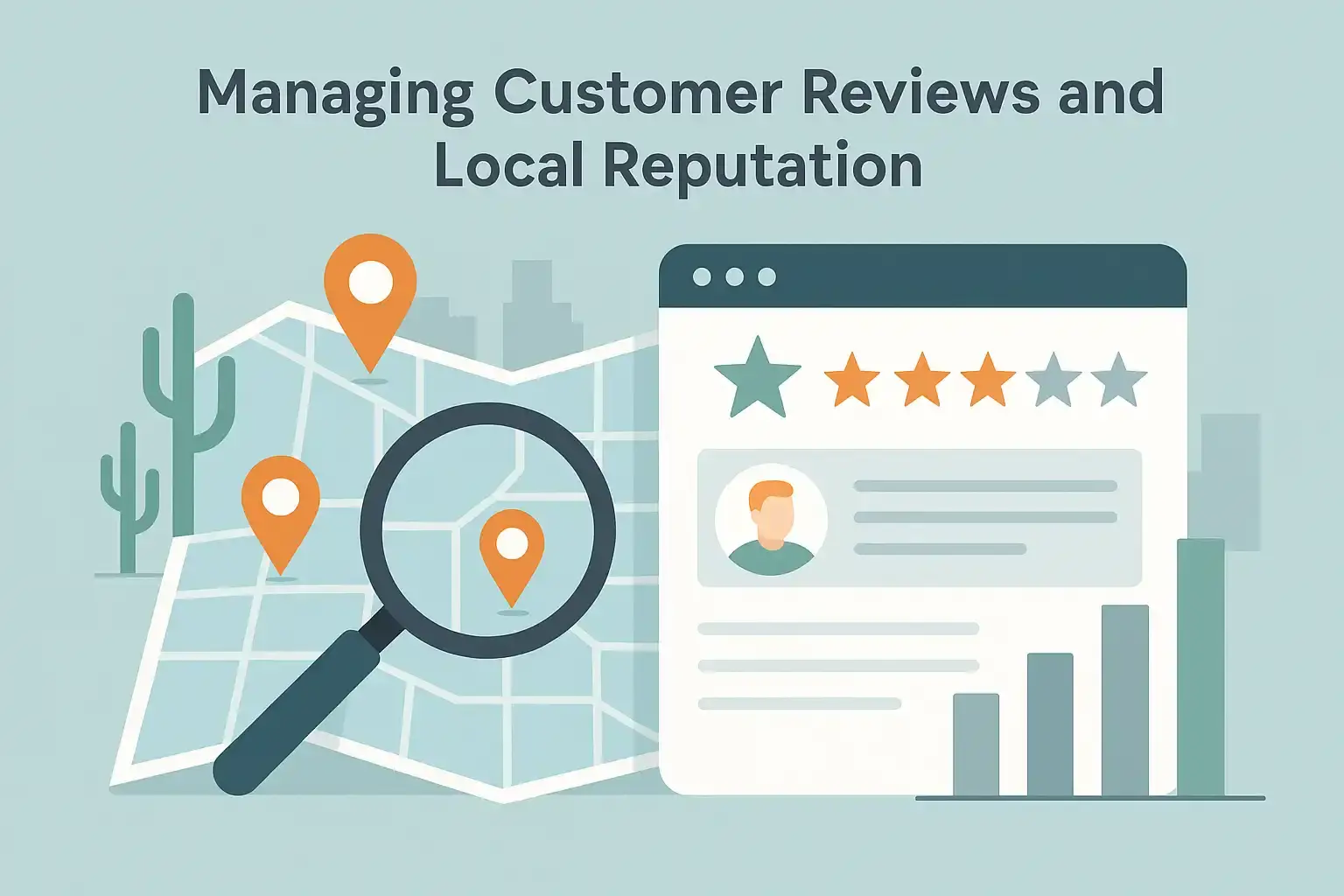
In the local SEO world, reputation is everything. When potential customers find your business online, one of the first things they’ll notice are your reviews and star ratings. But beyond influencing customers, reviews are a key ranking factor for local search. Google’s algorithm takes into account both the quantity and quality of reviews on your Google Business Profile (as well as on other platforms).
Why Reviews Impact SEO: Google wants to show users the best options for their search. A business with many positive reviews appears more credible and popular, so it’s more likely to be displayed prominently. In competitive markets like Phoenix, having a stellar rating can set you apart from dozens of others in the same field. Reviews often contain keywords too – for instance, a customer might mention that you provided “excellent plumbing service in Phoenix.” Such keywords in reviews can subtly boost your relevance for those terms.
Encourage Satisfied Customers to Leave Reviews: Develop a process to request reviews from happy clients. This could be as simple as sending a follow-up email or text after a service is completed, with a polite request and a direct link to your Google review page. You might say, “We’re a local Phoenix business and would love if you share your experience to help others find us.” Make it easy – the less friction, the more likely someone will take a minute to write a review.
Diversify Your Review Platforms: Google is the most important for SEO, but don’t neglect other sites where Phoenix locals might be looking. Yelp is popular for restaurants and services, Facebook recommendations can matter, and industry-specific sites (like ZocDoc for doctors, Avvo for lawyers, etc.) could be relevant too. A well-rounded review profile across multiple platforms extends your reach and signals to search engines that you have broad support.
Respond to Reviews (Good and Bad): Managing reviews isn’t just passive – you should actively engage. Thank reviewers who leave positive feedback, and do it in a personal way (maybe mention something specific they said). For negative reviews, respond professionally and helpfully. Apologize if appropriate and offer to resolve the issue offline. Remember, you’re not just addressing the reviewer, but everyone else who sees your response. A thoughtful, prompt reply shows that you care about your customers. It can even turn a negative impression into a positive one for onlookers. Additionally, responses keep your Google Business Profile active and show you engage with the community, which can indirectly aid local seo phoenix efforts.
Maintain a Positive Reputation Ethically: Never attempt to cheat the system by buying fake reviews – Google’s algorithms and users are increasingly adept at spotting inauthentic reviews, and it can lead to penalties or loss of trust. Also, avoid “review gating” (only asking clearly happy customers for reviews and filtering out others); Google wants an honest representation of customer opinions.
By cultivating a strong base of genuine reviews and being responsive, you enhance your online reputation. Over time, a business that consistently earns five-star service praise will climb in local seo phoenix rankings and, more importantly, win the trust and business of more local customers.
Local Link Building and Community Partnerships
Links from other websites to yours (backlinks) have long been a cornerstone of SEO, and for local SEO they’re especially powerful when those links come from other Phoenix-based or Arizona websites. Earning backlinks is like earning endorsements – if a reputable local site links to your site, search engines interpret that as a sign of trust and authority. Here’s how Phoenix businesses can build local links:
Partner with Other Local Businesses: Form relationships with complementary businesses in the area. For example, if you’re a web design agency, you might partner with a local marketing firm or print shop. You can refer clients to each other and mention each other on your websites. Perhaps you write a guest blog post for their site or they feature you in an article about “top service providers in Phoenix.” These partnerships can naturally lead to backlinks and also send referral traffic your way.
Sponsor or Participate in Local Events: Phoenix has numerous community events, workshops, charity drives, and industry meet-ups. By sponsoring an event (even a Little League team or a local meetup), you often get a mention and link on the event’s website or social media. The cost of sponsorship can pay off with a high-quality local backlink, plus you get your name out in the community. Similarly, participating in local events as a speaker or panelist can earn you links from event pages or news coverage of the event.
Get Featured in Local Media: Don’t overlook local news outlets, magazines, and blogs. Phoenix is a big city with its own ecosystem of media. If you have a newsworthy story (a new product launch, a community initiative, an award, etc.), consider sending out a press release to Phoenix media or pitching a story. A feature or mention in an online article by a local newspaper, radio station, or popular blog often includes a link to your website. These .edu or .gov links (if you collaborate with universities or city programs) and news site links carry a lot of weight.
Contribute to Community Resources: Perhaps create a useful resource or guide that others find worth linking to. For instance, if you’re a landscaping company, you could publish a “Desert Gardening Guide for Phoenix Homeowners” on your site. Local blogs or community websites might link to this kind of high-quality, locally relevant content. Creating content that highlights Phoenix-specific knowledge establishes you as a local expert and can attract backlinks over time.
List Your Site on Local Directories and Associations: Beyond citations for NAP consistency, some local directories provide an actual followed backlink. Joining the Phoenix Chamber of Commerce, local business associations, or industry groups often gets you a profile page on their site with a link. These organizational links are both relevant and credible.
Quality Over Quantity: When building links, prioritize quality and relevance. A single link from a well-respected Phoenix news site or a high-traffic local blog can do more for your SEO than dozens of links from random, low-quality sites. Avoid any schemes of buying links or joining “link farms” – Google’s algorithms can detect unnatural linking patterns and may penalize your site. Focus on genuinely earning links through relationships and content.
Local link building might take effort and networking, but it can dramatically boost your local seo phoenix authority. Not only will you climb in search rankings, but you’ll also deepen your roots in the Phoenix business community, creating a virtuous cycle of trust and referrals.
Tracking, Analytics, and Continuous Optimization
After implementing all these strategies, it’s important to track how your local SEO efforts are paying off and continually fine-tune your approach. SEO is not a one-and-done task – especially in a competitive environment like Phoenix, where rival businesses are also vying for that top spot. Here’s how to stay on top of your local seo phoenix progress:
Monitor Your Rankings: Use SEO tools or even manual searches to see where you stand for important keywords (like “your service + Phoenix”). There are specialized local rank tracking tools (e.g., BrightLocal, Whitespark, or even features in SEMrush) that let you check how you rank within specific ZIP codes or areas. Keep an eye on your Google Business Profile insights too – Google provides data on how many people found you via search or maps, what queries they used, etc.
Analyze Traffic and Leads: Use Google Analytics (GA4) to track your website traffic. Look at how much of your traffic is coming from the Phoenix area (you can often see user location data). If you set up goals in Analytics (like a contact form submission), you can measure how many leads or calls are coming through your site. An increase in locally driven traffic and leads over time is a good indication your local SEO is working. Also pay attention to referral traffic – if you see visitors coming from directories or partner sites, that means your citation and link efforts are bringing people in.
Watch for Changes in Search Algorithms: Google updates its search algorithms frequently. Some updates specifically impact local search results (for example, changes to how the map pack is ordered, or spam detection improvements). Stay informed by following SEO news or blogs. If you notice a sudden change in your rankings or traffic, check if there was a known Google update around that time. Adapting your strategy in response to changes – or even proactively anticipating them by following best practices – will keep your local seo phoenix performance strong over the long term.
Regularly Update Your Content: Don’t let your website or Google Business Profile go stale. Post new blog articles or service updates when you have them, especially ones that might include fresh Phoenix-related content (e.g., a blog post about “Top Trends in [Your Industry] in Phoenix 2025”). On your GBP, use Google Posts to share announcements or offers. Not only do these updates provide more value to users, they also send signals that your business is active.
Conduct Periodic Audits: Every so often, do a health check of your local SEO. Verify your NAP information is still correct everywhere. Check that all your website pages are loading fast and have up-to-date content. Search for your business name and see if any new directories or review sites have listings for you that need attention. Look at what competitors are doing – if a new competitor is suddenly ranking above you, see what might have changed (did they build new content, get a lot of new reviews, etc.?).
Adjust and Improve: Use all the data you gather to refine your strategy. If you find that one particular blog post with “Phoenix” in the title is bringing in a lot of traffic, consider writing more content around that topic. If you notice that a certain keyword isn’t performing well, but another related one is, shift your content focus. Local SEO involves some trial and learning; the Phoenix market might respond to certain approaches more than others, and you’ll discover that over time.
By staying vigilant and adaptable, you’ll ensure that your local SEO investment continues to yield results. Remember, achieving top rankings for local seo phoenix terms is great, but maintaining them requires ongoing effort. The payoff is keeping your business prominently visible to new customers month after month.
Working with a Local SEO Company in Phoenix
Implementing a full local seo phoenix strategy can be a big undertaking. As a business owner or CEO, you might not have the time or in-house expertise to handle everything from technical website tweaks to content creation, citation building, and analytics tracking. That’s where hiring a professional comes in. But how do you choose the right local seo agency phoenix to trust with your business’s online growth?
Look for Phoenix Experience: SEO best practices apply everywhere, but local expertise gives an edge. An agency that has worked with other Phoenix-based businesses will understand the local market nuances – whether it’s knowing the peak seasons for Phoenix tourism vs. off-season, or being familiar with the competitive landscape in your industry around town. They’ll have insight into how Phoenix consumers search and what resonates with the local audience.
Check Proven Results: A reliable local seo company phoenix should be able to show you examples of how they’ve helped other clients increase rankings, traffic, or leads. Ask for case studies or references, specifically for local SEO projects. Did they help a restaurant rank in the map pack for “restaurants in Phoenix”? Did a local contractor’s website traffic double after their campaign? Concrete results speak louder than vague promises.
Comprehensive Services: Local SEO isn’t isolated – it ties in with web design, content marketing, social media, and broader SEO techniques. Many top agencies offer packages that include on-page optimization, link building, content creation, and even website development. For instance, if your website also needs a facelift, it might be beneficial to work with a team that can handle both the development and the SEO, ensuring your new site is built SEO-friendly from the start. When evaluating candidates, see if they have the capability to cover all bases or if they specialize in just one area.
Transparency and Communication: Choose an agency that communicates clearly and regularly. They should provide you with updates or reports on what work they’re doing and how your rankings and traffic are changing. Beware of anyone who “guarantees” #1 rankings overnight – reputable SEO professionals set realistic expectations and use white-hat (ethical) techniques. You want a partner who will be honest, explain their process, and be available to answer your questions.
Local Understanding and Availability: There’s an advantage to working with a team that’s actually in Phoenix or at least easily reachable in the same time zone. You could arrange face-to-face meetings or phone calls during local business hours. Plus, an agency that’s part of the Phoenix community might have additional networking benefits – they might connect you with other local businesses or opportunities.
Hiring the right partner for local seo phoenix can accelerate your success. It allows you to focus on running your business while experts handle the SEO intricacies. In the long run, a good agency will not just improve your search rankings – they’ll help deliver a steady stream of local leads, giving you a strong return on investment.
Why should I hire a local SEO company in Phoenix?
How long does local SEO take to show results in Phoenix?
How much do local SEO services cost in Phoenix?
What factors affect local SEO rankings in Phoenix?
Google Business Profile optimization: having a verified, complete, and active listing.
Reviews: the number and quality of customer reviews (and your responses).
On-page SEO: relevant keywords on your website, quality content, and good site user experience.
Citations/NAP consistency: your business info is consistent across the web.
Backlinks: links from other reputable sites, especially local Phoenix sites, pointing to your site.
User behavior: how people interact with your listings (click-through rates, calls, check-ins).
Google considers all these signals (and more) to determine who appears in the local pack and top results.