


Construction SEO Guide
Construction Website SEO Checklist for Contractors
This construction website SEO checklist helps contractors and construction companies plan a website that can be found, understood, trusted, and used by potential customers. A strong construction website is not only a digital brochure. It is a structured lead generation system with clear service pages, proof of completed work, local relevance, technical SEO, and conversion paths that make it easy for homeowners, property managers, developers, and commercial buyers to request a quote. For US-based contractors, the best time to plan SEO is before design starts because page structure, navigation, content depth, project galleries, speed, tracking, and forms all affect whether the website can support organic search, Google Ads, and real sales conversations.
Local service intent
Construction searches often include location, project type, urgency, and trust signals.
Project proof matters
Galleries, before and after photos, and case details help visitors evaluate workmanship.
SEO starts early
Site structure, content, technical SEO, and conversion planning should guide the design.
Lead paths need clarity
Calls, forms, quote requests, and consultation buttons should be easy to find.




Quick Answer
What should a construction company website include?
A construction company website should include clear service pages, local landing pages when relevant, a project gallery, trust signals, quote request forms, contact options, reviews, licensing or insurance information when appropriate, technical SEO foundations, and tracking. This is the core of contractor website SEO because search engines and potential customers both need to understand what you do, where you work, why you are credible, and how to contact you.
Website structure
Build around services and locations
A contractor website should not rely on one generic services page. Each major service should have a focused page with the right search intent, useful copy, photos, FAQs, and a clear next step.
Trust
Show proof before asking for a lead
Construction buyers want to see completed projects, process details, materials, safety practices, reviews, and real contact information before they request a quote.
SEO
Make every important page understandable
Use optimized titles, headings, internal links, schema where relevant, image alt text, fast loading, clean indexing, and clear content that matches how customers search.
Conversion
Guide visitors toward action
Every page should make the next step obvious, whether that is calling, submitting a form, requesting an estimate, viewing project examples, or discussing a future build.
Article Navigation
Use this guide as a website planning checklist
Jump to the sections that matter most for your construction website, or review the full checklist before redesigning, launching SEO, or sending paid traffic to your site.
Checklist sections
Planning and services
SEO Before Design
Why contractor website design should start with SEO planning
Contractor website design works best when SEO, content, and conversion strategy are planned before the visual layout. If the design is approved first and SEO is added later, the site may look good but still miss the pages, headings, internal links, image structure, and call-to-action paths needed for search visibility and lead generation. Construction company SEO should define how the website is organized, which services deserve individual pages, which locations need coverage, how project proof is displayed, and what actions visitors can take from each page.
Review SEO services
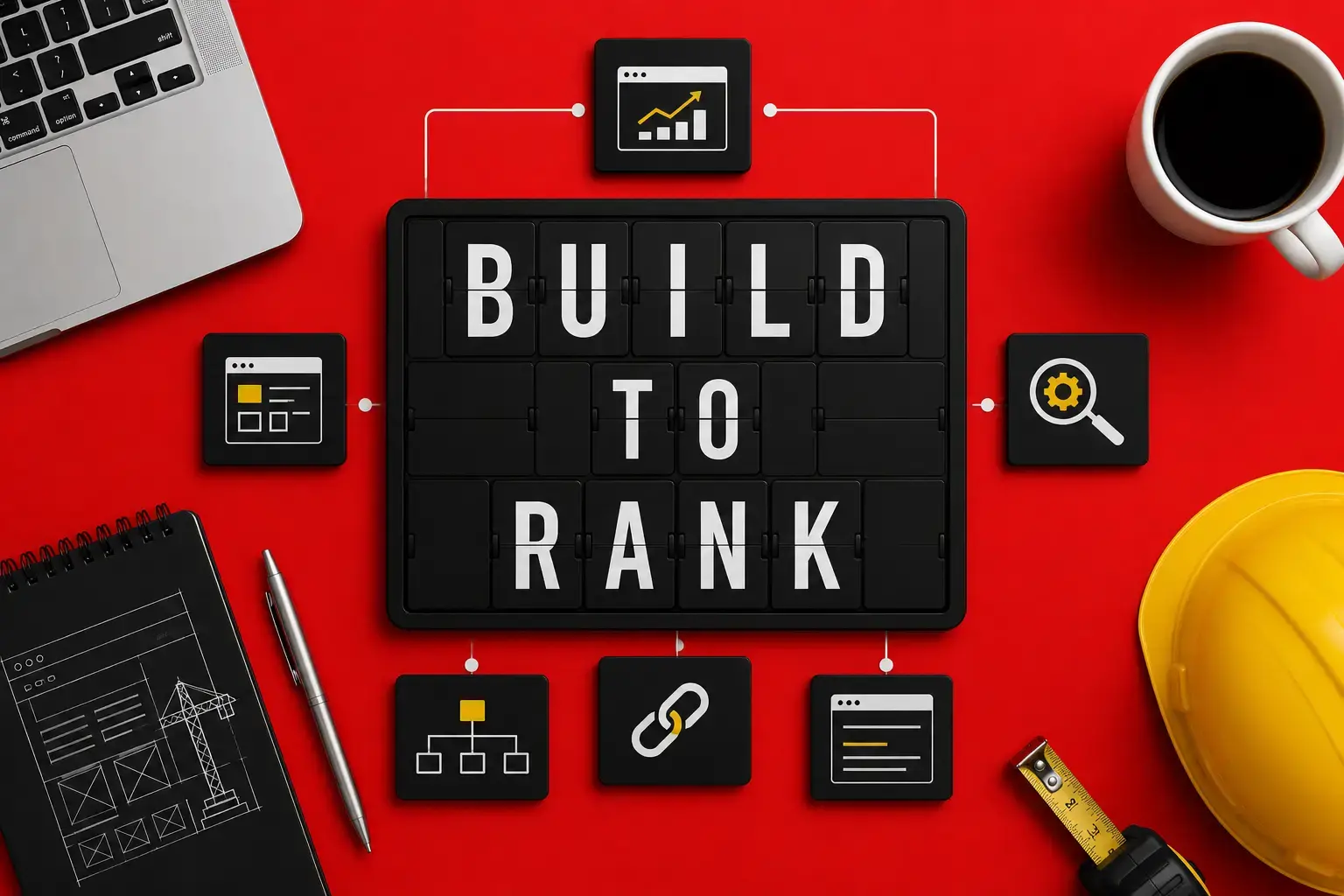
A practical construction website SEO checklist connects search intent, content, visuals, development, and lead tracking before the site is built.

Search intent shapes the sitemap
People do not only search for a contractor. They search for specific needs such as commercial remodeling, concrete repair, roofing replacement, design build contractors, home additions, or construction companies near a specific city. The sitemap should reflect the services and local intent that matter to the business.
Service pages need depth
A thin service page rarely explains enough for customers or search engines. Strong pages describe the service, ideal projects, process, materials or methods, service area, FAQs, proof, and next step.
Design should support trust
Construction decisions are high consideration. The design should make credentials, reviews, completed projects, safety awareness, team experience, and contact details visible without forcing users to hunt.
Technical SEO affects launch quality
Crawlable navigation, clean URLs, fast pages, mobile usability, image compression, redirects, metadata, schema, and indexation settings are easier to handle during development than after launch.
Google Ads needs landing clarity
If the company plans to run ads, pages should match campaign intent. A visitor who clicks on a remodeling ad should land on a relevant remodeling page, not a generic homepage.
Tracking completes the system
Forms, phone clicks, quote requests, traffic sources, and key conversions should be tracked from the beginning so marketing decisions are based on real website behavior.
Core Pages
What pages should contractors have on a website?
A contractor website should give visitors a complete path from discovery to trust to contact. The exact sitemap depends on the company, but most construction businesses need the following page types to support contractor website SEO, sales conversations, and local relevance.
Essential
Homepage
The homepage should explain who you help, what construction services you provide, where you work, and why a visitor should trust the company. It should route users to service pages, project examples, and contact options.
- Clear value statement
- Primary services
- Service area overview
- Trust signals
- Main CTA
SEO priority
Service pages
Each high-value service should have its own page. This helps search engines understand relevance and helps customers compare your offer to their project needs.
- Dedicated service copy
- Process explanation
- Project examples
- FAQs
- Quote request CTA
Local SEO
Location pages
If the company serves multiple cities or regions, location pages may help when they are useful and specific. They should include real service details, not duplicate city-name swaps.
- City or region focus
- Services available locally
- Local proof if available
- Contact path
- Internal links
Trust builder
Project gallery
A project gallery is one of the strongest credibility assets for a contractor. It should be organized by project type, location, scope, and outcome when possible.
- Before and after photos
- Project categories
- Short descriptions
- Optimized images
- Calls to action
Authority
About and credentials
The about page should show experience, team background, company values, certifications, insurance or licensing details when appropriate, and reasons customers can rely on the business.
- Company story
- Team overview
- Credentials
- Service standards
- Contact details
Conversion
Contact and quote pages
Contact pages should reduce friction. Include phone, form, service area, project type fields, preferred contact method, and expectations for the next step.
- Phone number
- Quote form
- Project details
- Service area
- Response expectation
SEO Checklist
Construction website SEO checklist for stronger visibility and leads
Use this construction website SEO checklist before a redesign, website launch, SEO campaign, or Google Ads campaign. It covers the practical items that help construction websites become easier to crawl, easier to understand, and easier to convert.
Sitemap
Map services to search demand
List every profitable service and compare it with how customers actually search. Decide which services need dedicated pages and which can be grouped. Avoid hiding major revenue services inside one short paragraph on the homepage.
- Identify core services
- Group related services carefully
- Create dedicated pages for high-intent searches
- Link services from the homepage and navigation
On-page SEO
Optimize titles, headings, and copy
Each page should have one clear topic, a useful title tag, a descriptive meta description, logical headings, and body copy that answers real buyer questions. The goal is clarity, not keyword stuffing.
- Use one primary topic per page
- Write helpful headings
- Include service and location context naturally
- Add FAQs where they help decisions
Local SEO
Show where the company works
Construction company SEO often depends on local trust. Make service areas clear, connect relevant services to relevant regions, and avoid creating low-quality duplicate location pages.
- Mention service areas naturally
- Use local project proof where available
- Link to important location pages
- Keep contact details consistent
Images
Optimize project photos and media
Images should support both trust and performance. Use descriptive filenames, useful alt text, compressed files, clear categories, and captions or project descriptions when they add context.
- Compress large photos
- Use descriptive alt text
- Group projects by service type
- Avoid slow gallery pages
Technical SEO
Prepare the site for crawling and indexing
A polished design is not enough if search engines cannot crawl the content properly. Check URLs, redirects, canonical tags, sitemap, robots rules, internal links, mobile usability, speed, and Google Search Console setup.
- Clean URL structure
- XML sitemap
- Redirect plan
- Core Web Vitals basics
- Google Search Console
Conversion
Make lead generation measurable
How can construction companies get leads from a website? They need clear CTAs, simple forms, phone click tracking, relevant landing pages, and analytics that show which pages and channels create inquiries.
- Quote request forms
- Phone click tracking
- CTA buttons on service pages
- Thank-you page or event tracking
- Google Ads-ready landing paths
Planning Process
How to apply the checklist before building the website
The checklist becomes more useful when it is turned into a practical workflow. Before design starts, the business should define its priority services, local markets, proof assets, content needs, technical requirements, and conversion goals.
01
Step
Goal
Clarify business goals
Decide what the website must support: local quote requests, commercial bids, residential projects, recruiting, brand credibility, Google Ads, SEO growth, or all of these. This keeps the site focused on business outcomes.
Strategy first
02
Step
Structure
Build the SEO sitemap
Create a sitemap around services, locations, project types, proof pages, and conversion pages. This step prevents the common mistake of designing a beautiful site with too few useful pages.
Before design
03
Step
Copy
Plan page content
Define what each page needs to answer. Service pages should cover scope, process, ideal customer, project examples, service area, FAQs, and the next action.
Content outline
04
Step
Gallery
Prepare project assets
Collect photos, project notes, categories, locations, outcomes, and permissions before the gallery is designed. A strong gallery often needs structure more than decoration.
Proof assets
05
Step
Build
Develop with SEO controls
During development, confirm mobile layout, speed, metadata fields, schema options, redirects, sitemap, robots settings, index status, and form tracking. These details protect launch quality.
Technical setup
06
Step
Growth
Launch, measure, and improve
After launch, submit the sitemap, check Google Search Console, review analytics, test forms, monitor rankings and leads, and improve content based on real search and conversion data.
Ongoing review
Problem and Solution
Common construction website mistakes and better SEO choices
Many contractor websites lose leads because they are built around appearance only. Strong contractor website design combines credibility, SEO structure, technical performance, and clear conversion paths.
Common mistakes
One generic services page
A single services page makes it harder to rank for specific construction searches and harder for buyers to understand whether you handle their project type.
Unorganized project photos
A gallery with large, unlabeled images may look impressive but gives limited context to visitors and search engines.
Weak local relevance
If the website does not clearly show where the company works, local searchers may leave and search engines may have less confidence in regional relevance.
Missing quote path
If visitors cannot quickly request an estimate, call, or share project details, qualified traffic may not become leads.
Slow mobile pages
Large images, heavy scripts, and untested mobile layouts can make the site difficult to use on phones, where many local searches happen.
No tracking after launch
Without form, phone, and traffic tracking, it is difficult to know which services, pages, or campaigns are producing inquiries.
Better choices
Dedicated service pages
Create focused pages for important services and connect them with internal links, FAQs, proof, and clear CTAs.
Structured project galleries
Organize projects by service, property type, location, or scope, and add short descriptions that explain the work.
Clear service area signals
Use service area copy, local proof, contact details, and useful location pages when they are relevant to real customers.
Visible lead actions
Place quote request buttons, phone links, and contact options throughout the site without overwhelming the visitor.
Performance-minded design
Compress images, keep layouts clean, test mobile usability, and build pages that load quickly enough for real users.
Measurement from day one
Set up analytics, conversion events, Google Search Console, and form testing so improvements can be based on data.
Project Gallery SEO
How should project galleries be optimized?
Project galleries help construction websites prove experience, but they also need structure. A useful gallery should support trust, page relevance, internal linking, image SEO, and conversion instead of acting as a disconnected photo wall.
1
Use meaningful categories
Group projects by service type, property type, industry, or location when it helps visitors find relevant examples. A visitor looking for commercial renovation should not have to browse unrelated residential photos first.
2
Write short project descriptions
Each project can include a brief explanation of the scope, challenge, service provided, location area, and result when available. Keep it factual and avoid unsupported claims.
3
Optimize image filenames and alt text
Use descriptive filenames before upload and write alt text that explains the image naturally. Alt text should describe the project image, not repeat the same keyword on every photo.
4
Compress images for speed
Construction photos are often large. Compress and resize them before upload so gallery pages remain fast, especially on mobile devices.
5
Link galleries to service pages
When a gallery project supports a specific service, link users toward that service page or quote path. Internal links help visitors continue their journey and help search engines understand topical relationships.
6
Add a next step near proof
After visitors review similar work, give them a clear action such as requesting a quote, discussing a project, or viewing the related service. Proof works best when it is close to the conversion path.
Website Help Options
What to do after this construction website SEO checklist
If your website is being redesigned, underperforming in search, or not producing enough qualified inquiries, the next step is to review the structure, content, technical setup, and conversion paths. Webfly can help plan, build, optimize, or improve a contractor website based on the current condition and business goals.
Option
Timeline
Estimate
Action
Custom contractor website development
Best for construction companies that need a new website or a redesign with SEO, mobile usability, service pages, project galleries, and lead generation planned from the start.
Project-based timeline
Project-based estimate
Construction company SEO and on-page optimization
Best for websites that already exist but need better service pages, content structure, internal links, metadata, local relevance, and search visibility improvements.
Monthly or project format
After review
Technical SEO and landing page improvements
Best for sites with crawl issues, slow pages, weak mobile performance, poor tracking, indexing problems, or landing pages that do not support Google Ads and lead generation.
Depends on the website
Based on scope
FAQ
Construction website SEO checklist FAQ
These answers cover common questions contractors ask before building, redesigning, or optimizing a construction company website.
What is a construction website SEO checklist?
A construction website SEO checklist is a planning tool that helps contractors build pages, content, technical settings, project galleries, and lead paths that support search visibility. It connects website structure with how customers search for construction services. The checklist should be used before design, during development, and after launch.
What pages should contractors have?
Most contractors should have a homepage, dedicated service pages, project gallery, about page, contact or quote page, and useful location pages when they serve multiple areas. Some companies also need industry pages, financing information, FAQs, blog resources, or landing pages for Google Ads. The right structure depends on services, markets, and sales goals.
How can construction companies get leads from a website?
Construction companies get leads from a website by matching high-intent traffic with relevant service pages, strong proof, visible CTAs, simple forms, and phone contact options. SEO brings qualified visitors, but conversion-focused design turns those visitors into quote requests. Tracking should measure forms, calls, and important actions.
How should project galleries be optimized?
Project galleries should be organized by service, property type, location, or project scope when possible. Each gallery item should use compressed images, descriptive alt text, clear categories, and short project descriptions. The gallery should also link to relevant service pages and include a next step.
Is contractor website design different from SEO?
Contractor website design focuses on layout, visual trust, usability, and brand presentation, while SEO focuses on search visibility, content structure, technical crawlability, and relevance. They should not be separated. The best contractor website design uses SEO planning to shape the sitemap, page content, navigation, project proof, and lead paths.
When should construction company SEO start?
Construction company SEO should start before the website is designed or redesigned. Early planning helps define the sitemap, service pages, URLs, metadata, content needs, project gallery structure, technical SEO settings, and tracking. Starting after launch often means fixing avoidable structure and content problems.
Next Step
Need a construction website built for SEO and leads?
Webfly can review your current construction website, plan a new sitemap, improve contractor website SEO, design conversion-focused service pages, prepare project gallery structure, and support technical SEO before or after launch. If your website needs to attract better local traffic and turn more visitors into inquiries, start with a practical review of structure, content, speed, tracking, and lead paths.
Contact Webfly
SEO-first website planning
Plan the sitemap, content, service pages, project proof, and technical SEO before design decisions lock the site structure.
Conversion-focused development
Build pages that help visitors understand services, trust the company, and request a quote with less friction.
Ongoing improvement options
Use SEO, technical audits, on-page updates, and landing page improvements to keep the website aligned with real business goals.